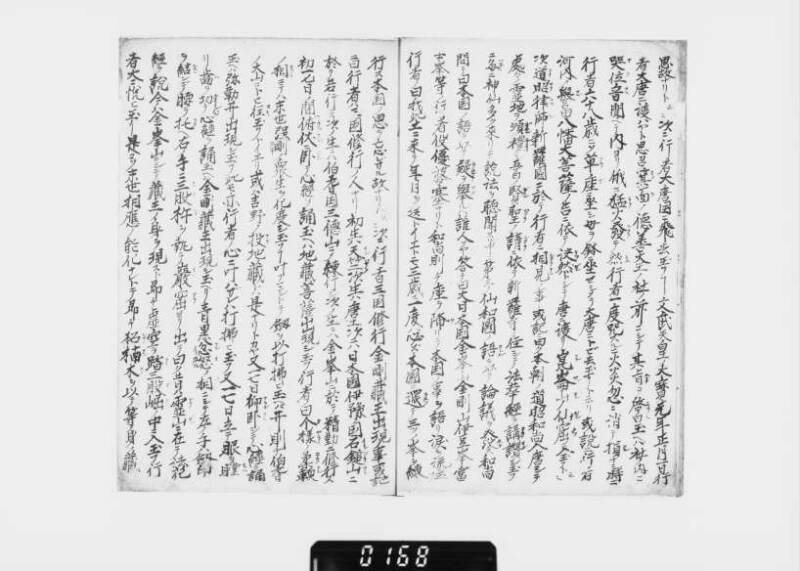
翻刻
【コマ7】
【右丁】
思故ナリト《割書:云々》次ニ行者大唐国ニ飛去玉フヿ文武天皇ノ大寳元年正月一日行
者大唐ニ渡ハヤト思召 箕面(ミノヲ)ノ徳善大王ノ社ノ前ニシテ其 旨(ムネ)ヲ啓白(モウシ)玉ヘバ社ノ内ニ
哭位音(ナクコヘ)聞ヘテ内ヨリ俄ニ猛火(ミウ )發(ヲコツ)テ然(モユ)行者一度咒スルニ火炎忽ニ消テ損(ソシ)ナシ時ニ
行者六十八歳ニ𬼀草座(ソウザ)ニ坐シ母ヲ鉢ニ坐セシメテ大唐ニトビ去玉フト云リ或說ニ行者
河内ノ譽田八幡大菩薩(コン )ノ告ニ依テ決然(ケツゼン)トシテ唐ニ渡リ崑崙山(コンロンサン)ノ仙窟(センクツ)ニ入玉フト《割書:云々》
次 道昭律師(トウセウリツシ)新羅國ニ於テ行者ニ相見(シヨウケン)ノ事或記ニ曰ク本朝ノ道昭和尚入唐シテ
處々ノ霊地ヲ順禮(ヂユンライ)シ五百ノ賢聖(ゲンジヨウ)ノ請(シヨウ)ニ依テ新羅寺ニ住シテ法蕐經ヲ講讚(コウサン)シ玉フ
ニ毎(ツネ)ニ神仙多ク來リテ說法ヲ聴聞スル中ニ第三ノ仙和國ノ語(コトバ)ヲ以テ論議ヲ發(ホツ)ス和尚
問テ曰本国ノ語ヲ以テ疑(ウタガイ)ヲ擧(アグ)ルハ誰人ソヤ答テ曰大日本国金峯山金剛山伊豆峯富
士峯等ノ行者役優婆塞ナリト和尚則チ座ヲ降(ヲ)リテ本国ノ事ヲ語リ涙ヲ流シ玉フ
行者ノ曰我此土ニ來テ年月ヲ送トイエトモ三歳ニ一度ハ必ズ本國ニ還(カエツ)テ三ツノ峯ヲ練
【左丁】
行ス本国ノ恩ヲ忘レサル故ナリ□#1《割書:云々》次ニ行者三国修行金剛藏王出現ノ事或記
ニ曰行者ハ三国修行ノ人ナリ初生ハ天竺(テンヂク)次生ハ唐土次ニハ日本國伊豫ノ国 石鎚山(イシヅチサン)ニ
於テ苦行ス次ノ生テ伯耆国三徳山ニ𬼀練行シ次ノ生ニハ金峯山ニ於テ精勤ニ修行ス
初一七日ノ間 ̄ハ俯伏(ウツフシ)ニ卧(フシ)テ心經ヲ誦玉ヘハ地藏菩薩出現シ玉フ行者ノ曰 个樣(カヤウ)ノ柔輭(ニウナン)
ノ相(スカタ)ニテハ末世 强剛( | コハキ)ノ衆生ヲ化度シ玉フヿ叶フマジトテ劔ヲ以打拂ヒ玉ヘバ𦬇則チ伯耆
ノ大山ニトヒ往(ユキ)玉フトイヱリ或ハ吉野ノ投地藏(ナゲ )トハ是ナリトカヤ又一七日 仰卧(アヲギフシ)シテ心經ヲ誦
玉ヘハ弥勒𦬇出現シ玉フ此モ亦行者ノ心ニ叶ハザレハ打拂ヒ玉フ又一七日立テ眼ヲ瞠(ミハ)
リ齒(ハ)ヲ切(クイシハツ)テ心經ヲ誦玉ヘハ金剛藏王出現シ玉ヘリ青黒 忽怒(フンヌ|イカル )ノ相ニシテ左ノ手ハ劔印
ヲ結(ムスン)ンデ腰ヲ托(ヲサ)ヘ右ノ手ニ三股杵(サンコシヨ)ヲ執テ巖窟(イハアチ)ヨリ出テ曰ク昔ハ霊山(レウゼン)ニ在テ法花
經ヲ説今ハ金峯山ニシテ藏王ノ身ヲ現スト即チ虚空ヲ踏(フミ)三股( ゴ)崛(クツ)ノ中ニ入玉フ行
者大ニ悅ヒ玉イ是コソ末世相應ノ能化ナレトテ即チ柘楠木(シヤクナンホク)ヲ以テ等身ノ藏
現代語訳
【右丁】
(前頁より続く)……そのように思うゆえなり、ということである。
次に、行者が大唐国に飛び去り給う事。
文武天皇の大宝元年正月一日、行者は大唐に渡ろうと思い召し、箕面の徳善大王の社の前にてその旨を啓白し給えば、社の内に泣き声が聞こえ、内より俄かに猛火が発って燃えた。行者が一度咒を唱えると、火炎は忽ちに消えて損なうことなし。この時、行者は六十八歳にして草座に坐し、母を鉢に坐せしめて大唐へ飛び去り給うと云えり。或る説に、行者は河内の誉田八幡大菩薩のお告げに依って、決然として唐に渡り、崑崙山の仙窟に入り給うとのことである。
次に、道昭律師が新羅国において行者に相見した事。
或る記に曰く、本朝の道昭和尚は入唐して処々の霊地を巡礼し、五百の賢聖の請いに依って新羅寺に住して法華経を講讃し給うに、常に神仙多く来りて説法を聴聞する中に、第三の仙が和国の言葉をもって論議を発す。和尚が問うて曰く、「本国の語をもって疑いを挙ぐるは誰人ぞや」と。答えて曰く、「大日本国、金峯山・金剛山・伊豆峯・富士峯等の行者、役優婆塞なり」と。和尚はすなわち座を降りて本国のことを語り、涙を流し給う。行者の曰く、「我はこの土に来て年月を送るといえども、三歳に一度は必ず本国に還って三つの峯を練
【左丁】
行す。本国の恩を忘れざる故なり」ということである。
次に、行者の三国修行・金剛蔵王出現の事。
或る記に曰く、行者は三国修行の人なり。初生は天竺、次生は唐土、次には日本国伊予の国・石鎚山において苦行す。次の生には伯耆国三徳山にて練行し、次の生には金峯山において精勤に修行す。初めの一七日の間は俯伏に臥して心経を誦し給えば、地蔵菩薩が出現し給う。行者の曰く、「かように柔軟の相にては、末世の強剛の衆生を化度し給うこと叶うまじ」とて、剣をもって打ち払い給えば、則ち伯耆の大山に飛び往き給うとも云えり。あるいは、吉野の投げ地蔵とはこれなりとか。また一七日、仰臥して心経を誦し給えば、弥勒菩薩が出現し給う。これもまた行者の心に叶わざれば、打ち払い給う。また一七日、立って眼を見張り、歯を食いしばって心経を誦し給えば、金剛蔵王が出現し給えり。青黒く忿怒の相にして、左の手は剣印を結んで腰を押さえ、右の手に三股杵を執って、巌窟より出て曰く、「昔は霊山にありて法華経を説き、今は金峯山にして蔵王の身を現す」と。即ち虚空を踏んで、三股窟の中に入り給う。行者は大いに悦び給い、「これこそ末世相応の能化なれ」とて、即ち柘楠木をもって等身の蔵……
英語訳
【Right folio】
(Continued from the previous page) …for that is the reason behind it, it is said.
**Next: On the ascetic flying away to the Great Tang.**
On the first day of the first month of the first year of Taihō during Emperor Monmu's reign, the ascetic resolved to cross to the Great Tang. He presented his intentions before the shrine of the Great King Tokuyoshi of Minoo, whereupon a sound of weeping was heard from within the shrine, and suddenly a fierce fire broke out from within and began to burn. The ascetic chanted a single incantation, and the flames were instantly extinguished without causing any damage. At that time, the ascetic was sixty-eight years of age. He seated himself upon a grass mat, placed his mother in a begging bowl, and flew away to the Great Tang, it is said. According to one account, heeding an oracle from the Great Bodhisattva Hachiman of Konda in Kawachi, the ascetic resolutely crossed to Tang and entered the immortal cave of Mount Kunlun.
**Next: On the meeting of the Vinaya Master Dōshō with the ascetic in the kingdom of Silla.**
A certain record states: The Venerable Dōshō of our country entered Tang and made a pilgrimage to various sacred sites. At the request of five hundred sages and holy men, he took up residence at a Silla temple and gave lectures and praises on the Lotus Sūtra. There he regularly received visits from numerous divine immortals who came to hear his teachings. Among them, the third immortal raised a doctrinal question in the language of Japan. The Venerable asked: "Who is it that poses this question in the language of our homeland?" The reply came: "It is En-no-Ubasoku, the ascetic of Mount Kinpusen, Mount Kongō, the Izu Peaks, Mount Fuji, and other such peaks of Great Japan." The Venerable immediately descended from his seat, spoke of matters of their homeland, and shed tears. The ascetic said: "Though I pass the days and months in this land, once every three years I necessarily return to my home country and make the rounds of the three peaks
【Left folio】
in ascetic practice. It is because I do not forget the grace of my homeland," it is said.
**Next: On the ascetic's austerities across three countries, and the manifestation of Kongō Zaō.**
A certain record states: The ascetic is a man who practiced austerities across three countries. In his first life it was in India (Tenjiku), in his second life in China (Tōdo), and in the next in Japan — he performed austerities on Mount Ishizuchi in the province of Iyo. In the next life he practiced austerities on Mount Mitoku in the province of Hōki, and in the next he trained diligently on Mount Kinpusen. During the first seven-day period, he lay face down and recited the Heart Sūtra, whereupon Kṣitigarbha Bodhisattva (Jizō) manifested. The ascetic said: "With such a gentle and soft form as this, you shall not be able to convert and save the stubborn sentient beings of the Latter Days of the Dharma." And so, striking him away with his sword, the Bodhisattva flew off to Mount Daisen in Hōki, it is said. This is perhaps what is called the "Thrown Jizō of Yoshino." During the next seven-day period, he lay face up and recited the Heart Sūtra, whereupon Maitreya Bodhisattva manifested. This too did not satisfy the ascetic's intent, and he struck him away as well. Then for another seven-day period, he stood upright, eyes wide open, teeth clenched, and recited the Heart Sūtra — whereupon Kongō Zaō manifested. His form was dark blue-black, an expression of fierce wrath: his left hand formed the sword-mudrā and pressed against his hip, while his right hand grasped a three-pronged vajra staff, and he emerged from a rocky cavern, declaring: "In ancient times I dwelt at Vulture Peak and expounded the Lotus Sūtra; now on Mount Kinpusen I manifest the body of Zaō." He then trod upon the empty sky and entered into the three-pronged cavern. The ascetic was greatly delighted and declared: "This is indeed the fitting teacher for the Latter Days of the Dharma!" He then took wood from the *shakunanboku* tree and carved a life-sized statue of Zaō…