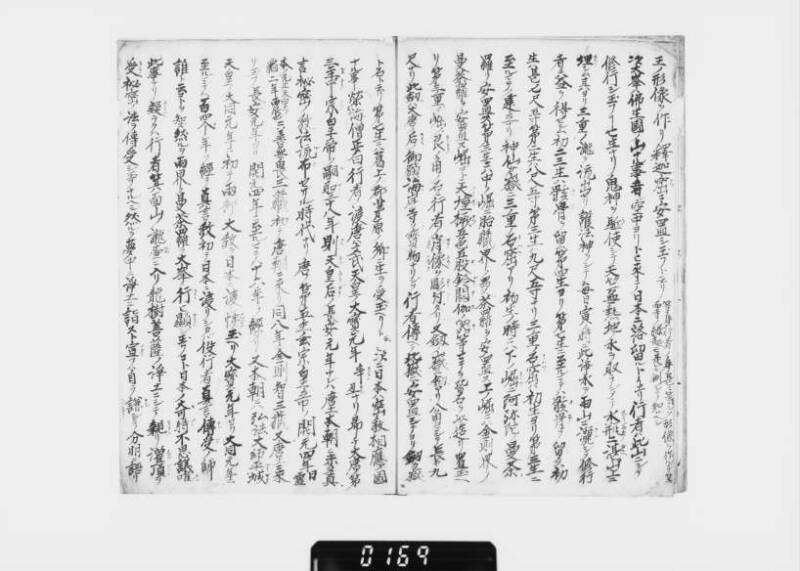
翻刻
【コマ8】
【右丁】
王ノ形像ヲ作リ《振り仮名:釈迦窟| クツ》ニ安置シ玉フト云リ《割書:等身ハ行者ノ身ノ長ニ等(ヒト)シク形像ヲ作ルナリ箕|面寺ノ縁起モ是レニ例シテ知ルヘシ》
次大峯ハ佛生國ノ山ナル事昔 ̄シ空中ヨリトヒ來テ日本ニ落留ルトイヱリ行者ハ此山ニシテ
修行シ玉フヿ七生ナリ鬼神ヲ駈使(ク )シテ天竺無𤍠地ノ水ヲ取ラシメテ水瓶(スイビヤウ)ニ湛(タヽヘ)#1山上ニ
埋(ウツマ)シム其ヨリ三重ノ瀧ヲ流出セリ護法神ヲシテ毎日寅ノ時ニ此淨水ヲ兩山ニ灑(ソヽガ)シメ修行
者ニ益ヲ得セシム初二三生ハ骸骨(カハネ)ヲ留ム第四生ヨリ第七生ニ至ルマテハ骸骨(ホネ)ヲ留メス初
生ハ長七尺五寸第二生ハ八尺五寸第三生ハ九尺五寸ナリ三重ノ石窟(イハヤ)ハ初生ヨリ第三生ニ
至ルマテノ建立ナリ神仙ガ嶽ニ三重ノ石窟(イハヤ)アリ初生ノ時ニハ下ノ崛(イハヤ)ニ阿弥陀ノ曼茶
羅ヲ安置ス第三生ニハ中ノ崛ニ胎藏界ノ曼陀羅ヲ安置ス上ノ崛ニハ金剛界ク
曼茶羅ヲ安置ス崛コトニ大壇(タイダン)橛(ケツ)五色 五股鈴( コレイ)《振り仮名:闕伽ノ器|アカ キ 》等マテヲ皆石ヲ以造リ置玉ヘ
リ第三重ノ崛ノ艮(ウントラ)ノ角󠄀ノ石ニ行者ノ肖像(セウソウ|ニタルカタチ)ヲ彫付(ヱリツケ)タリ又劔ノ嶽ニ劔アリ八角󠄀ニシテ長サ九
尺ナリ此劔ハ大唐ノ后(キサキ)ノ御願海岸寺ノ寳物ナリシヲ行者傳ヘテ此嶽ニ安置ミテヨリ劔カ嶽
【左丁】
ト名ト云リ第七生ニハ葛󠄀上ノ郡茅原ノ郷ニ生ヲ受玉ヘリト《割書:云々》次ニ日本ハ密敎相應ノ國
ナル事榮海僧正ノ曰行者ノ渡唐ハ文武天皇ノ大寳元年 辛丑(カノトノウシ)ナリ即チ大唐ノ第
三 主(シユ)中宗皇帝(チウソウ )ノ嗣聖(シセイ)十八年 則天皇后(ソクテンクワウゴウ)ノ長安元年ナレハ唐土本朝ニ未タ真
言秘密ノ敎法 流布(ルフ)セザル時代ナリ唐ノ第五主玄宗皇帝ノ開元四年《割書:日|霊》#2
《割書:本ノ元正天皇ノ|龜二年丙辰也》ニ善無𠂽三藏初テ唐朝ニ來リ同八年金剛智三藏又唐土ニ來
リ玉フ長安元年ヨリ開元四年ニ至ルマテハ十六年ヲ經タリ又本朝ニハ弘法大師 平城(ヘイゼイ)
天皇ノ大同元年ニ初テ兩部ノ大敎ヲ日本ニ渡シ恢(ヒロメ)玉ヘリ大寳元年ヨリ大同元年ニ
至ルマテハ百四个年( カ )ヲ經テ真言敎初テ日本ニ渡リシカバ役行者真言 伝受(テンジユ)ノ師
誰ト云コトヲ知ズ然ルヲ兩界ノ曼荼羅ヲ大峯ニ行(ヲコナ)ヒ顯(アラハ)シ玉フコト日本ノ奇特(キドク)不思議 唯(タヾ)
此事ナリ疑(ウタガウ)ラクハ行者箕面山ノ瀧壺( ツボ)ニ入リ龍樹菩薩ノ淨土ニシテ親(マノアタ)リ灌頂(クワンヂヤウ)ヲ
受(ウケ)秘密ノ法ヲ傳受シ玉フナルヘシ然ルヲ夢中ニ淨土ニ詣スト宣(ノタマ)フハ自ラ謙(ケン|ヘリクダリ)シテ分明ニ語リ
現代語訳
【右丁】
(前頁より続く)……王の形像を作り、釈迦窟に安置し給うと云えり。
(割注:等身とは行者の身の丈に等しく形像を作ることなり。箕面寺の縁起もこれに例して知るべし。)
次に、大峯は仏生国の山である事。
昔、空中より飛び来たりて日本に落ち留まると云えり。行者はこの山にて修行し給うこと七生なり。鬼神を駆使して天竺の無熱地の水を取らしめて、水瓶に湛え山上に埋めしむ。その後、三重の瀧が流れ出した。護法神をして毎日寅の時にこの浄水を両山に灑がせ、修行者に益を得せしむ。初め二三生は骸骨を留む。第四生より第七生に至るまでは骨を留めず。初生の身の丈は七尺五寸、第二生は八尺五寸、第三生は九尺五寸なり。三重の石窟は、初生より第三生に至るまでの建立なり。神仙ヶ嶽に三重の石窟あり。初生の時には下の窟に阿弥陀の曼荼羅を安置す。第三生には中の窟に胎蔵界の曼荼羅を安置す。上の窟には金剛界の曼荼羅を安置す。窟ごとに大壇、橛、五色の五鈷鈴、閼伽の器等まで、皆、石をもって作り置き給えり。第三重の窟の艮の角の石に行者の肖像を彫り付けたり。また剣ヶ嶽に剣あり。八角にして長さ九尺なり。この剣は大唐の后の御願により、海岸寺の宝物であったのを、行者が伝えてこの嶽に安置してより、剣ヶ嶽と名付けると云えり。
【左丁】
第七生には葛上郡茅原の郷に生を受け給えりと、ということである。
次に、日本は密教相応の国である事。
榮海僧正の曰く、「行者の渡唐は、文武天皇の大宝元年辛丑なり。すなわち大唐の第三代君主・中宗皇帝の嗣聖十八年、則天皇后の長安元年にあたる。唐土・本朝においてはいまだ真言秘密の教法が流布していない時代なり。唐の第五代君主・玄宗皇帝の開元四年(割注:日本の元正天皇の霊亀二年丙辰なり)に善無畏三蔵が初めて唐朝に来たり、同じく八年に金剛智三蔵がまた唐土に来り給う。長安元年より開元四年に至るまでは十六年を経たり。また本朝には、弘法大師が平城天皇の大同元年に初めて両部の大教を日本に渡し、広め給えり。大宝元年より大同元年に至るまでは百四か年を経て、真言教が初めて日本に渡ったのであれば、役行者が真言を伝受した師が誰であるかということは知れない。しかるに、両界の曼荼羅を大峯において行い顕し給うことは、日本における奇特・不思議のことは、ただこの事のみである。思うに、行者は箕面山の瀧壺に入り、龍樹菩薩の浄土において親しく灌頂を受け、秘密の法を伝受し給うたのであろう。しかるを夢中に浄土に詣すと宣い給うのは、みずから謙して分明に語ら……」
英語訳
【Right folio】
(Continued from the previous page) …he carved a life-sized image of Zaō and enshrined it in the Śākyamuni Cave (Shakakutsu), it is said.
(Interlinear note: "Life-sized" means that the image was carved to be equal in height to the ascetic's own body. The founding legend of Minoo-dera temple can be understood by analogy with this.)
**Next: On the matter that Mount Ōmine is a mountain of the Buddha-land.**
It is said that in ancient times it flew through the air and came to rest in Japan. The ascetic performed austerities on this mountain across seven lifetimes. He commanded demons and supernatural beings to fetch water from the Anavatapta Lake (the Lake Without Heat) in India, stored it in a water vessel (suibyō), and buried it atop the mountain. Thereafter, a triple waterfall flowed forth from that place. He caused the Dharma-protecting deities to sprinkle this pure water over the two mountains every day at the hour of the Tiger, granting benefit to practitioners. In the first through third lifetimes, his bodily remains were left behind. From the fourth through the seventh lifetime, no remains were left. In his first life, his height was seven shaku five sun; in the second life, eight shaku five sun; in the third life, nine shaku five sun. The three-tiered stone caves were constructed from the first through the third lifetime. On Jinsen-ga-take (Peak of the Divine Immortals), there are three tiers of stone caves. In the time of his first life, an Amitābha maṇḍala was enshrined in the lower cave. In his third life, a Womb World (Taizōkai) maṇḍala was enshrined in the middle cave. In the upper cave, a Vajra World (Kongōkai) maṇḍala was enshrined. In each cave, a great altar (daidan), ritual stakes (ketsu), five-pronged vajra bells (goko-rei) of five colors, vessels for floral offerings (akagiki), and all other implements were fashioned entirely from stone and installed. On the stone at the northeast corner of the third-tier cave, a portrait likeness of the ascetic was carved. Furthermore, on Tsurugi-ga-take there is a sword, eight-sided in form and nine shaku in length. This sword had been a treasure of the temple Kaigan-ji, made at the wish of an empress of the Great Tang. The ascetic transmitted it and enshrined it on this peak — and from that time forward, it has been called Tsurugi-ga-take (Sword Peak), it is said.
【Left folio】
In his seventh lifetime, he was born in the village of Chihara in Katsuragi District — or so it is said.
**Next: On the matter that Japan is a country suited to Esoteric Buddhism.**
The Venerable Eikai, Bishop (Sōjō), states: "The ascetic's crossing to Tang was in the first year of Taihō of Emperor Monmu's reign, the year of Kanoto-Ushi (701 CE). This corresponds to the eighteenth year of the Sisheng era of Emperor Zhongzong — the third ruler of the Great Tang — and the first year of the Changan era of Empress Wu Zetian. At that time, the teachings of the Shingon secret transmission had not yet spread in Tang or in Japan. It was only in the fourth year of the Kaiyuan era of Emperor Xuanzong — the fifth ruler of Tang —(interlinear note: which is the second year of the Reiki era, the year Hinoe-Tatsu, of Empress Genshō of Japan) that the Tripiṭaka Master Śubhākarasiṃha (Zenmui Sanzō) first came to the Tang court, and in the eighth year of the same era that the Tripiṭaka Master Vajrabodhi (Kongōchi Sanzō) also arrived in Tang. From the first year of Changan to the fourth year of Kaiyuan, sixteen years had elapsed. Furthermore, in Japan, it was not until the first year of Daidō of Emperor Heizei's reign that the Great Master Kūkai (Kōbō Daishi) first brought the Great Teaching of the Two Realms to Japan and disseminated it. From the first year of Taihō to the first year of Daidō, one hundred and four years had elapsed before the Shingon teaching was first transmitted to Japan — and so it is not known from whom En-no-Gyōja received initiation into Shingon. Yet despite this, the fact that he performed and manifested the maṇḍalas of the Two Realms on Mount Ōmine is the sole extraordinary and wondrous event in Japan. One may surmise that the ascetic entered the waterfall basin of Minoo Mountain, received direct initiation (kanjō) in the Pure Land of the Bodhisattva Nāgārjuna, and there received transmission of the secret Dharma. That he speaks of visiting the Pure Land 'in a dream' is because he humbly refrains from stating it plainly…"