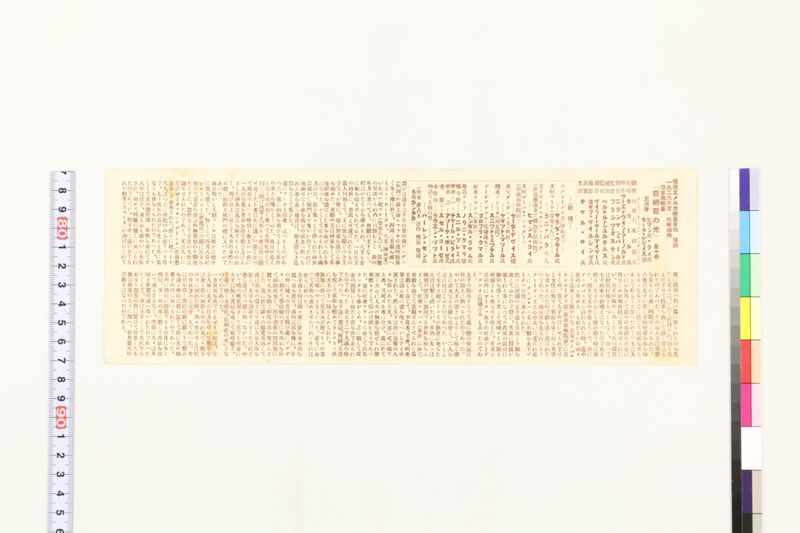
翻刻
【上段】
獨逸エメルカ映畫会社 提供
一九二六年度 超弩級作
釋尊傳映畫
『亞細亞の光』 全十巻
主演者《割書:ヒマンズ・ライ氏|セータ・デヴイス嬢》
顧問 印度大東洋協會(グレート、イースタン、コーポレーシヨン)
指導 タゴール翁
原作 サーエドウイン・アーノルド氏
脚色 ニランヤン・パール氏
監督 フランツ・オステン氏
《割書:補助|監督》 ベルトㇽ・シュルテルス氏
撮影 ヴイリー・キールマイヤー氏
撮影 ヨセフ・ヴイルシング氏
《割書:衣裳|考證》 チヤル・ロイ氏
-(配役)-
スツトーダナ王(淨飯王)……
……サラダ・ウキール氏
王妃マーヤ(摩耶夫人)……
……ラニ・バラ夫人
王子ゴータマ・シツダールタ
(瞿曇悉達多)(釋迦牟尼佛陀)
……ヒマンス・ライ氏
其妃ゴーパ・ヤシヨダーラ
(瞿波耶輸陀羅)…………
……セーダ・デヴイス孃
其父ダンダパニ王(執杖)……
……ヤギツト・マツール氏
隱者アシータ(阿私陀)
……スニツト・ミツテル氏
デーヴアダツタ(提婆達多)
……プロフラ・クマル氏
從者チヤンナ(車匿)
……スンダル・ラヤム氏
母乳チトラ ノリニ・クマリ孃
傳令使………スニル・プレミ氏
使者ノ一……チヤール・ピライ氏
使者 二……アソーケ・ボーゼ氏
老臣…………スセル・ゴーゼ氏
布告使………ラウエン・ヅツト氏
物語する賤の男…………
……ハーレン・セン氏
(侍女 夢占者 近侍 僧侶 祭司
名馬カンタカ)
思ひは遠き三千年の昔印度ガンヂス
(恒河)の諸上流ヒマラヤの連峰裾長
く曳く地に於て、四隣に其覇を稱へ
らるゝフツトーダナ、大王(淨飯王)
があつた妃マヤ(摩耶夫人)と、伉儷
の契淺からぬ内に只憾むらく 長の
年月に至つても、世繼の王子なく、
妃はいたく心を痛められ、大王も常
に頭を惱ませられてゐた。一日大王
の御前に、市民より選ばれたるもの
數人伺候して、王に位を繼ぐべき王
子なきが故に、他に側妾を設けん事
を勸めた。果斷の王は神象をして其
後繼者を選ばしむ事を命ぜられる事
になつた、かくして定められたる滿
月の日、裝ひ美々しく飾られた神象
は嚴かに城門より曳かれ出でたれば
此極りなき幸を我兒の頭上へ與へら
れん事を希ふ母達は、街上隈なき迄
群をなして集ひた。
茲にアシター隱者 云へるものがあ
つた、常に仙術を用ひてよく大事件
の來るを豫知してゐた、此日何處と
もなく風の如く來つて大聲叱呼して
曰く「聽け汝等よ『生るゝ者は死に歸
り死したる者は生に還る』須く立つ
て用意せよ」と時恰も街上の一角に
一人の兒童を其鼻を持て拾ひ上げん
とした神象は此言を解するものの如
く、再び路上に返して大衆の呆然た
る裡に祐然と城門の裡に入つたので
あつた。
此日恰かも王妃マーヤは俄かに體中
に異を感じた、斯くして四月八日妃
がルンビニー(藍毘尼)の園に宮女を
伴ひて遊歩を運ぶ時無憂樹の花爛漫
たる下に、忽然として千古の大聖は
誕生せられたのである。王は大いに
喜びゴータマ・シツダールタ(瞿曇悉
達多)と命名された、然るに妃マーヤ
夫人はつひに佛陀のみを宿すべき母
で、太子出生の喜びを見ると共に果
なくも世を去られたのであつた、か
くして王の慈愛深 春秋を重ねて十
八年は過ぎ、身も心も健やかに成長
され、初めて狩獵の催しに加はられ
たのであつた。勢子共に追ひ立てら
れた羚羊(カモシカ)が逃げおくれて
【下段】
遂に獵用の豹の爲に屠られるのを見
たる王子は、いたく打愕かれ、自ら馬
より下りて羚羊を撫して厚く勞はら
れたのであつた。その夜大王は奇夢
を見られ占者 判斷せしめられた。
占者は太子が若し老病死等の事を知
らるゝならば之に感じて出家をせら
るゝであらうと答へたので父王は大
いに心を用ひて數多の美姫を左右に
侍せしめ歌舞管絃は日夕奏せられた
が、太子の胸中に兆した人生の疑問
は到底打消さるべくもなく、却つて
太子出家の動機とはなつたのである
然るに太子の心にも愛の萌す時は來
た。深き父王の考慮よりして、共に
ダンダパニ王を訪れられた時、蓮の
花のほゝ笑める も似たるかの神々
しき迄美しき淑やかな王女ゴーパ・
ヤシヨーダラ姫(瞿波耶輸陀羅)に見
えし時、甞て太子の口にせられざり
し女性に對する賛辭を呈し自ら其手
を求められたので姫も深く喜ばれた
のであつた。此有様を見られたるス
ツトーダナ王は心中大いに喜ばれ直
ちにダンダ・パニ王に其姫を太子ゴ
ータマの爲に求められた。
然るに近國の王子達も又美しき姫を
欲してゐたので勢ひ、其處に競技が
催される事になつて其武術の試合に
勝利を得たる者こそ天晴ゴーパ姫と
結婚さるゝ者なりと决した。其王子
達の内にゴータマ太子の從弟デーヴ
アダツタ(提婆達多)も在つたのであ
る。
太子の勝利となつて茲に戀の榮冠は
彼の頭上に與へられたのであつた。
やがて大王の深き心よりして輝く湖
上に莊大なる宮殿を造營し、二人を
之に住はしめたのであつた。かくし
て太子と妃ゴーパとの勸喜に充ちた
生活は暫し續いたが、其内に太子は
城壁の彼方に展開する世界を知らん
として、從者チヤンナ(車匿)に命じ
宮殿を出でて遊觀せんとせられし爲
王嚴しく命じて、不具者、老者、病者
等は訪ふ街に姿を現すべからずと申
渡された。然し太子は路に是等の人
々を眼のあたり見、又遂に死に瀕す
る者、又死せる者に會ひ、茲に於て
深く其心に人生の無常を感ぜられ爾
來鬱々として惱みは深む斗りであつ
た。遂に從者チヤンナに命じて白馬
カンタカを牽かしめ、之に騎して黄
金の囚屋にも似たる宮を出で去られ
たのであつた 是太子二十九歲の時
であつた。太子途に寶冠、寶劔、王沓
を脱して車匿を慰めてカンカタと共
に大王の下へ歸らしめられた。
此報に依つて父王及び妃ゴーパの悲
嘆は喩へやうもなかつた。直ちに命
じて其後を求めさせたけれどそれは
徒らに終つた。
太子或る時は賤ケ家に食を求め山を
越へ谷を渡り、或時は石を枕に、草
の褥に種々の苦行と戰ひ遂にブダガ
ヤに到りて菩提樹の下に大决心を以
て結跏趺坐し、四十晝夜の間冥想に
耽り人生を觀じ解脱の道を究めんと
した。茲に於て諸々の障魔現出して
或は美女の姿となり或は大風大雨を
起し、太子を誘惑せんとしたけれど
悉く退けて一顧も與へなかつた。や
がて曉の明星燦として出でる頃遂に
太子は無上菩提を成じて眼玲瓏と、
千古に輝く大佛陀「亞細亞の光」とな
つたのであつた。
一方宮居を出でたるゴーパ妃は、會
ふ人每に太子の行方を尋ねて數年今
は全く花の面影もやつれ果て、樹下
の下に倒れた時、遇々來會せしは妃
の日夜望みし太子 人であつた。今
は悟を得し佛陀の前に躓づきて慈み
を請ふ佛陀は懇に諭して終に其の御
弟子の内に加へられたのであつた。
其内に佛陀に歸依するもの日に多く
佛陀、又一切の衆に對して其法を說
いて至らざるなく、次第に人々は奉
福と勸喜の道へ導かれたのであつた
かくして、身は王子として生れ乍ら
有ゆる忍苦の内に隨ひて發見したる
敎は幾億の人々に傳へ、世界最大の
宗敎とはなつたのである。
現代語訳
【上段】
ドイツエメルカ映画会社 提供
1926年度 超弩級作品
釈尊伝映画
『亜細亜の光』 全十巻
主演者《ヒマンズ・ライ氏|セータ・デヴィス嬢》
顧問 インド大東洋協会(グレート・イースタン・コーポレーション)
指導 タゴール翁
原作 サー・エドウィン・アーノルド氏
脚色 ニランヤン・パール氏
監督 フランツ・オステン氏
《補助監督》 ベルトル・シュルテルス氏
撮影 ヴィリー・キールマイヤー氏
撮影 ヨセフ・ヴィルシング氏
《衣装考証》 チャル・ロイ氏
-(配役)-
スッドーダナ王(浄飯王)……サラダ・ウキール氏
王妃マーヤ(摩耶夫人)……ラニ・バラ夫人
王子ゴータマ・シッダールタ(瞿曇悉達多)(釈迦牟尼仏陀)……ヒマンス・ライ氏
その妃ゴーパ・ヤシヨダーラ(瞿波耶輸陀羅)……セーダ・デヴィス嬢
その父ダンダパニ王(執杖)……ヤギット・マツール氏
隠者アシータ(阿私陀)……スニット・ミッテル氏
デーヴァダッタ(提婆達多)……プロフラ・クマル氏
従者チャンナ(車匿)……スンダル・ラヤム氏
乳母チトラ ノリニ・クマリ嬢
伝令使………スニル・プレミ氏
使者の一……チャール・ピライ氏
使者 二……アソーケ・ボーゼ氏
老臣…………スセル・ゴーゼ氏
布告使………ラウエン・ダット氏
物語する賎民の男…………ハーレン・セン氏
(侍女 夢占い師 近侍 僧侶 祭司 名馬カンタカ)
思いは遠い三千年の昔、インドガンジス河(恒河)の上流、ヒマラヤの連峰の裾が長く引く地において、四隣にその覇を称えられるスッドーダナ大王(浄飯王)がいた。妃マーヤ(摩耶夫人)との夫婦の契りは浅くなかったが、ただ遺憾なことに長年月に至っても、世継ぎの王子がなく、妃はひどく心を痛められ、大王も常に頭を悩ませておられた。ある日大王の御前に、市民より選ばれた者数人が伺候して、王の位を継ぐべき王子がないがゆえに、他に側室を設けることを勧めた。果断な王は神象にその後継者を選ばせることを命じられることになった。こうして定められた満月の日、装いを美々しく飾られた神象は厳かに城門より引き出されたので、この限りない幸を我が子の頭上に与えられることを希望する母たちは、街上の隅々まで群をなして集まった。
ここにアシータ隠者という者がいた。常に仙術を用いてよく大事件の来るのを予知していた。この日どこともなく風のように来て大声で叫んで言うには「聞けお前たちよ『生まれる者は死に帰り、死した者は生に還る』すべからく立って用意せよ」と。時あたかも街上の一角で一人の児童をその鼻で持ち上げようとした神象は、この言葉を理解するもののように、再び路上に戻して、大衆の呆然とする中を悠然と城門の内に入ったのであった。
この日ちょうど王妃マーヤは急に体中に異変を感じた。こうして四月八日、妃がルンビニー(藍毘尼)の園に宮女を伴って散歩に出かけた時、無憂樹の花が爛漫と咲く下で、突然として千古の大聖が誕生されたのである。王は大いに喜びゴータマ・シッダールタ(瞿曇悉達多)と命名された。しかるに妃マーヤ夫人は、ついに仏陀のみを宿すべき母で、太子出生の喜びを見ると共に、はかなくも世を去られたのであった。こうして王の慈愛深く春秋を重ねて十八年は過ぎ、身も心も健やかに成長され、初めて狩猟の催しに加わられたのであった。勢子らに追い立てられた羚羊(カモシカ)が逃げ遅れて、ついに猟用の豹のために殺されるのを見た王子は、ひどく打ちのめされ、自ら馬より下りて羚羊を撫でて厚く労われたのであった。
【下段】
その夜大王は奇夢を見られ、占い師に判断させられた。占い師は、太子がもし老病死等のことを知られるならば、これに感じて出家をされるであろうと答えたので、父王は大いに心を用いて数多の美姫を左右に侍らせ、歌舞管弦は日夕に奏でられた。しかし太子の胸中に兆した人生の疑問は到底打ち消されるべくもなく、かえって太子出家の動機となったのである。
しかるに太子の心にも愛の芽生える時は来た。深い父王の考慮によって、共にダンダパニ王を訪れられた時、蓮の花のほほ笑みにも似た、かの神々しいまでに美しく淑やかな王女ゴーパ・ヤショーダラ姫(瞿波耶輸陀羅)に会った時、かつて太子の口にされなかった女性に対する賛辞を述べ、自らその手を求められたので、姫も深く喜ばれたのであった。この有様を見られたスッドーダナ王は心中大いに喜ばれ、直ちにダンダ・パニ王にその姫を太子ゴータマのために求められた。
しかるに近国の王子たちも又美しい姫を欲していたので、勢い、そこに競技が催されることになって、その武術の試合に勝利を得た者こそ、見事ゴーパ姫と結婚する者なりと決した。その王子たちの内にゴータマ太子の従弟デーヴァダッタ(提婆達多)もいたのである。
太子の勝利となって、ここに恋の栄冠は彼の頭上に与えられたのであった。やがて大王の深い心によって、輝く湖上に荘大な宮殿を造営し、二人をそこに住まわせたのであった。こうして太子と妃ゴーパとの歓喜に満ちた生活はしばし続いたが、その内に太子は城壁の彼方に展開する世界を知ろうとして、従者チャンナ(車匿)に命じ宮殿を出て遊観せんとされたため、王は厳しく命じて、不具者、老者、病者等は太子の訪う街に姿を現すべからずと申し渡された。しかし太子は路でこれらの人々を目の当たりに見、また遂に死に瀕する者、また死せる者に会い、ここにおいて深くその心に人生の無常を感じられ、それ以来憂鬱として悩みは深まるばかりであった。遂に従者チャンナに命じて白馬カンタカを引かせ、これに騎して黄金の囚われの家にも似た宮を出て去られたのであった。これは太子二十九歳の時であった。太子は途中で宝冠、宝剣、王靴を脱いで車匿を慰めて、カンタカと共に大王の下へ帰らせられた。
この報によって父王及び妃ゴーパの悲嘆は例えようもなかった。直ちに命じてその後を求めさせたけれどそれは無駄に終わった。
太子はある時は賎しい家に食を求め、山を越え谷を渡り、ある時は石を枕に、草の褥で種々の苦行と戦い、遂にブダガヤに到って菩提樹の下に大決心をもって結跏趺坐し、四十昼夜の間瞑想に耽り人生を観じ解脱の道を究めようとした。ここにおいて諸々の障害の魔が現れ出て、あるいは美女の姿となり、あるいは大風大雨を起こし、太子を誘惑しようとしたけれど、ことごとく退けて一顧も与えなかった。やがて暁の明星が燦として出る頃、遂に太子は無上菩提を成じて眼は玲瓏と、千古に輝く大仏陀「亜細亜の光」となったのであった。
一方宮居を出たゴーパ妃は、会う人ごとに太子の行方を尋ねて数年、今は全く花の面影もやつれ果て、樹の下に倒れた時、偶然に来会したのは妃の日夜望んだ太子その人であった。今は悟りを得た仏陀の前にひざまずいて慈悲を請う。仏陀は懇切に諭して終にその御弟子の内に加えられたのであった。
その内に仏陀に帰依する者日に多く、仏陀は又一切の衆生に対してその法を説いて至らざるなく、次第に人々は幸福と歓喜の道へ導かれたのであった。こうして、身は王子として生まれながら、あらゆる忍苦の内に従って発見した教えは幾億の人々に伝えられ、世界最大の宗教となったのである。
英語訳
【Upper Section】
Provided by German Emelka Film Company
1926 Super-production
Biography of Buddha Film
"Light of Asia" Ten Reels in Total
Leading Actors: Himanshu Rai and Seeta Devi
Advisor: Indian Great Eastern Corporation
Director: Rabindranath Tagore
Original Story: Sir Edwin Arnold
Screenplay: Niranjan Pal
Director: Franz Osten
Assistant Director: Bertl Schultes
Cinematography: Willy Kiermeier
Cinematography: Josef Wirsching
Costume Design: Chhail Roy
-(Cast)-
King Shuddhodana (King Śuddhodana)……Sarada Ukil
Queen Maya (Queen Māyā)……Rani Bala
Prince Gotama Siddhartha (Gautama Siddhartha) (Śākyamuni Buddha)……Himanshu Rai
His consort Gopa Yashodhara (Gopā Yaśodharā)……Seeta Devi
Her father King Dandapani……Yagit Mathur
Hermit Asita (Asita)……Sunit Mittel
Devadatta (Devadatta)……Prohlad Kumar
Attendant Channa (Channa)……Sundar Rayam
Wet nurse Chitra Norini Kumari
Herald………Sunil Premi
Messenger One……Chhail Pillay
Messenger Two……Ashoke Bose
Elder Minister…………Susel Ghose
Herald………Rauen Dutt
Storytelling lowly man…………Haren Sen
(Maidservants, dream interpreters, attendants, monks, priests, the noble horse Kanthaka)
Our thoughts turn to three thousand years ago, in the land where the foothills of the Himalayan mountain range extend long below the upper reaches of the Ganges River in India, where there lived the great King Shuddhodana (King Śuddhodana), whose dominion was praised by all neighboring lands. Though his marital bond with Queen Maya (Queen Māyā) was not shallow, regrettably, even after many long years, there was no heir prince, and the queen was greatly troubled in heart, while the great king was constantly vexed. One day, several citizens selected from among the people came before the great king and, because there was no prince to succeed to the throne, recommended that he take concubines. The decisive king commanded that a sacred elephant should choose his successor. Thus, on the appointed day of the full moon, the sacred elephant, beautifully adorned and decorated, was solemnly led out from the castle gates, and mothers hoping that this boundless fortune would be bestowed upon their children gathered in crowds throughout every corner of the streets.
Here there was a man called the hermit Asita. He constantly used mystical arts and could well predict the coming of great events. On this day, coming from nowhere like the wind, he shouted loudly saying, "Listen, all of you! 'Those who are born return to death, and those who have died return to life.' All should stand and prepare!" Just then, the sacred elephant, which was about to lift up a child with its trunk at one corner of the street, as if understanding these words, put the child back on the road and entered serenely through the castle gates while the crowd looked on in amazement.
On this very day, Queen Maya suddenly felt something strange throughout her body. Thus, on April 8th, when the queen went for a walk in the Lumbini Garden accompanied by palace ladies, under the fully blooming flowers of the Ashoka tree, suddenly the great sage of all ages was born. The king rejoiced greatly and named him Gotama Siddhartha (Gautama Siddhartha). However, Queen Maya was destined to be the mother who would bear only the Buddha, and having witnessed the joy of the prince's birth, she departed this world all too briefly. Thus, with the king's deep compassion, eighteen years passed as spring and autumn accumulated, and the prince grew healthy in both body and mind, participating for the first time in a hunting gathering. When the prince saw an antelope that had fallen behind while being driven by beaters and was finally killed by a hunting leopard, he was greatly dismayed, dismounted from his horse himself, and gently stroked the antelope, offering it deep comfort.
【Lower Section】
That night the great king had a strange dream and had it interpreted by a diviner. The diviner answered that if the prince were to learn of old age, sickness, death and such things, he would be moved by these and become a monk, so the father king took great care to have many beautiful maidens attend him on all sides, and song, dance, and music were performed day and evening. However, the questions about life that had begun to emerge in the prince's heart could not possibly be dispelled, and instead became the motivation for the prince's renunciation.
However, the time came when love also budded in the prince's heart. Through the deep consideration of the father king, when they together visited King Dandapani, and the prince met that divinely beautiful and graceful Princess Gopa Yashodhara (Gopā Yaśodharā), who was like a smiling lotus flower, he offered praise for women that had never before passed the prince's lips and sought her hand himself, so the princess too was deeply pleased. Seeing this situation, King Shuddhodana was greatly pleased in his heart and immediately asked King Dandapani for that princess for Prince Gotama.
However, since princes of neighboring countries also desired the beautiful princess, it came to pass that a competition was held there, and it was decided that whoever achieved victory in that martial arts contest would splendidly marry Princess Gopa. Among those princes was also Gotama's cousin Devadatta (Devadatta).
The prince was victorious, and here the crown of love was bestowed upon his head. Soon, through the great king's deep heart, a magnificent palace was built on the shining lake, and the two were made to live there. Thus the joyful life of the prince and Princess Gopa continued for a while, but in time the prince, wishing to know the world that unfolded beyond the castle walls, commanded his attendant Channa to leave the palace for sightseeing. Therefore the king sternly commanded that the disabled, elderly, sick and such should not show themselves in the streets the prince would visit. However, the prince saw these people with his own eyes on the road, and also eventually encountered those near death and those who had died, and here he deeply felt the impermanence of life in his heart, and from then on his melancholy and anguish only deepened. Finally he commanded his attendant Channa to lead out the white horse Kanthaka, mounted it, and departed from the palace that was like a golden prison. This was when the prince was twenty-nine years old. Along the way, the prince removed his jeweled crown, precious sword, and royal boots, comforted Channa, and sent him back to the great king together with Kanthaka.
Upon this news, the grief of the father king and Princess Gopa was beyond description. He immediately commanded that they search for him, but this ended in vain.
The prince sometimes sought food at humble homes, crossed mountains and valleys, sometimes pillowed his head on stones and made his bed of grass, fighting various austerities, and finally arrived at Bodh Gaya where under the Bodhi tree with great determination he sat in lotus position, and for forty days and nights immersed himself in meditation, contemplating life and seeking to fathom the path of liberation. Here various obstructing demons appeared, sometimes taking the form of beautiful women, sometimes causing great winds and rains, trying to tempt the prince, but he repelled them all and paid them not the slightest attention. When the morning star appeared brilliantly at dawn, the prince finally achieved supreme enlightenment, his eyes became clear and bright, and he became the great Buddha "Light of Asia" shining through the ages.
Meanwhile, Princess Gopa, who had left the palace, asked every person she met about the prince's whereabouts for several years, and now completely worn away from her flower-like beauty, when she collapsed under a tree, the one who happened to come was none other than the prince whom the princess had hoped for day and night. Now kneeling before the Buddha who had attained enlightenment, she pleaded for compassion. The Buddha kindly instructed her and finally admitted her among his disciples.
In time, those who took refuge in the Buddha increased daily, and the Buddha also preached his dharma to all sentient beings without exception, and gradually people were led to the path of happiness and joy. Thus, though born as a prince, the teaching discovered through following all manner of patient suffering was transmitted to hundreds of millions of people and became the world's greatest religion.