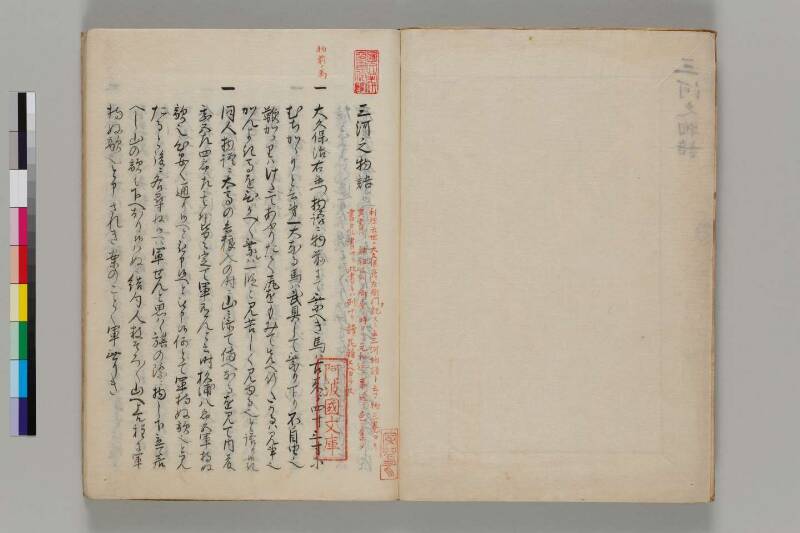
翻刻
三河之物語 《割書:利往云世ニ大久保彦左衛門カ記スト云三河物語ト云フ物三巻アリ|其書ハ 神祖三州ニ御座ノ時ヨリ元和迄ノ事迹ヲ色々集メ|書タル書ナリ此書トハ別ナリ読昆雑スヘカラズ【朱書】》
《割書: |物前ノ馬》【上段に朱書】
一 大久保治右衛門物語ニ物前にて乗へき馬ハ古来ゟ四寸三寸に
むちかゝりと云第一大なる馬ハ武具して乗り下り不自由也
鞭かゝりハけたてあふりたて尻をもみて先へ行たかるハ見事也
かんよき馬ひかへ〳〵乗レハ一段と見苦しく見ゆる也と語り候き
一 同人物語ニ大高の兵粮入の時ニ山々添て備へなるを見て内藤
甚五左四郎左其外皆々定て軍有んと云時杉浦八郎五軍持ぬ
敵也心安く通り候へと被申候へと被申候何とて軍持ぬ敵也と見
たると後ニ各尋ね候へハ軍せんと思ハ丶旗の際ニ物し下立て居
へし山の敵も下へおり候ハぬニ結句人数そろ〳〵山へ上ル程に軍
持ぬ敵也と申されき案のことく軍無りき
現代語訳
三河之物語《注記:利往という人が言うには、世に大久保彦左衛門が記したという「三河物語」という書物が三巻ある。その書は徳川家康が三州(三河国)におられた時から元和年間までの事跡を色々と集めて書いた書物である。この書とは別のものであり、混同してはならない【朱書】》
《注記:戦場での馬》【上段に朱書】
一 大久保治右衛門の話によると、戦場で乗るべき馬は古来より四寸三寸(体高四尺三寸の誤りか)で、鞭がかりと言われる。第一に大きな馬は武具をつけて乗り降りするのに不自由である。鞭がかりは蹴立て煽り立て尻を揉んで先へ行きたがるのが見事である。おとなしい馬を控え控え乗るのは一段と見苦しく見えると語られた。
一 同人の話によると、大高城への兵糧入れの時に、山々に沿って敵が備えを成しているのを見て、内藤甚五左衛門、四郎左衛門その他皆々がきっと戦いがあるだろうと言った時、杉浦八郎五(杉浦正重)が「戦う気のない敵である。安心して通られよ」と申された。なぜ戦う気のない敵だと見たのかと後に皆が尋ねると、「戦をしようと思えば旗の際に物見を下に立てて置くはずである。山の敵も下へ降りてこないのに、結局人数がぞろぞろと山へ上がる程なので戦う気のない敵だ」と申された。案の定、戦いはなかった。
英語訳
Tales of Mikawa 《Note: A person named Riō says that there exists in the world a three-volume work called "Tales of Mikawa" said to be written by Ōkubo Hikozaemon. That book is a compilation of various events from the time when the Divine Ancestor (Tokugawa Ieyasu) resided in Sanshū (Mikawa Province) until the Genna era. This book is separate from that one and should not be confused with it【written in red ink】》
《Note: Horses for the battlefield》【written in red ink in the upper section】
1. According to the story told by Ōkubo Jihemon, horses suitable for riding in battle have been traditionally four sun three sun (possibly an error for four shaku three sun in height) and called "whip-responsive." First of all, large horses are inconvenient for mounting and dismounting while wearing armor. Whip-responsive horses that kick up, rear up, knead their rumps and eagerly want to go forward are splendid. Riding gentle horses in a restrained manner appears quite unsightly, he said.
1. According to the same person's story, during the provision of supplies to Ōdaka Castle, when they saw enemy forces positioned along the mountains, Naitō Jingozaemon, Shirōzaemon and all the others said there would surely be a battle. At that time, Sugiura Hachirōgo (Sugiura Masashige) said, "These are enemies with no intention of fighting. Pass through with peace of mind." When everyone later asked why he judged them to be enemies with no fighting spirit, he replied, "If they intended to fight, they would have stationed lookouts below near their banners. Since the mountain enemies did not come down, and the troops were merely straggling up the mountain, I knew they were enemies with no intention of fighting." As expected, there was no battle.