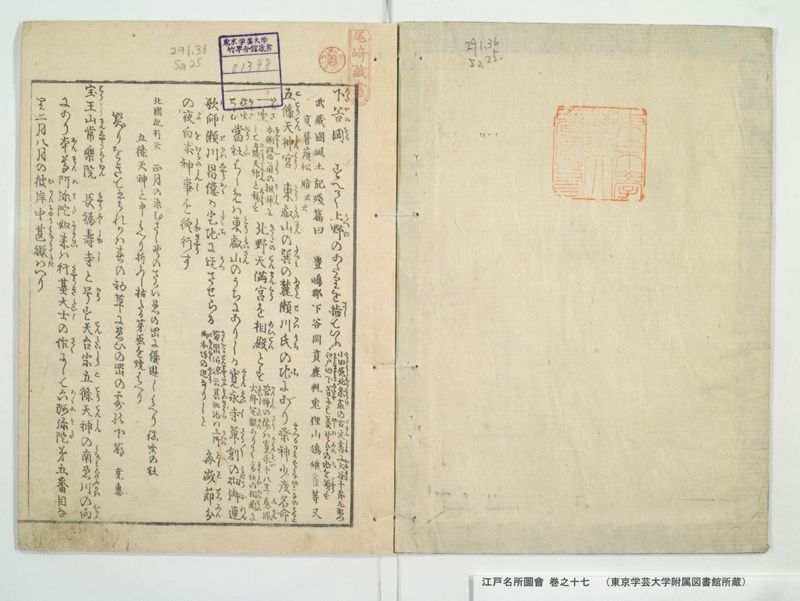
翻刻
【左丁】
下谷岡(したやのをか) すへて上野(うへの)のあたりを指(さし)ていふ《割書:小田原(をたはら)北条家(ほうてうけ)の古文書(こもんしよ)に大谷(おほたに)十郎左衛門|江戸回(えとまはり)下谷(したや)にて菱野分(ひしのふん)の地(ち)を領(りやう)す》
武蔵国風土記残篇曰 豊嶋郡下谷岡貢鹿狐兎狸山鴒雉雀等又
貢薯蕷松脂《割書:云云》
五條天神宮(こてうてんしんくう) 東叡山(とうえいさん)の巽(たつみ)の麓(ふもと)瀬川氏(せかはうち)の地(ち)にあり祭神(まつるかみ)少彦名彦命(すくなひこなのみこと)
一坐(いちさ)《割書:本朝(ほんてう)医道(いたう)の祖神(そしん)に|して五條天神(こてうてんしん)と称(しよう)す》北野天満宮(きたのてんまんくう)を相殿(あひてん)とす《割書:菅神(かんしん)の像(さう)は寛永(くわんえい)十八年 慈眼(しけん)|大師(たいし)開眼(かいけん)ありて当社(たうしや)の相殿(あひてん)に》
《割書:鎮坐(ちんざ)|せしむ》当社(たうしや)はしめは東叡山(とうえいさん)のうちにありしか寛永寺(くわんえいし)草創(さう〳〵)の砌(みきり)御連(おれん)
歌師(かし)瀬川昌億(せかはしやうおく)か宅地(たくち)に遷(うつ)【迁は俗字】させらる《割書:菊岡沾涼(きくをかせんりやう)云(いふ)其(その)旧地(きうち)は上野(うえの)|御本坊(こほんほう)の辺(あたり)なりしと》毎歳(としこと)節分(せつふん)
の夜(よ)白朮神事(をけらのしんし)を修行(しゆきやう)す
北国記行云 正月の末むさし野のさかい忍の岡に優遊しはへり鎮座の社
五條天神と申はへり折ふし枯たる茅原を焼はへり
契りをきてたれかは春の初草に忍ひの岡の露の下萌 堯恵
宝王山常楽院(はうわうさんしやうらくゐん) 長福寿寺(ちやうふくしゆし)と号(かう)す天台宗(てんたいしう)五條天神(こてうてんしん)の南(みなみ)忍川(しのふかは)の向(むかふ)
にあり本尊(ほんそん)阿弥陀如来(あみたによらい)は行基大士(きやうきたいし)の作(さく)にして六阿弥陀(ろくあみた)第五番目な
り二月八月の彼岸中(ひかんちゆう)甚(はなはた)賑(にき)はへり
現代語訳
【左丁】
下谷岡(したやのおか) 全て上野のあたりを指していう《小田原北条家の古文書に大谷十郎左衛門が江戸回り下谷にて菱野分の地を領したとある》
武蔵国風土記残篇に曰く、豊島郡下谷岡は鹿・狐・兎・狸・山鴒・雉・雀等を貢ぎ、また薯蕷・松脂を貢ぐ《云云》
五条天神宮(ごじょうてんじんぐう) 東叡山の巽の麓、瀬川氏の地にある。祭神は少彦名彦命一座《日本医道の祖神にして五条天神と称する》。北野天満宮を相殿とする《菅神の像は寛永十八年に慈眼大師が開眼して当社の相殿に鎮座させた》。
当社は初めは東叡山の内にあったが、寛永寺草創の際、御連歌師瀬川昌億の宅地に遷された《菊岡沾涼が言うには、その旧地は上野御本坊の辺りであったという》。毎年節分の夜に白朮神事を執り行う。
北国記行に云く、正月の末、武蔵野の境、忍の岡に優遊していた。鎮座の社は五条天神と申す。折しも枯れた茅原を焼いていた。
契りおきて誰かは春の初草に忍びの岡の露の下萌 堯恵
宝王山常楽院(ほうおうさんじょうらくいん) 長福寿寺と号する天台宗の寺。五条天神の南、忍川の向こうにある。本尊阿弥陀如来は行基大士の作で六阿弥陀第五番目である。二月・八月の彼岸中はたいへん賑わう。
英語訳
【Left Page】
Shitaya-oka (Shitaya Hill): Generally refers to the entire area around Ueno. 《According to ancient documents of the Odawara Hōjō family, Ōtani Jūrōzaemon held territory at Hishinobun in Shitaya during his rounds of Edo》
The remaining volumes of the Musashi Province Gazetteer state: "Shitaya-oka in Toshima District provides tribute of deer, foxes, rabbits, badgers, wagtails, pheasants, sparrows, etc., and also provides tribute of yams and pine resin" 《etc.》
Gojō Tenjin Shrine (Gojō Tenjin-gū): Located on the land of the Segawa family at the southeastern foot of Mount Tōei. The enshrined deity is Sukunahikona-no-mikoto, one seat 《the ancestral deity of Japanese medicine, called Gojō Tenjin》. Kitano Tenmangū is enshrined as a co-deity 《the statue of the Kan deity was consecrated by Great Master Jigen in the 18th year of Kan'ei and enshrined as a co-deity of this shrine》.
This shrine was originally within Mount Tōei, but when Kan'ei-ji Temple was established, it was moved to the residential land of the court poet Segawa Masaoku 《According to Kikuoka Senryō, the old site was around the main temple quarters of Ueno》. Every year on the night of Setsubun, the Okera Shinji (white atractylodes ritual) is performed.
The Hokoku Kikō states: "At the end of the first month, I wandered leisurely at Shinobugaoka on the border of Musashino. The enshrined shrine is called Gojō Tenjin. At that time, they were burning the withered miscanthus fields."
"Having made a promise, who would not wait for the spring's first grass, the dew beneath the sprouting plants of Shinobi Hill" - Gyōe
Hōōzan Jōrakuin (Mount Hōō, Jōraku Temple): Called Chōfukuju-ji, a Tendai sect temple. Located south of Gojō Tenjin, across the Shinobu River. The principal image, Amida Nyorai, was created by Great Master Gyōki and is the fifth of the Six Amida Buddhas. It becomes very lively during the equinoxes in February and August.