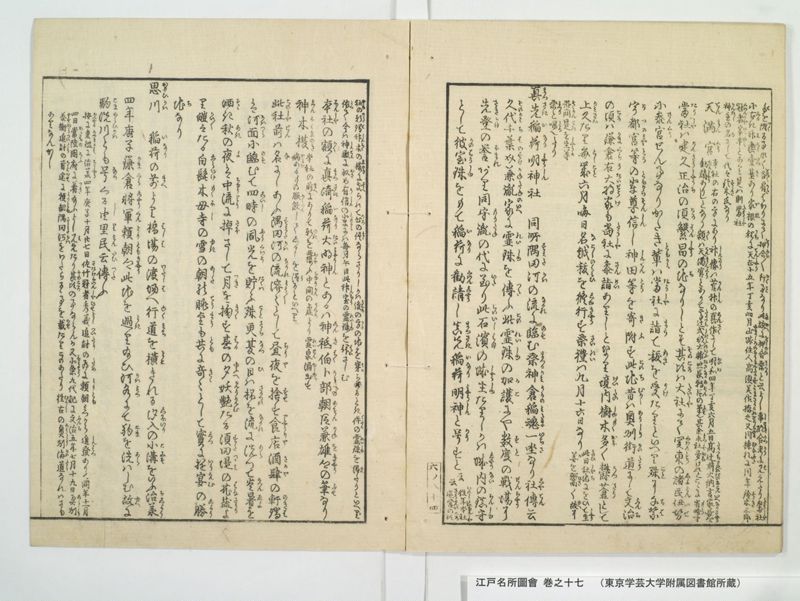
翻刻
【右丁】
《割書:手(て)を附(つく)る事なく各(をの〳〵)肩(かた)はかりにて押合(をしあひ)〳〵行事(ゆくこと)なり此故(このゆへ)に押合祭(をしあひまつり)と云よし事跡合考(しせきかつかう)に見(み)えたり当社(たうしや)|に古(ふる)き神輿(みこし)壱基(いつき)あり家根(やね)の裡(うち)に天正(てんしやう)十五年丁亥四月 山城住人(やましろのちうにん)高須美作(たかすみまさか)拵之(これをこしらゆる)又同 棟札(むなふた)に同年 鈴木三郎(すゝき )|冠者(くはんしや)家平(いへひら)とあり是は則 当社(たうしや)|神主(かんぬし)の名(な)にして代々 鈴木氏(すゝき )なり》
天満宮(てんまんくう)《割書:本社の右の方にあり神像(しんさう)は菅神(かんしん)の真作(しんさく)にして明和(めいわ)四年丁亥六月五日 高辻前大納言家長卿(たかつちさきのたいなこんいへなかきやう)|勧請(くはんしやう)ありしとなり額(かく)は天満宮(てんまんくう)とありて高辻式部大輔世長朝臣(たかつちしきふたいふひさなかあそん)の筆(ふて)也其余 末社(まつしや)多(おほ)けれとこゝに省略(もら)す》
当社(たうしや)は建久(けんきう)正治(しやうち)の頃(ころ)繁昌(はんしやう)の地(ち)なりしとそ其頃(そのころ)は大社(たいしや)にて関東(くはんとう)の諸民(しよみん)伊勢(いせ)
に参宮(さんくう)せん事なりかたき輩(ともから)は当社(たうしや)に詣(まう)て祓(ぬさ)を受(うけ)たりといへり殊(こと)に千葉(ちは)
宇都宮(うつのみや)等(とう)の輩(ともから)尊信(そんしん)し神田(しんてん)等(とう)を寄附(きふ)す此地(このち)昔(むかし)は奥州街道(あうしうかいたう)にして文治(ふんち)
の頃(ころ)は鎌倉右大将家(かまくらうたいせうけ)も当社(たうしや)に参詣(さんけい)ありしとなり境内(けいたい)樹木(しゆもく)多(おほ)く鬱蒼(うつさう)として
上久(かみさひ)たり毎歳(としこと)六月晦日 名越祓(なこしのはらひ)を修行(しゆきやう)す祭礼(さいれい)は九月十六日なり《割書:此日(このひ)社地(しやち)にをひて生(しやう)|姜(か)を鬻(ひさ)く故(ゆへ)に》
《割書:俗間(そくかん)是(これ)を生姜(しやうか)|祭(まつり)と唱(とな)えたり》
真先稲荷明神社(まつさきいなりみやうしん ) 同所 隅田河(すみたかは)の流(なかれ)に臨(のそ)む祭神(まつるかみ)倉稲魂(うかのみたま)一坐(いちさ)なり社伝(しやてん)云
久代(そのかみ)千葉介兼胤家(ちはのすけかねたねのいえ)に霊珠(れいしゆ)を伝(つた)ふ此(この)霊珠(れいしゆ)の加護(かこ)にや数度(すと)の戦場(せんちやう)に
先登(さきかけ)の誉(ほまれ)あり同 守胤(もりたね)の代に至(いた)り此(この)石浜(いしはま)の城主(しやうしゆ)たりしかは城内(しやうない)の鎮守(ちんしゆ)
として彼(かの)宝珠(ほうしゆ)をもて稲荷(いなり)に勧請(くはんしやう)し真先稲荷明神(まつさきいなりみやうしん)と号(かう)すと云云《割書:往年(いんしとし)本社(ほんしや)|造営(さうえい)の頃(ころ)》
【左丁】
《割書:社(やしろ)の軒端(のきは)神木(しんほく)の榎(ゑのき)に支(さゝへ)られて心(こゝろ)の儘(まゝ)ならさりしかは後(うしろ)の方(かた)の地を穿(うか)ちけるとき件(くたん)の霊珠(れいしゆ)を得(え)たりといへり|依(よつ)て今は神殿(しんてん)に収(おさ)め有信(うしん)の輩(ともから)には毎月午日 此 神宝(しんほう)の霊珠(れいしゆ)を拝(はい)さしむ》
本社(ほんしや)の額(かく)に真崎稲荷大明神(まつさきいなりたいみやうしん)とあるは神祇伯(しんきはく)卜部朝臣兼雄卿(うらへのあそんかねをきやう)の筆(ふて)なり
神木榎(しんほくゑのき)《割書:本社の前(まへ)にありて軒(のき)を覆(おほ)ふ中間(ちゆうかん)の虚(うつろ)より霊泉(れいせん)涌出(ゆしゆつ)す|病(やまひ)あるもの服飲(ふくいん)してしるしを得(う)るといへり》
此(この)社前(しやせん)は名(な)にしあふ隅田河(すみたかは)の流(なかれ)溶々(よう〳〵)として昼夜(ちうや)を捨(すて)す食店(りやうりや)酒肆(さかや)の軒端(のきは)
は河面(かはつら)に臨(のそ)むて四時(しいし)の風光(ふうくわう)を貯(たくは)ふ殊更(ことさら)夏(なつ)の日(ひ)は杯(さかつき)を流(なかれ)に洗(あら)つて炎暑(えんしよ)を
洒(そゝ)き秋(あき)の夜(よ)は中流(ちゆうりう)に棹(さほ)さして月(つき)を掬(きく)す春(はる)の夕(ゆふへ)妖艶(えうえむ)たる須田堤(すたつゝみ)の花盛(はなさかり)よ
り皚々(かい〳〵)たる白髭(しらひけ)木母寺(もくほし)の雪(ゆき)の朝(あした)の眺望(てうまう)も共(とも)に奇々(きゝ)として実(しつ)に遊宴(いうえむ)の勝(しよう)
地(ち)なり
思川(おもひかは) 稲荷(いなり)の前(まへ)より橋場(はしは)の渡場(わたしは)へ行道(ゆくみち)を横(よこ)きれる汐入(しほいり)の小溝(こみそ)をいふ治承(ちしよう)
四年庚子 鎌倉将軍(かまくらしやうくん)頼朝卿(よりともきやう)此地を過(よき)り給ひ河水(かはみつ)にて駒(こま)を洗(あら)はしむ故(ゆへ)に
駒洗川(こまあらひかは)とも号(なつ)くる由(よし)里民(りみん)云伝(いひつた)ふ
《割書:按(あんする)に東鑑(あつまかゝみ)に治承(ちしやう)四年庚子十月廿七日 佐竹冠者秀義(さたけくはんしやひてよし)追討(ついたう)の為(ため)に頼朝(よりとも)みつから進発(しんはつ)ありて同年十一月|四日 常陸国府(ひたちのこくふ)に着(つき)給(たま)ふよし見(み)えたり其頃(そのころ)の事ならんか又 北条(ほうてう)九代記に文治(ふんち)五年七月十九日 奥州(あうしう)|泰衡(やすひら)追討(ついたう)の首途(かといて)に頼朝(よりとも)隅田河(すみたかは)をわたらるゝ事を載(のせ)たりこのあたり往古(むかし)の奥州海道(あうしうかいたう)なれはさも|ありなんかし》
現代語訳
【右丁】
手を使わずに、それぞれが肩だけで押し合って進むことから、これを「押合祭」と呼ぶと『事跡合考』に記されている。当社には古い神輿が一基あり、屋根の内側に「天正十五年丁亥四月 山城住人高須美作がこれを作る」とあり、また同じ棟札に同年「鈴木三郎冠者家平」とある。これは当社の神主の名前で、代々鈴木氏が務めている。
天満宮(本社の右側にあり、神像は菅原道真の真作で、明和四年丁亥六月五日に高辻前大納言家長卿が勧請したという。額には「天満宮」とあり、高辻式部大輔世長朝臣の筆である。その他末社も多いが、ここでは省略する)
当社は建久・正治の頃(12世紀末~13世紀初頭)に繁栄した土地であった。その頃は大きな神社で、関東の人々で伊勢神宮に参詣することが困難な者は、当社に詣でて祓いを受けたという。特に千葉氏や宇都宮氏などが信仰し、神田などを寄附した。この地は昔は奥州街道で、文治の頃には鎌倉右大将源頼朝も当社に参詣したという。境内には樹木が多く、うっそうと茂っている。毎年六月晦日に名越の祓いを行う。祭礼は九月十六日である(この日、境内で生姜を売るため、俗に「生姜祭り」と呼ばれている)。
真先稲荷明神社 同所、隅田川の流れに面している。祭神は倉稲魂命一座である。社伝によると、
昔、千葉介兼胤の家に霊珠が伝わっていた。この霊珠の加護により、数度の戦場で先陣の誉れがあった。同じく守胤の代になって、この石浜の城主となったので、城内の鎮守として、その宝珠をもって稲荷神を勧請し、真先稲荷明神と号したという(往年、本社造営の頃、
【左丁】
社の軒先が神木の榎に支えられて思うようにならなかったので、後ろの方の地を掘ったとき、その霊珠を得たという。よって今は神殿に収め、信心深い人には毎月午の日に、この神宝の霊珠を拝ませている)
本社の額に「真崎稲荷大明神」とあるのは、神祇伯卜部朝臣兼雄卿の筆である。
神木の榎(本社の前にあって軒を覆っている。幹の空洞から霊泉が湧き出し、病気の人が飲んで効験を得るという)
この社前は名高い隅田川の流れがゆったりと昼夜を問わず流れている。料理屋や酒屋の軒先は川面に臨んで、四季の風光を蓄えている。特に夏の日は杯を流れで洗って暑さを払い、秋の夜は川の中ほどに棹をさして月を愛でる。春の夕べの妖艶な墨田堤の花盛りから、真っ白な白髭・木母寺の雪の朝の眺望も、ともに奇異で、実に遊宴の勝地である。
思川 稲荷の前から橋場の渡し場へ行く道を横切る潮入りの小さな溝をいう。治承四年庚子(1180年)、鎌倉将軍源頼朝がこの地を通り、川水で馬を洗わせたので、駒洗川とも呼ぶと里人が語り伝えている。
(考察するに、『吾妻鏡』に治承四年庚子十月二十七日、佐竹冠者秀義追討のために頼朝自ら出発し、同年十一月四日に常陸国府に到着したとある。その頃のことであろうか。また『北条九代記』に文治五年七月十九日、奥州の藤原泰衡追討の出発に際して頼朝が隅田川を渡ったことを記している。このあたりは昔の奥州街道なので、そうしたこともあったのであろう)
英語訳
【Right Page】
Without using hands, people push against each other using only their shoulders as they proceed, which is why this is called the "Oshiai Festival" (Pushing Festival), as recorded in the "Shiseki Gōkō." The shrine possesses an ancient portable shrine (mikoshi) with an inscription inside the roof stating "Made by Takasu Mimasaka, resident of Yamashiro Province, in the fourth month of Tenshō 15 (1587)." Another ridge plaque from the same year bears the name "Suzuki Saburō Kanja Iehira." This is the name of the shrine's head priest, as the Suzuki family has served in this capacity for generations.
Tenman-gū Shrine (Located to the right of the main shrine, the divine image is said to be a true work of Sugawara no Michizane, and it was established through the solicitation of Former Minister of the Left Takatsuji Ienaga on the fifth day of the sixth month of Meiwa 4 (1767). The plaque reads "Tenman-gū" and is written by Takatsuji Shikibu-taifu Hisanaga Ason. There are many other subsidiary shrines, but they are omitted here.)
This shrine was a prosperous location during the Kenkyū and Shōji periods (late 12th to early 13th century). At that time it was a major shrine, and people from the Kantō region who found it difficult to make pilgrimage to Ise Shrine would visit this shrine to receive purification rites. Particularly the Chiba and Utsunomiya clans showed devotion and donated sacred rice fields. This area was formerly on the Ōshū Highway, and during the Bunji period, Minamoto no Yoritomo, the Right General of Kamakura, is said to have visited this shrine. The precincts are filled with many trees growing luxuriantly. Every year on the last day of the sixth month, the Nagoshi purification ritual is performed. The festival is held on September 16th (on this day, ginger is sold within the shrine grounds, which is why it is commonly called the "Ginger Festival").
Massaki Inari Myōjin Shrine - Located in the same area, facing the flow of the Sumida River. The enshrined deity is Ukanomitama no Mikoto. According to shrine tradition:
Long ago, the house of Chiba no Suke Kanetane possessed a sacred jewel. Through the protection of this sacred jewel, they gained honor as vanguard warriors in numerous battles. In the generation of Moritane, when he became lord of Ishihama Castle, he enshrined Inari with this precious jewel as the castle's tutelary deity and named it Massaki Inari Myōjin. (In past years, during the construction of the main shrine,
【Left Page】
the shrine's eaves were supported by the sacred keyaki tree, making construction difficult, so when they excavated the ground behind it, they discovered this sacred jewel. Therefore, it is now kept in the shrine hall, and on every Horse Day of each month, faithful devotees are allowed to worship this sacred treasure.)
The plaque on the main shrine reading "Masaki Inari Daimyōjin" is written by Urabe no Ason Kaneo, the Shinto Ceremonial Chief.
The Sacred Keyaki Tree (Located in front of the main shrine, covering the eaves. A sacred spring bubbles up from the hollow of the trunk, and it is said that sick people who drink from it receive healing.)
In front of this shrine flows the famous Sumida River, flowing gently day and night. The eaves of restaurants and sake shops face the river surface, capturing the scenic beauty of all four seasons. Especially on summer days, cups are washed in the current to dispel the heat, and on autumn nights, poles are pushed into the midstream to admire the moon. From the enchanting cherry blossoms of Sumida Embankment in spring evenings to the brilliant white snow of Shirahige and Mokuboji temples on winter mornings, the views are all extraordinary, making this truly an excellent place for entertainment and banquets.
Omoi River - This refers to a small tidal inlet that crosses the road from in front of the Inari shrine to the Hashiba ferry crossing. In Jishō 4 (1180), Kamakura Shogun Minamoto no Yoritomo passed through this area and had his horse washed in the river water, which is why local people say it is also called Koma-arai River (Horse-washing River).
(Upon consideration, the "Azuma Kagami" records that on the 27th day of the 10th month of Jishō 4, Yoritomo personally departed to pursue Satake Kanja Hideyoshi, arriving at Hitachi Provincial Office on the 4th day of the 11th month of the same year. This may refer to events from that time. Also, the "Hōjō Kudai-ki" records that on the 19th day of the 7th month of Bunji 5, Yoritomo crossed the Sumida River when departing to pursue Fujiwara no Yasuhira of Ōshū. Since this area was on the ancient Ōshū Highway, such events would indeed have been possible.)