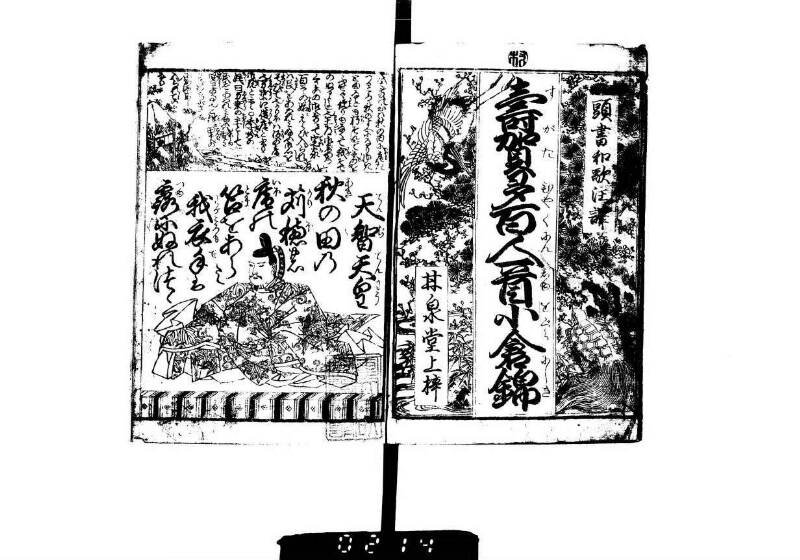
翻刻
【右頁】
頭書和歌注訳
寿賀多(すがた)百人(ひやくにん)一 首(しゆ)小倉錦(をぐらにしき)
甘泉堂上梓
【左頁中】
天智(てんぢ)天皇(てんわう)
秋(あき)の田(た)の
苅穂(かりほ)の
庵(いほ)の
苫(とま)をあらみ
我衣(わがころも)手(で)は
露(つゆ)にぬれつゝ
【左頁上】
此哥【歌】の心は秋の田に庵(いほり)た
つるころ秋のすへになりゆき
とまなども朽(くち)そんじて露(つゆ)を
ふせぐ便(たよ)りもなくて我(わが)そで
のぬるゝよし也 王道(わうだう)御じゆつ
くわい【述懐】の御哥にて定家(ていか)
百首の始(はじめ)にえらび入れられし
は民(たみ)をあはれみ給ふ御心を
尊(たつと)びて也かりほは仮(かり)の庵
也 万葉(まんよう)に借(かり)庵(ほ)と書り
御 説(せつ)と云々〇 季吟(きぎん)の
注(ちう)に曰 万乗(ばんでう)の主(あるじ)として
民をあはれみ給ふは聖主(せいしゆ)
賢王(けんわう)の事也と殊(こと)に田夫(でんぶ)の
わざをつぶさ
におほしめし
入れられしてい
なり
現代語訳
【右頁】
頭書和歌注訳
寿賀多(すがた)百人(ひゃくにん)一首(いっしゅ)小倉錦(おぐらにしき)
甘泉堂上梓
【左頁中】
天智(てんち)天皇(てんのう)
秋の田の
刈穂の
庵の
苫をあらみ
我が衣手は
露にぬれつつ
【左頁上】
この歌の心は、秋の田に庵を建てる頃、秋の終わりになっていき、苫なども朽ち損じて露を防ぐ手立てもなくて、我が袖が濡れるという意味である。王道御述懐の御歌にて、定家百首の始めに選び入れられたのは、民を憐れみ給う御心を尊んでのことである。刈穂は仮の庵である。万葉集に「借庵」と書かれている御説という。季吟の注に曰く、万乗の主として民を憐れみ給うは聖主賢王のことであるとあり、特に田夫の業をつぶさに思し召し入れられた帝であるということである。
英語訳
【Right Page】
Annotated Translation of Waka with Headnotes
Sugata (Figures) One Hundred Poets, One Poem Each: Ogura Brocade
Published by Kansensha
【Left Page Middle】
Emperor Tenji
In the autumn fields,
At the harvest hut
Where they cut the grain—
The rough thatch gives no shelter,
And my sleeves are wet with dew.
【Left Page Top】
The meaning of this poem is that around the time when huts are built in autumn fields, as autumn comes to an end, the thatch and other materials decay and deteriorate, leaving no means to ward off the dew, so that one's sleeves become wet. This is His Majesty's poem of personal reflection on the imperial way, and it was selected to begin Teika's collection of one hundred poems because it honors His Majesty's compassionate heart toward the people. "Kariho" refers to a temporary hut. According to imperial commentary, it is written as "borrowed hut" in the Man'yōshū. Kigin's commentary states that for the sovereign of ten thousand chariots to show compassion for the people is the mark of a sage ruler and virtuous king, and that this emperor particularly took to heart the detailed work of farmers.