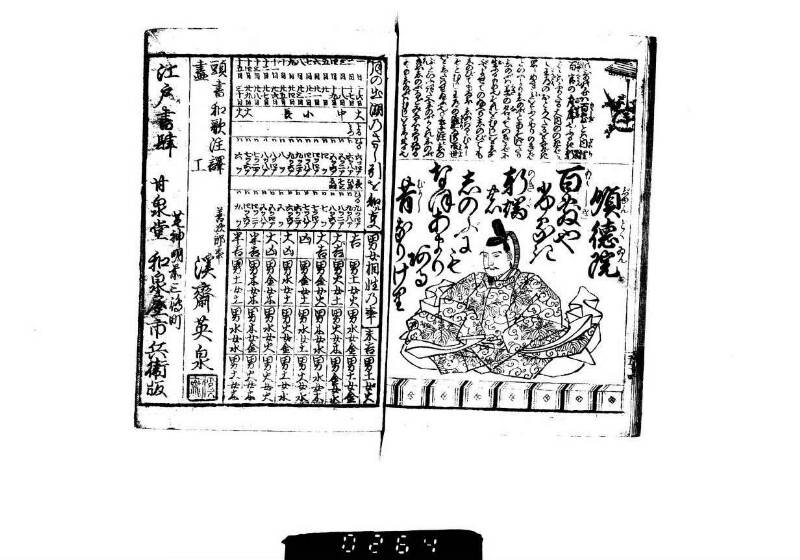
翻刻
【右頁中】
順徳院(じゆんとくいん)
百敷(もゝしぎ)や
ふるき
軒端(のきば)
の
しのぶにも
なほあまりある
昔(むかし)なりけり
一【右頁上】
此哥の心は百敷(もゝしぎ)とは内裡(だいり)
百官(ひやくくわん)の座席(ざせき)也ふるき軒(のき)
ばとはふりたる大内ののきばに
て王道(わうだう)のおとろへたるをなげき
思しめす意(い)をふくめりのきば
といふよりしのぶとあそばしたり
しのぶは草(くさ)の名(な)にてのきばに
生(お)ふるもの也それをむかしをしの
ぶによせての給ヘりしのびても
しのびてもなほしのばるゝむかし
そとむかし王道の盛(さかり)なりし御世(みよ)
をしたはせ給ふ也◯季注にしの
ぶといふ詞たへしのぶかくれしのぶ
恋(こひ)しのぶなどみな心かはり侍る
こゝのしのぶはむかしをしたへる也
【左頁上】
月の出潮のさし引きを知る事
【(日)】 【(潮)】【(説明)】 【(時刻)】 【(説明)】 【(時刻)
一 日 十六日 大 よる ひる 六ツ四部【(分?)】 夜 ひる 九ツ四部
二 日 十七日 みつ 〃 六ツ八部 ひき 〃 九ツ八部
三 日 十八日 中 【(満潮)】 〃 五ツ二部 そこ 〃 八ツ二部
四 日 十九日 〃 五ツ六部 る時 〃 八ツ六部
五 日 廿 日 〃 四 ツ 【(干潮)】〃 七 ツ
六 日 廿一日 〃 四ツ四部 〃 七ツ四部
七 日 廿二日 小 〃 四ツ八部 〃 七ツ八部
八 日 廿三日 〃 九ツ二部 〃 六ツ二部
九 日 廿四日 〃 九ツ六部 〃 六ツ六部
長
十 日 廿五日 〃 八 ツ 〃 五 ツ
十一日 廿六日 〃 八ツ四部 〃 五ツ四部
十二日 廿七日 〃 八ツ八部 〃 五ツ八部
十三日 廿八日 〃 七ツ二部 〃 四ツ二部
十四日 廿九日 大 〃 七ツ六部 〃 四ツ六部
十五日 三十日 大 〃 六 ツ 〃 九 ツ
【左頁下】
この表の読み方がわかりませんので どなたかご教示くださいませ】
【(生年(月)に対応する木火土金水の五行を用いた男女の相性占いらしい)】
男女相性の事 末吉 男土女火
吉 男土女火 男水女金 男土女金
大吉男火女土 男火女木 男金女水
大吉男金女火 男木女水 男水女木
凶 男金女土 男水女土 男火女水
大凶男水女土 男火女金 男土女水
大凶男金女木 男水女火 男火女火
半吉男木女木 男木女金 男火女木
半吉男土女土 男水女水 男土女木
【左頁後半】
頭書和歌注訳 善次郎事
画 工 渓斎英泉 【印】
芝神明前三島町
江戸書肆 甘泉堂 和泉屋市兵衛版
現代語訳
【右頁中】
順徳院(じゅんとくいん)
百敷や
古き
軒端の
しのぶにも
なお余りある
昔なりけり
【右頁上】
この歌の心は、百敷とは内裏で百官の座席のことである。古き軒端とは古びた大内の軒端で、王道の衰えたことを嘆きお思いになる意を含んでいる。軒端というところから「しのぶ」とお詠みになった。しのぶは草の名で軒端に生えるものである。それを昔を偲ぶに寄せておっしゃった。偲んでも偲んでもなお偲ばれる昔よ、と昔王道の盛んであった御世を慕われることである。季注に「しのぶ」という言葉は、堪え忍ぶ、隠れ忍ぶ、恋い慕う、などみな心が変わる。ここの「しのぶ」は昔を慕うことである。
【左頁上】
月の満ち欠けと潮の干満を知る表
(1日目〜15日目の月齢16日〜30日に対応する大潮・中潮・小潮・長潮の分類と、昼夜の満潮・干潮時刻を時刻と分で表示した潮汐表)
【左頁下】
男女相性について
末吉:男土女火
吉:男土女火、男水女金、男土女金
大吉:男火女土、男火女木、男金女水、男金女火、男木女水、男水女木
凶:男金女土、男水女土、男火女水
大凶:男水女土、男火女金、男土女水、男金女木、男水女火、男火女火
半吉:男木女木、男木女金、男火女木、男土女土、男水女水、男土女木
【左頁末尾】
頭書和歌注釈 善次郎筆
画工 渓斎英泉
江戸書肆 芝神明前三島町 甘泉堂 和泉屋市兵衛版
英語訳
【Right page center】
Juntoku-in (Retired Emperor Juntoku)
At the hundred-mat palace,
even the shinobu ferns
growing on the old
eaves
cannot contain all
the memories of the past
【Right page top】
The heart of this poem: "Momoshiki" refers to the imperial palace and the seats of the hundred court officials. "Old eaves" refers to the aged eaves of the great palace, containing the emperor's grief and thoughts about the decline of the imperial way. From "eaves" he composed "shinobu" (remembering/fern). Shinobu is the name of a fern that grows on eaves. He used this as a metaphor for remembering the past. "No matter how much I remember, there is still more to remember of the past"—he longs for the bygone era when the imperial way flourished. In seasonal notes, the word "shinobu" has different meanings: enduring patiently, hiding in secrecy, yearning in love—all have different nuances. Here "shinobu" means longing for the past.
【Left page top】
Table for knowing lunar phases and tidal movements
(A tidal table showing spring tide, medium tide, neap tide, and long tide classifications corresponding to lunar days 16-30 of days 1-15, with daytime and nighttime high and low tide times displayed in hours and quarters)
【Left page bottom】
Regarding male-female compatibility:
Barely auspicious: Male Earth, Female Fire
Auspicious: Male Earth Female Fire, Male Water Female Metal, Male Earth Female Metal
Very auspicious: Male Fire Female Earth, Male Fire Female Wood, Male Metal Female Water, Male Metal Female Fire, Male Wood Female Water, Male Water Female Wood
Inauspicious: Male Metal Female Earth, Male Water Female Earth, Male Fire Female Water
Very inauspicious: Male Water Female Earth, Male Fire Female Metal, Male Earth Female Water, Male Metal Female Wood, Male Water Female Fire, Male Fire Female Fire
Half auspicious: Male Wood Female Wood, Male Wood Female Metal, Male Fire Female Wood, Male Earth Female Earth, Male Water Female Water, Male Earth Female Wood
【Left page end】
Annotated Waka Poetry Commentary by Zenjirō
Illustrated by Keisai Eisen
Edo bookseller: Kansentō, Izumiya Ichibē edition, Shiba Shinmei-mae Mishima-chō