翻刻
【右丁】
権中納言定家卿は 《割書:これまで|八丁口絵》広重
俊成卿の御子なり
人代七八代乃帝
二條院応保二年に
誕生し貞永二年十
廿十月十一日に遁世して
明静と号す後仁治
二年八月二日逝去ある
年八十才京極黄門
と申定家卿迄称す
小倉の山荘に在して
此百人一首をえらみ
給ふ此百首は花を少
しおきて実を宗と
せしは和歌の本意を
尊びたまふがゆへ也
御子為家卿の時はじ
めて世にあらはれし
より後世のいまに至る
まで諸人これを尊び
用ゆる
しのばれん
ものとはなしに
をぐらやま
のきばのまつの
なれてひき
【左丁】
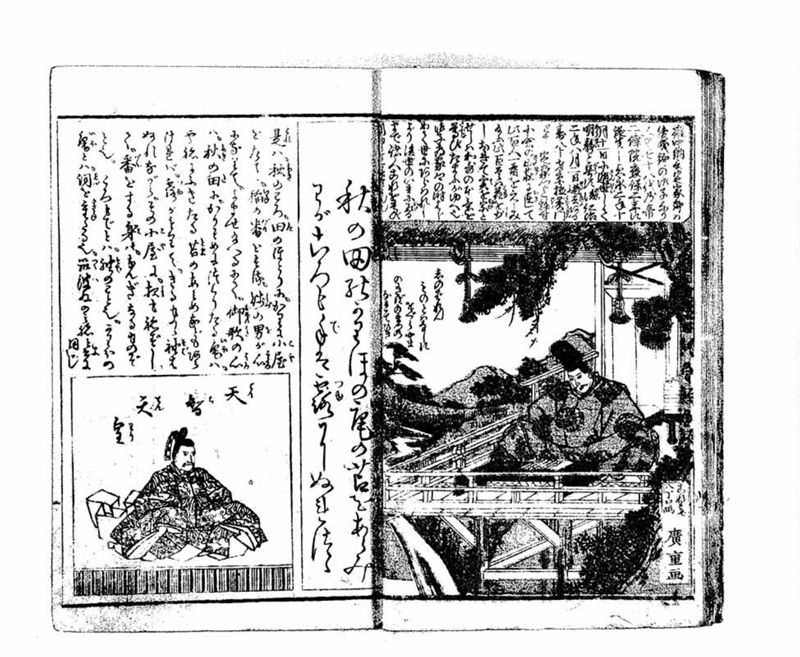
秋の田のかりほの庵の苫をあらみ
わがころも手は露にぬれつゝ
是は秋のころ田のほとりにかりに小屋
をたて稲の番をす賤の男が心
になりてよませ給へるにて御歌の心 天
は秋の田にかりそめにつくりたる庵は
やねにふきたる苫のあみめなどもあら 智
ければ露がもりてきるものゝ袖は
ぬれながらその小屋に夜もねずし 天
て番をする身はなんぎなるものぞ
と也。ころもでとは袖のこと也。かりほの 皇
庵とは詞を重たる也。筑波ねのみねと云に
同じ
現代語訳
【右丁】
権中納言定家卿は俊成卿の息子である。人皇七十八代の帝である二条院の応保二年(1162年)に誕生し、貞永二年(1233年)十月十一日に出家して明静と号した。後に仁治二年(1241年)八月二日に逝去した。享年八十歳。京極黄門とも称される定家卿は、小倉の山荘にいてこの百人一首を選んだ。この百首は表面的な美しさより内容の充実を重視したのは、和歌の本質を尊重されたからである。息子の為家卿の時代に初めて世に広まり、後世の現在に至るまで多くの人々がこれを尊重し愛用している。
忍ばれん
物とはなしに
をぐらやま
のきばのまつの
なれてひき
【左丁】
秋の田のかりほの庵の苫をあらみ
わがころも手は露にぬれつつ
これは秋の頃、田のほとりに仮の小屋を建てて稲の番をする身分の低い男の心になって詠まれた歌である。この歌の意味は、秋の田に一時的に作った庵は、屋根に葺いた苫の網目なども粗いので露が漏れてくるため、着物の袖は濡れながらもその小屋で夜も眠らずに番をする身は大変なものだということである。「ころも手」とは袖のことである。「かりほの庵」とは同じ意味の言葉を重ねたものである。「筑波嶺の峰」というのと同じである。
右上:天智天皇
英語訳
【Right Page】
Minister of the Middle Rank Teika was the son of Lord Toshinari (Shunzei). He was born in the second year of Ōhō (1162) during the reign of Emperor Nijō, the 78th emperor. He became a monk in the second year of Jōei (1233) on the 11th day of the 10th month, taking the Buddhist name Myōjō. He later passed away on the 2nd day of the 8th month in the second year of Ninji (1241) at the age of 80. Lord Teika, also known as Kyōgoku-no-kōmon, selected this collection of One Hundred Poems while residing at his mountain villa in Ogura. These one hundred poems prioritized substance over superficial beauty because he revered the true essence of waka poetry. The collection first became known to the world during the time of his son, Lord Tameie, and from then until the present day, many people have revered and used it.
Shinobaen
mono to wa nashi ni
Ogurayama
nokiba no matsu no
narete hiki
【Left Page】
Aki no ta no / kariho no io no / toma o arami / waga koromo-de wa / tsuyu ni nuretsusu
(The temporary hut in the autumn fields has a rough thatch roof, so my sleeves are constantly wet with dew)
This poem was composed from the perspective of a humble man who builds a temporary hut by the rice fields in autumn to guard the crops. The meaning of the poem is: the temporary hut built in the autumn fields has such a coarse thatch roof with loose weaving that dew leaks through, and while my sleeves get wet, I must stay in this hut without sleeping through the night to guard the crops—what a difficult life this is. "Koromo-de" means sleeves. "Kariho no io" uses redundant words with the same meaning, just like saying "Tsukuba-ne no mine."
Upper right: Emperor Tenji