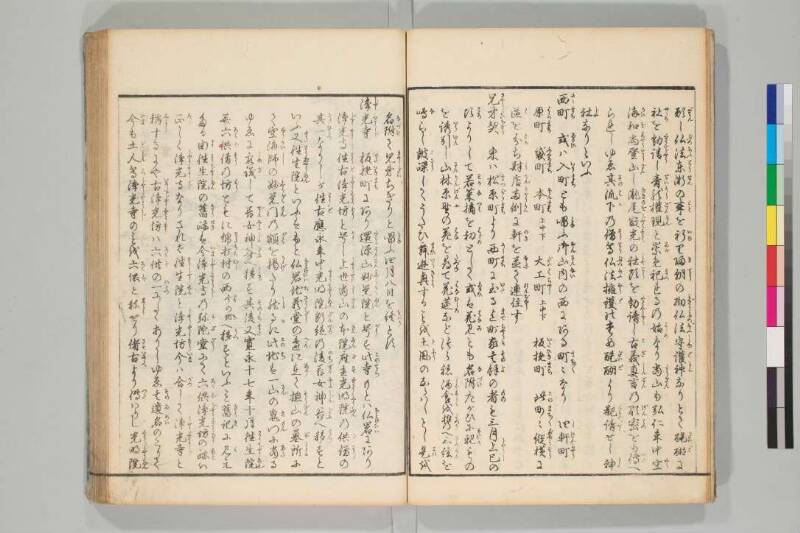
翻刻
【右丁】
願(ぐわん)し仏法(ぶつほふ)東漸(とうせん)の事(こと)を祈(いの)り帰朝(きてう)の砌(みぎり)仏法(ふつぼふ)守護神(しゆごじん)なりとて醍醐(だいご)に
社(やしろ)を勸請(くわんじやう)し青龍權現(せいりうごんげん)と崇(あが)め祀(まつ)れるの始(はじめ)なり當山(たうざん)も弘仁年中 空(くう)
海和尚(かいをしやう)登山(とうざん)し瀧尾(たきのを)寂光(じやくくわう)の社頭(しやとう)を勸請(くわんしやう)し古義(こぎ)真言(しんごん)の顕密(げんみつ)をも傳(つた)へ
られしゆゑ其(その)派下(はか)の僧等(そうとう)仏法(ぶつほふ)擁護(おうご)のため醍醐(だいご)より勸請(くわんじやう)せし神(じん)
社(じや)なりといふ
西町(にしまち) 或(あるひ)は入町(いりまち)とも唱(とな)ふ御山内(おんさんない)の西にある町(まち)〻(〳〵)なり 四軒町(しけんちやう)
原町(はらまち) 袋町(ふくろまち) 本町(ほんまち)《割書:上中下》 大工町(だいくちやう)《割書:上中下》 板挽町(いたひきまち) 此(この)町(まち)〻(〳〵)縦横(じゆうわう)に
區(く)を分(わか)ち肆店(してん)両側(りやうかは)に軒(のき)を並(ならべ)て連住(れんぢゆう)す
兄㐧契(きやうだいちぎり) 東は松原町(まつばらまち)より西町(にしまち)に至(いた)る迄(まで)町家(ちやうか)其餘(そのよ)の者(もの)も三月 上巳(じやうし)の
頃(ころ)よりして若菜摘(わかなつみ)を初(はじめ)として或(あるひ)は花見(はなみ)とも名附(なづけ)たがひに親(したしき)もの
を誘引(いういん)し山林(さんりん)原㙒(げんや)の花(はな)を尋(たづね)て花筵(はなむしろ)などつらね酒色(しゆしよく)を携(たづさ)へ三絃(さんげん)を
鳴(な)らし皷躁(こさう)してうたひ舞(まひ)逰興(いうきよう)することを土風(とふう)のならはしとし是(これ)を
【左丁】
名附(なづけ)て兄㐧(きやうだい)ちぎりと唱(とな)ふ四月八日を終(をはり)とす
浄光寺(じやうくわうじ) 板挽町(いたひきまち)にあり還源山(くわんげんさん)妙覚院(みやうかくゐん)と号(がう)す此寺(このてら)もとは仏岩(ほとけいは)にあり
浄光寺(じやうくわうじ)徃古(わうご)浄光防(じやうくわうばう)と号(がう)し上世(じやうせい)當山(たうざん)の本院(ほんゐん)座主(ざす)光明院(くわうみやうゐん)の供僧(ぐそう)の
其一(そのひとつ)なりしが徃古(わうご)應永年中 光明院(くわうみやうゐん)断絶(だんぜつ)の後(のち)善女神谷(ぜんによじんだに)へ移(うつ)すと
いふ又(また)徃生院(わうじやうゐん)といふはもと仏岩(ほとけいは)地蔵堂(ぢさうだう)の邊(へん)に在(あり)て摠山(そうざん)の墓所(ぼしよ)に
て空海師(くうかいし)の妙覚門(みやうがくもん)の額(がく)を掲(かゝげ)たり然(しか)るに此地(このち)は一 山(さん)の鬼門(きもん)に當(あた)る
ゆゑに衆議(しゆぎ)して善女神谷(ぜんによじんだに)へ移(うつ)す其後(そのゝち)又(また)寛永十七年十月 徃生院(わうじやうゐん)
并 六供僧(ろくぐそう)の坊(ばう)ともに綿内村(わたうちむら)の西《割書:今(いま)の地(ち)》へ移(うつ)すといふこと《振り仮名:𦾔記|きうき》に見(み)え
たる由(よし)徃生院(わうじやうゐん)の《振り仮名:𦾔跡|きうせき》は今(いま)浄光寺(じやうくわうじ)の弥陀堂(みだだう)にて六供(ろくぐ)浄光坊(じやうくわうばう)の跡(あと)は
正(たゞ)しく浄光寺(じやうくわうじ)なりされば徃生院(わうじやうゐん)と浄光坊(じやうくわうばう)今(いま)は合(がつ)して浄光寺(じやうくわうじ)と
稱(しよう)するにや古(いにしへ)浄光坊(じやうくわうばう)は六供(ろくぐ)の一(ひとつ)にしてありしゆゑ其(その)遺名(ゐめい)のこりて
今(いま)も土人等(どじんら)浄光寺(じやうくわうじ)のことを六供(ろくぐ)と称(しよう)せり偖(さて)古(いにしへ)より傳(つた)はりし光明院(くわうみやうゐん)
現代語訳
【右丁】
願いをかけて仏法東漸の事を祈り、帰朝の際に仏法守護神であるとして醍醐に社を勧請し、青龍権現と崇め祀ったのが始まりである。当山も弘仁年中、空海和尚が登山し、瀧尾・寂光の社頭を勧請し、古義真言の顕密をも伝えられたため、その派下の僧等が仏法擁護のために醍醐より勧請した神社であるという。
西町 あるいは入町とも唱える。御山内の西にある町々である。四軒町、原町、袋町、本町(上中下)、大工町(上中下)、板挽町。この町々は縦横に区を分かち、店舗が両側に軒を並べて連住している。
兄弟契 東は松原町より西町に至るまで、町家その余の者も三月上巳の頃よりして若菜摘みを初めとして、あるいは花見とも名付け、互いに親しい者を誘い、山林原野の花を尋ねて花筵などを連ね、酒食を携え、三絃を鳴らし、鼓を叩いて歌い舞い遊興することを土風の習わしとし、これを
【左丁】
名付けて兄弟契りと唱える。四月八日を終わりとする。
浄光寺 板挽町にある。還源山妙覚院と号する。この寺はもとは仏岩にあり、浄光寺は往古浄光坊と号し、上世当山の本院座主光明院の供僧の一つであったが、往古応永年中光明院断絶の後、善女神谷へ移すという。また往生院というのはもと仏岩地蔵堂の辺にあって総山の墓所にて、空海師の妙覚門の額を掲げていた。しかしこの地は一山の鬼門に当たるため、衆議して善女神谷へ移す。その後また寛永十七年十月、往生院並びに六供僧の坊ともに綿内村の西(今の地)へ移すということが旧記に見えている由。往生院の旧跡は今の浄光寺の弥陀堂にて、六供浄光坊の跡は正しく浄光寺である。されば往生院と浄光坊は今は合して浄光寺と称するのであろうか。古来浄光坊は六供の一つであったため、その遺名が残って、今も土人等は浄光寺のことを六供と称している。さて古来より伝わりし光明院
英語訳
【Right Page】
He made a vow and prayed for the eastward transmission of Buddhism, and upon his return to Japan, he established a shrine at Daigo, revering it as a guardian deity of Buddhism and enshrining it as Seiryū Gongen. This was the beginning. At our mountain too, during the Kōnin era, the monk Kūkai climbed the mountain and established shrines at Takino-o and Jakkō, transmitting both the exoteric and esoteric teachings of the Old Shingon school. It is said that this shrine was established by his followers, who invited the deity from Daigo for the protection of Buddhism.
West Town: Also called Iri-machi (Entrance Town). These are the towns located west of the sacred mountain precincts: Shiken-chō, Hara-machi, Fukuro-machi, Hon-machi (Upper, Middle, Lower), Daiku-chō (Upper, Middle, Lower), and Itahiki-machi. These towns are divided into districts both lengthwise and crosswise, with shops lining both sides of the streets in continuous rows.
Kyōdai-chigiri (Brotherhood Pact): From the east at Matsubara-machi to the west at Nishi-machi, townspeople and others, starting from around the third month's Jōshi festival, begin with picking young herbs, sometimes calling it flower viewing, inviting close friends to seek flowers in mountains and fields, spreading flower mats, carrying food and drink, playing the shamisen, beating drums, singing and dancing for entertainment as a local custom, which they call
【Left Page】
"Brotherhood Pact," ending on the eighth day of the fourth month.
Jōkō-ji Temple: Located in Itahiki-machi, it is called Kangen-san Myōkaku-in. This temple was originally at Hotoke-iwa. Jōkō-ji was formerly called Jōkō-bō and was one of the attendant monks of Kōmyō-in, the head temple and chief priest of our mountain in ancient times. After Kōmyō-in was discontinued during the Ōei period in ancient times, it was moved to Zennyo-shin Valley. Also, what was called Ōjō-in was originally located near the Jizō Hall at Hotoke-iwa, serving as the cemetery for the entire mountain, displaying a plaque reading "Myōgaku-mon" by Master Kūkai. However, since this location corresponded to the demon gate (unlucky direction) of the mountain, it was decided by general consensus to move it to Zennyo-shin Valley. Later, in the tenth month of Kanei 17, both Ōjō-in and the quarters of the six attendant monks were moved to the west of Watauchi Village (the present location), as recorded in old documents. The former site of Ōjō-in is now the Amida Hall of Jōkō-ji, and the site of the six attendants' Jōkō-bō is precisely Jōkō-ji. Therefore, Ōjō-in and Jōkō-bō have now been combined and are called Jōkō-ji. Since Jōkō-bō was formerly one of the six attendants, its legacy name remains, and even today the local people call Jōkō-ji "Rokugu" (Six Attendants). Now, regarding the historically transmitted Kōmyō-in...