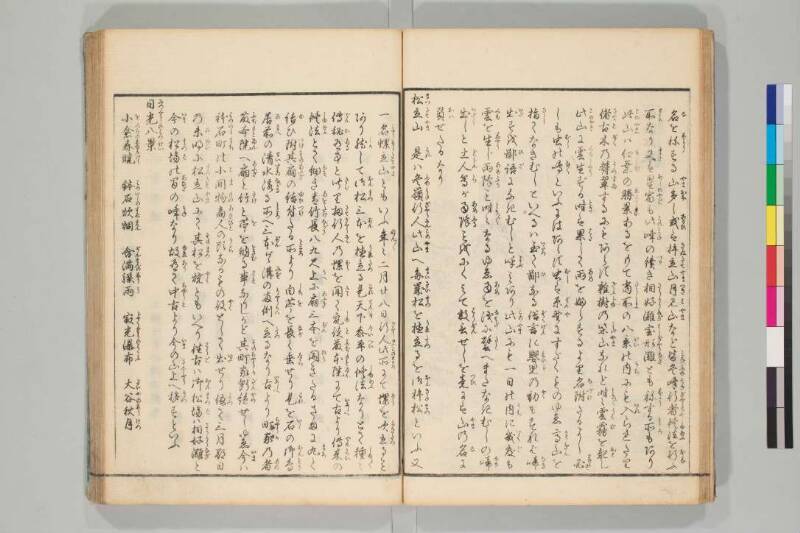
翻刻
【右丁】
名(な)を称(しよう)する山(やま)多(おほ)し或(あるひ)は杵立山(きねたてやま)月見山(つきみやま)など皆(みな)冬峰行者(ふゆみねぎやうじや)修法(しゆほふ)を行(おこな)ふ
所(ところ)なり又(また)は星宿(ほしのやど)も此峰(このみね)の續(つゞ)き相好灘(さうかうなぎ)宝形灘(はうぎやうなぎ)とも称(しよう)する所(ところ)もあり
此山(このやま)は紅葉(もみぢ)の勝景(しようけい)あるをもて當所(たうしよ)の八 景(けい)の内(うち)にも入(いれ)られたり
偖(さて)古木(こぼく)の欝翠(うつすゐ)するにもあらず雜樹(ざふじゆ)の柴山(しばやま)なれど时(とき)〻(〴〵)雲霧(うんむ)を起(おこ)し
此山(このやま)に雲(くも)生(しやう)ずる时(とき)は果(はた)して雨(あめ)をふらするより名附(なづけ)たるよし必(かならず)
しも虫(むし)の鳴(なく)といふにはあらず虫(むし)は原㙒(げんや)にすだくものゆゑ高山(かうざん)を
指(さし)てなきむしといへるは至(いたつ)て鄙(ひ)なる俗言(ぞくげん)に嬰児(えいじ)の動(やゝ)もすれば啼(なき)
出(いだ)すを鄙語(ひご)になきむしと呼(よぶ)ことあり此山(このやま)にも一日の内(うち)に幾度(いくど)も
雲(くも)を生(しやう)じ雨降(あめふる)こと时(とき)〻(〴〵)なるゆゑ雨(あめ)を涙(なみだ)に譬(たと)へまたなきむしの啼(なき)
出(いだし)しと土人等(どじんら)が雨降(あめふる)ことをにくみて放言(はうげん)せしを竟(つひ)には山(やま)の名(な)に
負(おは)せたるなり
松立山(まつたてやま) 是(これ)は冬嶺行人(ふゆみねぎやうにん)此山(このやま)へ毎歳(まいさい)松(まつ)を植立(うゑたつ)るを御杵松(おんきねまつ)といふ又
【左丁】
一 名(みやう)螺立山(ほらたてやま)ともいふ年(ねん)〻(〳〵)二月廿八日 行人(ぎやうにん)此所(このところ)にて螺(ほら)を吹立(ふきたつ)ること
あり然(しか)して御松(おんまつ)三 本(ぼん)を植立(うゑたつ)る是(これ)天下泰平(てんかたいへい)の修法(しゆほふ)なりとて種(しゆ)〻(〴〵)
傳秘(でんひ)有(ある)事と聞(きけ)り偖(さて)行人(ぎやうにん)の螺(ほら)を聞(きゝ)て衆徒(しゆと)藤本院(ふぢもとゐん)にて古(いにしへ)より傳來(でんらい)の
修法(しゆほふ)とて細(ほそ)き青竹(あをたけ)長(ながさ)八九尺 上(うへ)に扇(あふぎ)三 本(ぼん)を開(ひら)きたるさまに丸(まろ)く
結(ゆ)ひ附(つけ)其扇(そのあふぎ)の結付(ゆひつけ)たる所(ところ)より白苧(しろを)を長(なが)く垂(たら)せり是(これ)を石(いし)の御鳥(おんとり)
居前(ゐまへ)の清水(せいすゐ)流(ながる)る所(ところ)へ三 本(ぼん)づゝ溝(みぞ)の両側(りやうかは)へ立(たつ)るなり古(いにしへ)より町家(ちやうか)の者(もの)
藤本院(ふぢもとゐん)へ扇(あふぎ)と竹(たけ)と苧(を)を納(おさむ)る事(こと)なりしかど其(それ)町家(ちやうか)断絶(だんぜつ)せしゆゑ今(いま)は
鉢石町(はついしまち)の小間物(こまもの)商人(あきびと)の頭(かしら)なることの役(やく)として出(いで)せり依(よつ)て三月朔日
の未明(みめい)に松立山(まつたてやま)にて其松(そのまつ)を焼(やく)ともいへり徃古(わうご)は御松塲(おんまつば)は相好灘(さうかうなぎ)と
今(いま)の松塲(まつば)の間(あひだ)の峰(みね)なり故(ゆゑ)有(あり)て中古(ちゆうこ)より今(いま)の山上(さんしやう)へ移(うつ)すといふ
日光八景(につくわうのはつけい)
小倉春曉(をぐらのしゆんけう) 鉢石炊烟(はついしのすゐえん) 含満驟雨(がんまんのしうう) 寂光瀑布(じやくくわうのはくふ) 大谷秋月(だいやのしうけつ)
現代語訳
【右丁】
名前を持つ山が多い。あるいは杵立山、月見山などは、皆冬峰行者が修法を行う場所である。また星宿もこの峰の続きで、相好灘、宝形灘とも称する所もある。
この山は紅葉の美しい景色があることで、当地の八景の内にも入れられている。
さて、古木が緑豊かに茂っているわけでもなく、雑木の柴山であるが、時々雲霧を起こし、この山に雲が生じる時は必ず雨を降らせることから名付けられたという。必ずしも虫が鳴くということではない。虫は野原に群がるものなので、高山を指して「なきむし」というのは、とても田舎じみた俗語で、赤ん坊がちょっとしたことですぐに泣き出すのを方言で「なきむし」と呼ぶことがある。この山にも一日のうちに何度も雲を生じ、雨が降ることがたびたびあるので、雨を涙に例え、また「なきむし」が泣き出したと土地の人々が雨が降ることを嫌って悪口を言ったのを、ついには山の名前に負わせたのである。
松立山 これは冬嶺行人がこの山へ毎年松を植え立てるのを御杵松という。また
【左丁】
一名螺立山ともいう。毎年2月28日に行人がこの所で螺を吹き立てることがある。そして御松三本を植え立てる。これは天下泰平の修法だとして、種々の秘伝があることと聞いている。さて行人の螺を聞いて、衆徒が藤本院にて古来より伝来の修法として、細い青竹の長さ八九尺、上に扇三本を開いたような形に丸く結び付け、その扇の結び付けた所より白い麻糸を長く垂らしている。これを石の御鳥居前の清水が流れる所へ三本ずつ溝の両側へ立てるのである。古来より町家の者が藤本院へ扇と竹と麻糸を納めることであったが、その町家が断絶したので、今は鉢石町の小間物商人の頭がこの役として出している。よって3月1日の未明に松立山にてその松を焼くともいう。往古は御松場は相好灘と今の松場の間の峰であった。故あって中古より今の山上へ移したという。
日光八景
小倉春曉 鉢石炊煙 含満驟雨 寂光瀑布 大谷秋月
英語訳
【Right Page】
There are many mountains with names. Kinetsate Mountain, Tsukimi Mountain, and others are all places where winter peak ascetics perform ritual practices. Also, Hoshi-no-yado is part of this mountain range, and there are places also called Sōkō-nagi and Hōgyō-nagi.
This mountain is included among the eight scenic views of this area because of its beautiful autumn foliage.
Now, it is not a place where ancient trees grow luxuriantly in deep green, but rather a brushwood mountain of mixed trees. However, it occasionally produces clouds and mist, and when clouds form on this mountain, it invariably brings rain, which is said to be how it got its name. It is not necessarily about insects crying. Since insects swarm in the fields, calling a high mountain "nakimushi" (crying insect) is quite a rustic colloquialism - like how crying babies are sometimes called "nakimushi" in dialect when they cry at the slightest provocation. This mountain also produces clouds several times a day and often brings rain, so the local people, disliking the rain, would complain and compare the rain to tears, saying the "nakimushi" had started crying again, and eventually this became the mountain's name.
Matsutate Mountain: This is where winter peak ascetics plant pine trees on this mountain every year, called "On-kine-matsu" (honorable pestle pines). It is also
【Left Page】
known by another name, Horatate Mountain. Every year on February 28th, ascetics blow conch shells at this place. Then they plant three sacred pine trees. This is said to be a ritual practice for peace throughout the realm, and I have heard there are various secret traditions involved. When the ascetics' conch shells are heard, the monks at Fujimoto-in perform an ancient traditional ritual practice using thin green bamboo poles eight to nine shaku long, with three fans tied in a circular pattern at the top as if opened, and white hemp fibers hanging long from where the fans are attached. These are set up three at a time on both sides of the ditch where clear water flows in front of the stone torii. Since ancient times, townspeople would offer fans, bamboo, and hemp fibers to Fujimoto-in, but since those families died out, now the head of the small goods merchants in Hatsuishi-machi serves in this role. Therefore, it is also said that those pines are burned on Matsutate Mountain at dawn on March 1st. In ancient times, the sacred pine site was on the peak between Sōkō-nagi and the present pine site. For certain reasons, it was moved to the current mountaintop in medieval times.
The Eight Scenic Views of Nikko:
Ogura Dawn, Hatsuishi Cooking Smoke, Ganman Sudden Rain, Jakkō Waterfall, Daiya Autumn Moon