翻刻
【右丁】
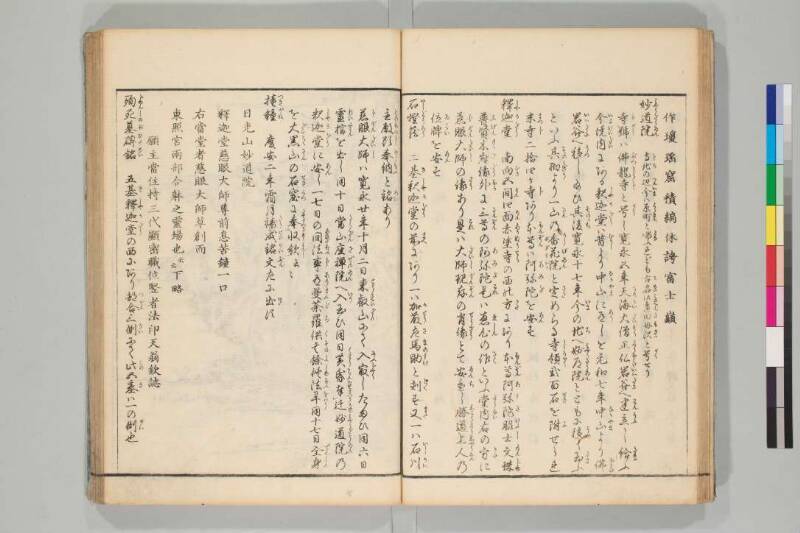
作 瓊 瑶 窟 積 縞 休 誇 富 士 巓
妙道院(みやうだうゐん) 《割書:寺地(じち)の辺(へん)今(いま)は原町(はらまち)と唱(とな)ふれども古名(こめい)此邊(このへん)田母沢(たもざは)と号(がう)せり》
時號(じがう)は佛龍寺(ぶつりうじ)と号(がう)し寛永五年 天海大僧正(てんかいだいそうじやう)仏岩谷(ほとけいはだに)へ建立(こんりふ)し給(たま)ふ
今(いま)境内(けいだい)にある釈迦堂(しやかだう)は昔(むかし)より中山(なかやま)に有(あり)しを元和七年 中山(なかやま)より佛(ほとけ)
岩谷(いはだに)へ移(うつ)し給ひ其後(そのゝち)寛永十七年 今(いま)の地(ち)へ妙道院(みやうだうゐん)とともに移(うつ)し玉(たま)ふ
といふ其砌(そのみぎり)より一 山(さん)の香花院(かうげゐん)【「ボダイシヨ」左ルビ】と定(さだ)めらる寺領(じりやう)貮百 石(せき)を附(ふ)せられ
末寺(まつじ)二拾四ヶ寺(じ)あり本尊(ほんぞん)は阿弥陀(あみだ)を安(あん)す
釋迦堂(しやかだう)南 向(むき)五 間(けん)四 面(めん)赤塗(あかぬり)寺(てら)の西の方(かた)にあり本尊(ほんぞん)阿弥陀(あみだ)脇士(けふし)文珠(もんじゆ)
普䝨(ふげん)木座像(もくざざう)外(ほか)に三尊(さんぞん)の阿弥陀(あみだ)是(これ)は恵心(ゑしん)の作(さく)といふ堂内(だうない)右の方(かた)に
慈眼大師(じげんだいし)の像(ざう)あり是(これ)は大師(だいし)現存(げんぞん)の肖像(せうざう)とて安置(あんち)し勝道上人(しようだうしやうにん)の
位牌(ゐはい)を安(あん)す
石燈籠(いしどうろう) 二 基(き)釈迦堂(しやかだう)の前(まへ)にあり一は加藤左馬助(かとうさまのすけ)と𠜇(こく)す又(また)一は石川(いしかは)
【左丁】
主殿頭(とのものかみ)奉納(ほうなふ)と銘(めい)あり
慈眼大師(じげんだいし)は寛永廿年十月二日 東叡山(とうえいざん)にて入寂(にふじやく)したまひ同六日
靈棺(れいくわん)を出し同十日 當山(たうざん)座禅院(ざぜんゐん)へ入(いり)玉ひ同日 黄昏(くわうこん)奉(たてまつり)_レ迁(うつし)妙道院(みやうだうゐん)の
釈迦堂(しやかだう)に安(あん)し一七日の間(あひだ)法事(ほふじ)有(あり)曼荼羅供(まんだらく)其餘(そのよ)修法(しゆほふ)畢(をはり)同十七日 全身(ぜんしん)
を大黒山(だいこくさん)の石窟(せきくつ)に奉(たてまつる)_二収歛(しゆうかんし)_一《割書:云| 〻》
撞鐘(つきがね) 慶安二年霜月 鋳成(たうせい)銘文(めいぶん)左に出(いだ)す
日光山妙道院
釋迦堂慈眼大師尊前息苦鐘一口
右當堂者慈眼大師草創而
東照宮兩部合躰之靈場也《割書:云| 云》下略
願主當住持三代顯密職位竪者法印天翁欽誌
殉死墓碑銘(じゆんしのぼひのめい) 五 基(き)釋迦堂(しやかだう)の西にあり都合(つがふ)三 側(かは)にて此(この)五 基(き)は一の側(かは)也
現代語訳
【右丁】
瓊瑶の窟を作し、積雪(縞)は富士の山頂を誇ることを休めよ
妙道院 (寺地の辺りは今は原町と呼ばれているが、古名はこの辺りを田母沢と号した)
時の号は佛龍寺と号し、寛永5年に天海大僧正が仏岩谷に建立された。
今境内にある釈迦堂は昔から中山にあったものを、元和7年に中山から仏岩谷へ移され、その後寛永17年に今の地へ妙道院とともに移されたという。その時から一山の香花院(菩提所)と定められ、寺領200石を付与され、末寺24ヶ寺がある。本尊は阿弥陀を安置する。
釈迦堂 南向き、5間4面、赤塗り、寺の西の方にある。本尊は阿弥陀、脇士は文殊・普賢の木座像、外に三尊の阿弥陀がある。これは恵心の作という。堂内右の方に慈眼大師の像がある。これは大師現存の肖像として安置し、勝道上人の位牌を安置する。
石燈籠 2基、釈迦堂の前にある。一つは加藤左馬助と刻す。もう一つは石川
【左丁】
主殿頭奉納と銘がある。
慈眼大師は寛永20年10月2日に東叡山にて入寂され、同6日に霊棺を出し、同10日に当山座禅院へ入られ、同日黄昏に妙道院の釈迦堂に移し安置し、7日の間法事があった。曼荼羅供その他の修法が終わり、同17日に全身を大黒山の石窟に収斂した。
撞鐘 慶安2年霜月に鋳成。銘文は左に出す。
日光山妙道院
釈迦堂慈眼大師尊前息苦鐘一口
右当堂者慈眼大師草創而
東照宮両部合体之霊場也 以下略
願主当住持三代顕密職位竪者法印天翁欽誌
殉死墓碑銘 5基、釈迦堂の西にある。都合3側にてこの5基は一の側である。
英語訳
【Right Page】
Creating caves of precious jade and snow, accumulated white [snow] should cease boasting of Mount Fuji's peak
Myōdō-in (The temple grounds are now called Hara-machi, but in ancient times this area was called Tamozawa)
Its temporal name was Butsuryū-ji, and in Kan'ei 5 (1628), Great Monk Tenkai established it at Hotoke-iwadani.
The Shaka-dō now within the precincts had been at Nakayama since ancient times, but in Genna 7 (1621) it was moved from Nakayama to Hotoke-iwadani, and later in Kan'ei 17 (1640) it was moved to the present location together with Myōdō-in. From that time it was designated as the kōge-in (bodaijo - family temple) of the entire mountain, granted temple lands of 200 koku, and has 24 subsidiary temples. The principal deity enshrined is Amida.
Shaka-dō: Facing south, 5 ken by 4 men, painted red, located to the west of the temple. The principal image is Amida, with attendant figures of Monju and Fugen as wooden seated statues. Additionally there are three Amida images, said to be the work of Eshin. On the right side within the hall is an image of Jigen Daishi. This is installed as a portrait from when the great teacher was still alive, and enshrines a memorial tablet of Saint Shōdō.
Stone Lanterns: 2 bases, in front of the Shaka-dō. One is inscribed with Katō Samanosuke. Another has an inscription Stone-kawa
【Left Page】
Tononokami dedication.
Jigen Daishi entered nirvana at Tōei-zan on the 2nd day of the 10th month of Kan'ei 20 (1643), the sacred coffin was brought out on the 6th of the same month, entered the Zazen-in of this mountain on the 10th of the same month, and at dusk of the same day was moved and enshrined in the Shaka-dō of Myōdō-in. Religious services were held for seven days. After the mandala offerings and other ritual practices were completed, on the 17th of the same month, the entire body was interred in the stone cave of Daikoku-san.
Temple Bell: Cast in the 11th month of Keian 2 (1649). The inscription text is given to the left:
Nikkō-zan Myōdō-in
Shaka-dō Jigen Daishi Honored Presence Suffering-Relief Bell, One Mouth
This hall was founded by Jigen Daishi and
Is a sacred place where Tōshō-gū and Ryōbu unite... (abbreviated below)
Petitioner, Current Chief Priest, Third Generation Exoteric-Esoteric Position Holder, Dharma Seal Ten'ō respectfully records
Martyrdom Grave Inscriptions: 5 bases, to the west of the Shaka-dō. In total there are 3 sides, and these 5 bases constitute one side.