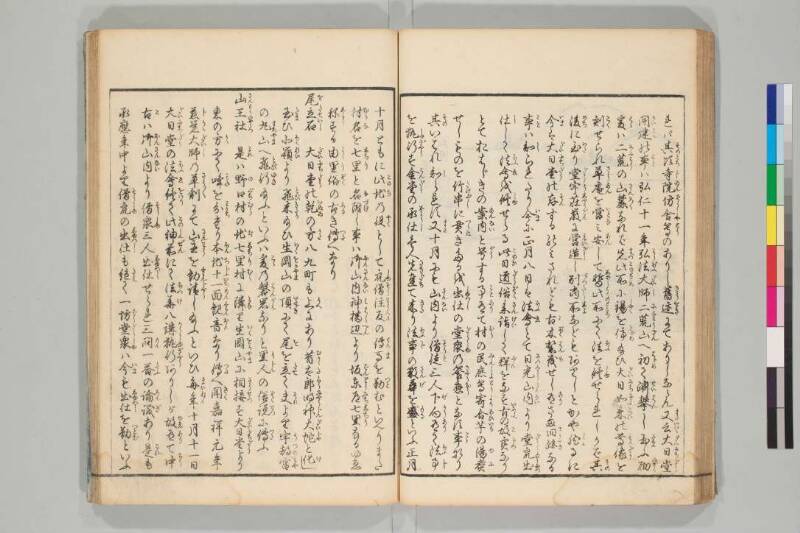
翻刻
【右丁】
れば其頃(そのころ)寺院(じゐん)坊舍(ばうしや)等(とう)のありし《振り仮名:𦾔迹|きうせき》にてありしならん又(また)云(いはく)大日堂(だいにちだう)
開建(かいこん)の事(こと)は弘仁十一年 弘法大師(こうぼふだいし)二荒山(にくわうざん)へ初(はじめ)て躋攀(せいはん)し玉(たま)ふ砌(みぎり)
爰(こゝ)は二荒(にくわう)の山麓(さんろく)なれば先(まづ)此所(このところ)に錫(しやく)を停(とゞめ)給ひ大日如來(だいにちによらい)の尊像(そんざう)を
/𠜇(こく)せられ草庵(さうあん)を営(いとな)み安(あん)して暫(しばらく)此所(このところ)にて法(ほふ)を修(しゆ)せられしかば其(その)
後(のち)に至(いた)り堂宇(だうう)荘厳(しやうごん)に営造(えいざう)し別當所(べつたうしよ)などもありしとかや然(しか)るに
今(いま)は大日堂(だいにちだう)の存(そん)するのみされども古木(こぼく)繁茂(はんも)せし有(あり)さま旧跡(きうせき)なる
事(こと)は知(し)られたり今(いま)に正月八日は法會(ほふゑ)とて日光山内(につくわうさんない)より堂衆(だうしゆ)出(しゆつ)
仕(し)して法會(ほふゑ)を修(しゆ)せらる此日(このひ)道俗(だうぞく)参詣(さんけい)して群(ぐん)をなす古(いにしへ)の故実(こじつ)なり
とておはじきの案内(あんない)と号(がう)する事(こと)有(あり)て村(むら)の民庶等(みんしよとう)寄合(よりあひ)芋(いも)の湯煑(ゆに)
せしものを竹串(たけぐし)に貫(つらぬ)きたるを出仕(しゆつし)の堂衆(だうしゆ)の饗應(きやうおう)となす事(こと)なり
其(その)いはれ知(し)られず又(また)十月にも山内(さんない)より僧徒(そうと)三人 下向(げかう)有(あり)て法事(ほふじ)
を執行(しゆぎやう)す金堂(こんだう)の承仕(しようし)壱人 先達(さきだち)て來(きた)り法事(ほふじ)の散蕐(さんげ)を盛(もる)といふ正月
【左丁】
十月ともに此地(このち)の役(やく)として衆僧(しゆそう)往反(わうへん)の傳馬(てんま)を勤(つと)むといへりまた
村名(むらな)を七里(しちり)と名附(なづけ)し事は御山内(おんさんない)神橋辺(みはしへん)より坂東道(ばんどうみち)七里(しちり)なるゆゑ
称(しよう)する由(よし)里俗(りぞく)の古(ふる)き傳(つた)へなり
尾立石(をたていし) 大日堂(だいにちだう)の乾(いぬゐ)の方(かた)八九町も上(うへ)にあり昔(むかし)太郎明神(たらうみやうじん)大蛇(だいじや)と化(け)し
玉(たま)ひ北嶺(ほくれい)より飛來(とびきたり)給ひ生岡山(いくをかやま)の頂(いたゞき)にて尾(を)を立(たて)て夫(それ)より宇都宮(うつのみや)
の丸山(まるやま)へ飛行(とびゆき)給ふといふは爰(こゝ)の磐岩(はんがん)なりと里人(りじん)の俗説(ぞくせつ)に傳(つた)ふ
山王社(さんわうのやしろ) 是(これ)は野口村(のぐちむら)の地(ぢ)七里村(しちむら)に隣(とな)り生岡山(いくをかやま)に相接(さうせつ)す大日堂(だいにちだう)より
東の方(かた)にて峰(みね)を分(わかち)たり本地(ほんち)十一面觀音(じふいちめんくわんおん)なり傳(つた)へ聞(きく)嘉祥元年
慈覚大師(じかくだいし)の草創(さう〳〵)にて山王(さんわう)を勸請(くわんじやう)し給ふといひ每年(まいねん)十月十一日
大日堂(だいにちだう)の法會(ほふゑ)終(をはり)て此(この)神前(しんぜん)にて法華(ほつけ)八 講(かう)執行(しゆぎやう)ありしが故(ゆゑ)有(あり)て中(ちう)
古(こ)は御山内(おんさんない)より僧衆(そうしゆ)三人 出仕(しゆつし)せられ三 問(もん)一 荅(たふ)の論議(ろんぎ)あり是(これ)も
承應年中より僧衆(そうしゆ)の出仕(しゆつし)も絶(たえ)て一 坊(ばう)堂衆(だうしゆ)は今(いま)も出仕(しゆつし)を勤(つとむ)といふ
現代語訳
【右丁】
れば其頃寺院坊舎等のありし旧跡にてありしならん又云く大日堂
開建の事は弘仁十一年 弘法大師二荒山へ初めて登り給う砌
ここは二荒の山麓なれば先ずこの所に錫を止め給い大日如来の尊像を
刻せられ草庵を営み安して暫くこの所にて法を修せられしかばその
後に至り堂宇荘厳に営造し別当所などもありしとかや然るに
今は大日堂の存するのみされども古木繁茂せしありさま旧跡なる
事は知られたり今に正月八日は法会とて日光山内より堂衆出
仕して法会を修せらるこの日道俗参詣して群をなす古の故実なり
とておはじきの案内と号する事有りて村の民庶等寄合芋の湯煮
せしものを竹串に貫きたるを出仕の堂衆の饗応となす事なり
そのいわれ知られず又十月にも山内より僧徒三人 下向有りて法事
を執行す金堂の承仕壱人 先達て来り法事の散華を盛るという正月
【左丁】
十月ともにこの地の役として衆僧往返の伝馬を勤むといえりまた
村名を七里と名付けし事は御山内神橋辺より坂東道七里なるゆえ
称する由里俗の古き伝えなり
尾立石 大日堂の乾の方八九町も上にあり昔太郎明神大蛇と化し
給い北嶺より飛来り給い生岡山の頂にて尾を立ててそれより宇都宮
の丸山へ飛行き給うというはここの盤岩なりと里人の俗説に伝う
山王社 これは野口村の地七里村に隣り生岡山に相接す大日堂より
東の方にて峰を分かちたり本地十一面観音なり伝え聞く嘉祥元年
慈覚大師の草創にて山王を勧請し給うといい毎年十月十一日
大日堂の法会終わりてこの神前にて法華八講執行ありしが故有りて中
古は御山内より僧衆三人 出仕せられ三問一答の論議あり これも
承応年中より僧衆の出仕も絶えて一坊堂衆は今も出仕を勤むという
英語訳
【Right Page】
Then this area must have been the site of old ruins where temples and monks' quarters existed in those days. It is also said that regarding the construction of Dainichi Hall,
In the 11th year of Kōnin era, when Kōbō Daishi first climbed Mount Nikō,
Since this place was at the foot of Mount Nikō, he first stopped his staff here and
Carved a sacred statue of Dainichi Nyorai, built a grass hermitage, and practiced Buddhist law here for a while. Therefore,
Later a magnificent hall was constructed and there was also a bettō (head priest's residence). However,
Now only Dainichi Hall remains, but from the appearance of the flourishing ancient trees, it is known
To be an old historic site. Even now on January 8th, there is a Buddhist service where hall monks from within Nikkō
Come to perform the service. On this day, both clergy and laypeople visit and form crowds - this is an ancient custom.
There is something called "ohajiki guidance" where the village commoners gather and芋 boiled in hot water
Pierced on bamboo skewers are offered as hospitality to the attending hall monks.
The origin of this is unknown. Also in October, three monks from the mountain come down to perform Buddhist rituals.
One attendant from the main hall comes first to prepare scattered flowers for the ritual in January.
【Left Page】
It is said that both in January and October, as a duty of this land, they provide relay horses for the monks' round trips. Also,
The reason the village is named "Shichiri" (Seven Ri) is because it is seven ri along the Bandō road from the area of the sacred bridge within the mountain,
According to an old local tradition.
Otate-ishi: Located eight or nine chō up in the northwest direction from Dainichi Hall. Long ago, Tarō Myōjin transformed into a great serpent,
Flew from the northern peaks, raised his tail at the summit of Mount Ikuoka, and then
Flew to Maruyama in Utsunomiya - this rock formation is said to be that place according to local folk tales.
Sannō Shrine: This is in the territory of Noguchi village, neighboring Shichiri village and adjoining Mount Ikuoka. From Dainichi Hall
It is to the east, separated by a peak. Its honji (original Buddhist form) is Eleven-faced Kannon. It is said that in the first year of Kashō era,
Jikaku Daishi founded it and invited Sannō deity. Every year on October 11th,
After the Buddhist service at Dainichi Hall ended, the Lotus Sutra Eight Lectures were held before this shrine, but for some reason in the medieval period
Three monks from within the mountain would attend and hold three-question-one-answer debates. This too
Ceased during the Jōō years when monks stopped attending, though monks from one sub-temple still attend even now.