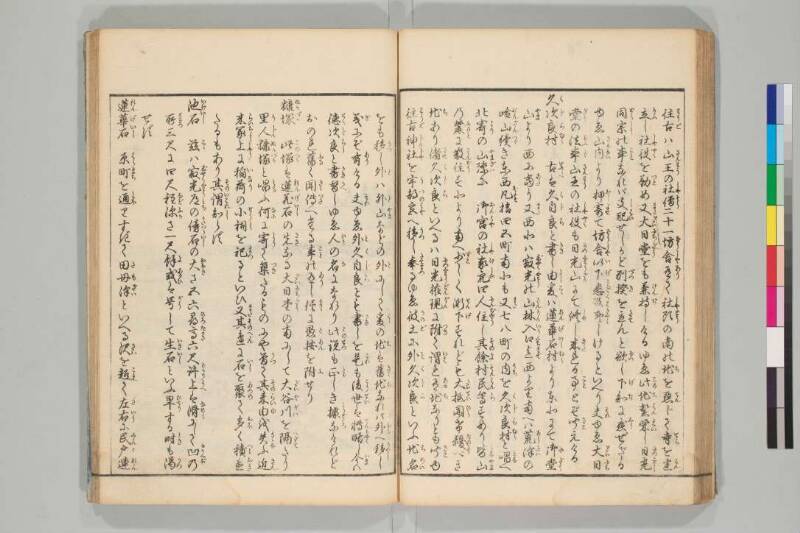
翻刻
【右丁】
往古(わうご)は山王(さんわう)の社僧(しやそう)二十一 坊舍(ばうしや)有(あり)て社頭(しやとう)の南の地(ち)を㸃(てん)じて寺(てら)を建(こん)
立(りふ)し社役(しややく)を勤(つと)め又(また)大日堂(だいにちだう)をも兼持(けんぢ)しけるゆゑ此地(このち)繁栄(はんえい)し日光(につくわう)
同宗(どうしう)の事(こと)なれば支配(しはい)せしかど別揆(べつき)を立(たて)んと欲(ほつ)し下知(げぢ)に應(おう)ぜざる
ゆゑ山内(さんない)より押寄(おしよせ)て坊舍(ばうしや)以下(いげ)悉(こと〴〵く)破却(はきやく)しけるといへり夫(それ)ゆゑ大日(だいにち)
堂(だう)の法事(ほふじ)山王(さんわう)の社役(しややく)も日光山(につくわうざん)にて修(しゆ)し來(きた)れる事(こと)とぞ聞(きこ)えける
久次良村(くじらむら) 古(いにしへ)は久自良(くじら)と書(かき)し由(よし)爰(こゝ)は蓮蕐石村(れんげいしむら)より東北にて御堂(みだう)
山(やま)より西に當(あた)り又(また)西北は寂光(じやくくわう)の山林(さんりん)入口(いりぐち)迄(まで)西より南へは荒澤(あらさは)の
嶮山(けんざん)續(つゞ)き東西 凡(およそ)拾四五町南北も又(また)七八町の内(うち)を久次良村(くじらむら)と唱(とな)へ
北 寄(より)の山際(やまぎは)に 御宮(おんみや)の社家衆(しやけしゆ)四 人(にん)住(ぢゆう)し其餘(そのよ)村民等(そんみんら)すめり皆(みな)山(やま)
の麓(ふもと)に散住(さんぢう)す北より南へ少(すこ)しく漸下(せんげ)すれども大抵(たいてい)開(ひら)け耰(たねかす)べき
地(ち)あり偖(さて)久次良(くじら)といへるは日光権現(につくわうごんげん)に附(つき)て謂(いは)れ有(ある)地(ち)なりとも聞(きこ)ゆ
往古(わうご)神社(じんじや)を宇都宮(うつのみや)へ移(うつ)し奉(たてまつ)るゆゑ彼土(かのど)に外久次良(とくじら)といふ地名(ちめい)
【左丁】
をも移(うつ)し外(と)は外山(とやま)などの外(と)にして爰(こゝ)の地(ち)は《振り仮名:𦾔地|きうち》なれば外(ほか)へ移(うつし)し
義(ぎ)にぞ有(あり)ける夫(それ)ゆゑ外久自良(とくじら)とも書(かき)しを是(これ)も後世(こうせい)は轉略(てんりやく)し今(いま)は
德次良(とくじらう)と書替(かきかへ)しゆゑ人(ひと)の名(な)になれり此説(このせつ)も正(たゞ)しき據(よりどころ)なけれど
おのれ𦾔(ふる)く聞傳(きゝつた)へたる事(こと)の有(あり)し侭(まゝ)に愚按(ぐあん)を附(ふ)せり
糠塚(ぬかづか) 此塚(このつか)は蓮花石(れんげいし)の先(さき)なる大日堂(だいにちだう)の南にして大谷川(だいやがは)を隔(へだて)たり
里人(りじん)糠塚(ぬかづか)と唱(とな)ふ何(なに)に寄(より)て築(つき)たるものにや曽(かつ)て其(その)來由(らいゆ)を失(うしな)ふ近(きん)
來(らい)冢上(ちようしやう)に稲荷(いなり)の小祠(せうし)を祀(まつ)るといひ又(また)其邊(そのへん)に石(いし)を聚(あつめ)て多(おほ)く積置(つみおき)
たるもあり其謂(そのいはれ)知(し)らず
池石(いけいし) 兹(こゝ)は寂光道(じやくくわうみち)の傍(かたはら)石(いし)の大(おほき)さ五六 尋(ひろ)高(たかさ)六尺 許(ばかり)上(うへ)は滑(なめら)にして凹(なかくぼ)の
所(ところ)三尺に四尺 程(ほど)深(ふか)さ一尺 餘(よ)或(あるひ)は号(がう)して生石(いきいし)といふ旱(ひでり)する时(とき)も渇(かつ)
せず
蓮蕐石(れんげいし) 原町(はらまち)を通(とほ)りすぎて田母澤(たもざは)といへる沢(さは)を越(こえ)て左右(さいう)に民戸(みんこ)連(れん)
現代語訳
【右丁】
往古は山王の社僧二十一坊舎有りて社頭の南の地を占めて寺を建
立し社役を勤め又大日堂をも兼持しけるゆえこの地繁栄し日光
同宗の事なれば支配せしかど別規を立てんと欲し下知に応ぜざる
ゆえ山内より押寄せて坊舎以下悉く破却しけるといえり それゆえ大日
堂の法事山王の社役も日光山にて修し来れる事とぞ聞こえける
久次良村 古は久自良と書きし由ここは蓮華石村より東北にて御堂
山より西に当たり又西北は寂光の山林入口まで西より南へは荒沢の
険山続き東西凡そ十四五町南北も又七八町の内を久次良村と唱え
北寄りの山際に御宮の社家衆四人住し その余村民等住めり皆山
の麓に散住す北より南へ少しく漸下すれども大抵開け耕すべき
地あり さて久次良というは日光権現に付いて謂れある地なりとも聞こゆ
往古神社を宇都宮へ移し奉るゆえ彼土に外久次良という地名
【左丁】
をも移し外は外山などの外にしてここの地は旧地なれば外へ移しし
義にぞありける それゆえ外久自良とも書きしを これも後世は転略し今は
徳次良と書き替えしゆえ人の名になれり この説も正しき拠なけれど
おのれ古く聞き伝えたる事のありし侭に愚按を付せり
糠塚 この塚は蓮花石の先なる大日堂の南にして大谷川を隔てたり
里人糠塚と唱う何に寄りて築きたるものにや曽てその来由を失う近
来塚上に稲荷の小祠を祀るといい又その辺に石を聚めて多く積み置き
たるもあり その謂れ知らず
池石 ここは寂光道の傍ら石の大きさ五六尋高さ六尺許り上は滑らかにして凹の
所三尺に四尺程深さ一尺余或いは号して生石という旱する時も渇
せず
蓮華石 原町を通りすぎて田母沢という沢を越えて左右に民戸連
英語訳
【Right Page】
In ancient times there were twenty-one temple quarters for the shrine monks of Sannō, and they occupied the land south of the shrine grounds to build
temples and perform shrine duties, also maintaining Dainichi Hall. Therefore this area prospered, and since it was of the same sect as Nikkō,
it was under their control, but when they wanted to establish separate rules and did not comply with orders,
forces from the mountain came and completely destroyed all the temple quarters and below. Therefore, it is said that
the Buddhist services of Dainichi Hall and the shrine duties of Sannō came to be performed by Nikkō-san.
Kujira Village: In ancient times it was written as "Kujira." This place is northeast of Rengeishi Village, located
west of Midō Mountain, and from the northwest to the entrance of Jakkō's mountain forest, from west to south the dangerous mountains of Arasawa
continue. The area within about fourteen to fifteen chō east-west and seven to eight chō north-south is called Kujira Village.
Four shrine families of the honorable shrine live near the mountains to the north, and the remaining villagers also reside there. All live
scattered at the foot of the mountains. It gradually slopes down from north to south, but generally there is
open land suitable for cultivation. Now, "Kujira" is said to be a place name with significance related to Nikkō Gongen.
In ancient times when the shrine was moved to Utsunomiya, a place name called "Tō-Kujira" was also moved to that land.
【Left Page】
"Tō" (outer) was moved, like in "Tōyama" (outer mountain), and since this land was the old site, it had the meaning of being moved elsewhere.
Therefore it was also written as "Tō-Kujira," but in later times this was abbreviated and changed, and now it is
written as "Tokujirō," thus becoming a person's name. This theory also lacks proper evidence, but
I have attached my humble opinion based on what I heard transmitted from ancient times.
Nuka-zuka (Bran Mound): This mound is south of Dainichi Hall beyond Rengeishi, separated by the Daiya River.
The local people call it Nuka-zuka. For what reason it was built is completely unknown, having lost its origins. Recently
a small Inari shrine is said to be enshrined on top of the mound, and there are also many stones
gathered and piled up in the vicinity. The reason for this is unknown.
Ike-ishi (Pond Stone): This is beside the Jakkō road, a stone about five to six fathoms in size, about six feet high, smooth on top with a concave
area about three by four feet, over one foot deep. It is sometimes called "Iki-ishi" (Living Stone). Even during droughts it does not
dry up.
Renge-ishi (Lotus Stone): Passing through Hara-machi and crossing the valley called Tamozawa, private houses line both sides