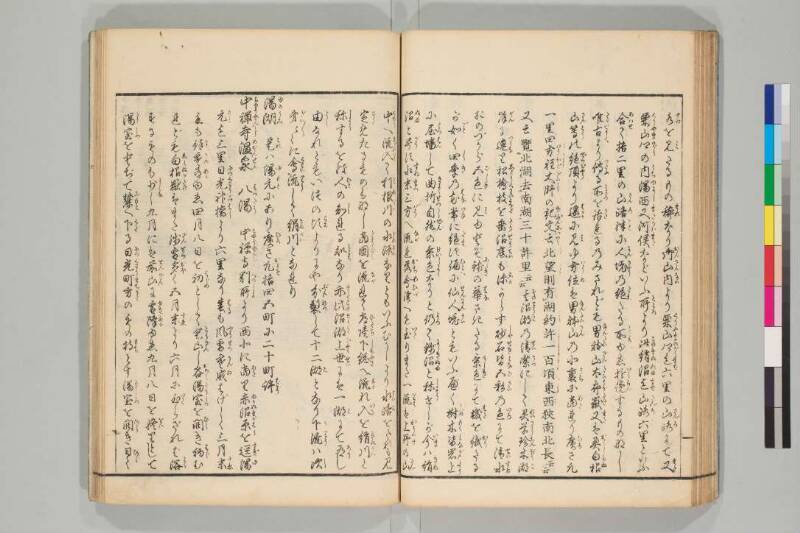
翻刻
【右丁】
水(すゐ)を見(み)たるもの稀(まれ)なり御山内(おんさんない)より栗山郷(くりやまのがう)迄(まで)六里の山路(さんろ)にて又(また)
栗山郷(くりやまのがう)の内(うち)湯西(ゆにし)又(また)河俣(かはまた)などいふ所(ところ)より此(この)絹沼(きぬぬま)迄(まで)山路(さんろ)六里といふ
合(あはせ)て拾二里の山路(さんろ)殊(こと)に人境(にんきやう)の絶(たえ)たる所(ところ)ゆゑ逰覧(いうらん)するものなし
唯(たゞ)古(いにしへ)より傳(つたふ)る所(ところ)を話(かた)れるのみされども男躰山(なんたいざん)太郎嶽(たらうがたけ)又(また)は奥白根(おくしらね)
山(さん)等(とう)の絶頂(ぜつぢやう)より遥(はるか)に見(み)ゆ方位(はうゐ)は男躰山(なんたいさん)の北 裏(うら)に當(あた)れり廣(ひろ)さ凢
一里四 方(はう)程(ほど)大師(だいし)の起文(きぶんに)云(いはく)北望則有_レ湖約許一百頃東西狹南北長《割書:云| 云》
又云覽_二北湖_一去_二南湖_一 三十許里《割書:云| 云》其(その)沼湖(せうこ)の清潔(せいけつ)にして㚑草(れいさう)珍木(ちんぼく)湖(こ)
岸(がん)に連(つらな)り松檜(しようくわい)枝(えだ)を垂(たり)沼底(せうてい)も深(ふか)からず砂石(しやせき)皆(みな)五彩(ごさい)の色(いろ)にて清水(せいすゐ)
おのづから五色(ごしき)に見(み)ゆとぞ錦(にしき)の蕐(はな)さきたる景色(けしき)にて機(はた)を織(おり)たる
が如(ごと)く四季(しき)の花(はな)常(つね)に絶(たえ)ず偏(ひとへ)に仙人境(せんにんかい)ともいふべく樹木(じゆもく)皆(みな)岩上(がんしやう)
に屈蟠(くつはん)して曲折(きよくせつ)自然(しぜん)の景色(けいしよく)なりと仍(よつ)て錦沼(にしきぬま)と称(しよう)せしが今(いま)は絹(きぬ)
沼(ぬま)と号(がう)す水末(すゐまつ)三 方(ばう)へ流(なが)れ落(おち)會津(あひづ)へも至(いた)りまた一 流(りう)は上野(かうつけ)の山(さん)
【左丁】
中(ちゆう)へ流入(ながれいり)て利根川(とねがは)の水源(すゐげん)なりともいふむかしより水路(すゐろ)をたれも見
定(さた)めたるものもなし當國(たうごく)を流(なが)れて常陸(ひたち)下総(しもふさ)へ流(なが)れ入(いる)を絹川(きぬがは)と
称(しよう)するをば人(ひと)の知(し)れる処(ところ)なり亦(また)此(この)沼湖(せうこ)上世(じやうせい)には一 湖(こ)にて有(あり)し
由(よし)なれどもいつの頃(ころ)よりにや分裂(ぶんれつ)して十二 湖(こ)となり下流(かりう)は次(し)
㐧(だい)〻〻(〳〵 )に會流(くわいりう)して絹川(きぬがは)となれり
湯湖(ゆのうみ) 是(これ)は湯元(ゆもと)にあり廣(ひろ)さ凢(およそ)拾四五町に二十町 許(ばかり)
中禅寺温泉(ちゆうぜんじのおんせん) 八湯(はつたう) 中禅寺(ちゆうぜんじ)別所(べつしよ)より西北に當(あた)り赤沼原(あかぬまがはら)を逕(すぎ)湯(ゆ)
元(もと)迄三里 日光神橋(につくわうみはし)より六里あり春(はる)も風雪(ふうせつ)寒威(かんゐ)はげしく三月 末(すゑ)
迄も餘寒(よかん)有(ある)ゆゑ四月八日を初(はじめ)として登山(とうざん)し各(おの〳〵)湯室(たうしつ)を開(ひら)き初(はじ)む
れども白根嶽(しらねがたけ)はまた残雪(ざんせつ)多(おほ)く五月 末(すゑ)より六月に至(いた)らざれば浴(よく)
するものも少(すくな)し九月には前山(せんざん)に雪(ゆき)降(ふる)ゆゑ九月八日を終(をは)りとして
湯室(たうしつ)をとぢて麓(ふもと)へ下(くだ)る日光町方(につくわうまちかた)のもの持(もち)とす湯室(たうしつ)を開(ひら)き日(ひ)〻(ゞ)
現代語訳
【右丁】
水を見たる者は稀である。御山内より栗山郷まで六里の山路にて、また栗山郷の内の湯西または河俣などいう所よりこの絹沼まで山路六里という。合わせて十二里の山路で、ことに人里の絶えたる所ゆえ遊覧する者なし。ただ古より伝わる所を話すのみである。されども男体山・太郎岳または奥白根山等の絶頂より遥かに見ゆ。方位は男体山の北裏に当たれり。広さおよそ一里四方程。大師の起文に云く「北望則有湖約許一百頃東西狹南北長」。また云く「覽北湖去南湖三十許里」。その沼湖の清潔にして霊草・珍木湖岸に連なり、松檜枝を垂れ、沼底も深からず、砂石皆五彩の色にて清水おのずから五色に見ゆとぞ。錦の花咲きたる景色にて機を織りたるが如く、四季の花常に絶えず、偏に仙人境ともいうべく、樹木皆岩上に屈曲して曲折自然の景色なりと。よって錦沼と称せしが今は絹沼と号す。水末三方へ流れ落ち、会津へも至り、また一流は上野の山
【左丁】
中へ流れ入りて利根川の水源なりともいう。昔より水路を誰も見定めたる者もなし。当国を流れて常陸・下総へ流れ入るを絹川と称するをば人の知れる処なり。またこの沼湖上世には一湖にて有りし由なれども、いつの頃よりにや分裂して十二湖となり、下流は次第に合流して絹川となれり。
湯湖 これは湯元にあり、広さおよそ十四五町に二十町ばかり。
中禅寺温泉 八湯 中禅寺別所より西北に当たり赤沼原を経て湯元まで三里、日光神橋より六里あり。春も風雪・寒威激しく三月末まで余寒あるゆえ、四月八日を初めとして登山し各々湯室を開き初むれども、白根岳はまた残雪多く、五月末より六月に至らざれば浴する者も少なし。九月には前山に雪降るゆえ九月八日を終わりとして湯室を閉じて麓へ下る。日光町方の者持ちとす。湯室を開き日々
英語訳
【Right Page】
Those who have seen the water are rare. From the sacred mountain precinct to Kuriyama Village is six ri of mountain path, and from places within Kuriyama Village called Yunishi or Kawamata to this Kinu Marsh is said to be another six ri of mountain path. Together it is twelve ri of mountain paths, and particularly because it is a place where human habitation has ceased, no one goes there for sightseeing. They only speak of what has been transmitted from ancient times. However, it can be seen from afar from the peaks of Mount Nantai, Mount Taro, or Mount Oku-Shirane. Its direction corresponds to the north back side of Mount Nantai. Its size is approximately one ri square. The Daishi's Kibun states: "Looking north there is a lake of approximately one hundred qing, narrow from east to west, long from north to south." It also says: "Viewing the northern lake, it is about thirty ri from the southern lake." The marsh lake is pure, with sacred grasses and rare trees lining the lake shore, pine and cypress branches hanging down. The marsh bottom is not deep, and the sand and stones are all five-colored, so the clear water naturally appears in five colors. The scenery is like brocade flowers in bloom, as if weaving on a loom. The flowers of the four seasons never cease, and it could truly be called a hermit's realm. All the trees bend and twist upon the rocks, creating a naturally curved and folded landscape. Therefore it was called Nishiki Marsh (Brocade Marsh), but now it is called Kinu Marsh (Silk Marsh). The water flows and falls in three directions, reaching even Aizu, and one stream flows into the mountains of Kozuke Province.
【Left Page】
It flows into the mountains and is said to be a source of the Tone River. Since ancient times, no one has definitively traced the waterway. People know that what flows through this province and enters Hitachi and Shimosa is called the Kinu River. Also, this marsh lake was originally one lake in ancient times, but at some point it split and became twelve lakes, and downstream they gradually converge to become the Kinu River.
Yu Lake: This is at Yumoto, approximately fourteen to fifteen cho by twenty cho in size.
Chuzenji Hot Springs - Eight Springs: Located northwest of Chuzenji Bessho, passing through Akanuma Plain to Yumoto is three ri, and six ri from Nikko's Sacred Bridge. Even in spring the wind, snow, and cold are severe, with lingering cold until the end of March, so starting from April 8th people climb the mountain and each opens their hot spring bathhouses. However, Mount Shirane still has much remaining snow, so few people bathe until late May to June. In September snow falls on the front mountains, so September 8th marks the end when they close the bathhouses and descend to the foot of the mountain. This is managed by people from Nikko town. Opening the bathhouses daily...