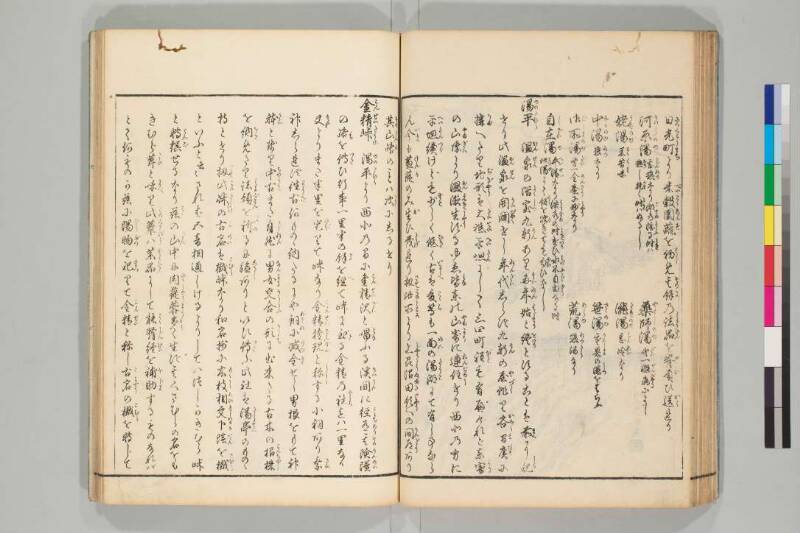
翻刻
【右丁】
日光町(につくわうまち)より米穀(べいこく)園蔬(ゑんそ)を初(はじ)め其餘(そのよ)の諸品(しよひん)を脊負(せお)ひ送(おく)れり
河原湯(かはらのゆ)《割書:甚热(じんねつ)なり湖水(こすゐ)湛(たゝふ)る时(とき)は|热(あつ)し乾(かわ)く时(とき)はぬるし》 藥師湯(やくしのゆ)《割書:㐧(だい)一 眼病(がんびやう)によし》
姥湯(うばのゆ)《割書:黒(こく)苦味(くみ)》 瀧湯(たきのゆ)《割書:甚冷(じんれい)なり》
中湯(なかのゆ)《割書:热(ねつ)なり》 笹湯(ささのゆ)《割書:寒暑(かんしよ)の濕(しつ)をはらふ》
御所湯(ごしよのゆ)《割書:㐧(だい)一 金瘡(きんさう)に妙(みやう)なり》 荒湯(あらゆ)《割書:热湯(ねつたう)なり》
自在湯(じざいゆ)《割書:平清(へいせい)なり洪水(こうずゐ)の时(とき)遣(つか)ひ水(みづ)不自由(ふじゆう)なる时(とき)|此湯(このゆ)にて飯(めし)を炊(た)きても匂(にひ)ひなし》
湯平(ゆのたひら) 温泉(おんせん)の浴室(よくしつ)九 軒(けん)あり毎年(まいねん)始(はじまり)と終(をはり)とすることは前(まへ)に記(しる)
せり此 温泉(おんせん)を開闢(かいびやく)せし年代(ねんだい)しらず九 軒(けん)の屋作(やづく)り各(おの〳〵)間廣(まびろ)に
構(かま)へたり地形(ちぎやう)は大抵(たいてい)平坦(へいたん)にして三四町 程(ぼと)も有べけれど東 寄(より)
の山際(やまぎは)より温液(おんえき)生(しやう)ずるゆゑ皆(みな)東の山寄(やまより)に連住(れんぢゆう)せり西北の方に
平坦(へいたん)續(つゞ)けども少(すこ)しく低(ひき)く古(いにしへ)は爰等(こゝら)も一 面(めん)の湯湖(たうこ)にて有し事なら
ん今(いま)も蒹葭(けんか)のみ生(お)ひ茂(しげ)れり扨(さて)此所(このところ)より上刕(じやうしう)沼田領(ぬまたりやう)への間道(かんだう)あり
【左丁】
其(その)山路(さんろ)のことは次(つき)にしるせり
金精峠(こんせいたうげ) 湯平(ゆのたひら)より西北の間に金精沢(こんせいざは)と唱(とな)ふる渓間(けいかん)に徑(こみち)有(あり)其(その)険隘(けんあい)
の路([み]ち)を傳(つた)ひ行事一里半の餘(よ)を經(へ)て峠に至(いた)る金精の社(やしろ)迄は一里なり
夫(それ)よりまた半里を登(のぼ)りて峠なり金精權現(こんせいごんげん)と称(しよう)する小祠あり祭(さい)
神しられず徃古(わうご)何ものゝ納たるにや銅(あかゝね)に滅金(めつき)せし男根をもて神
躰(たい)とせり中古(ちゆうこ)また自然(じねん)に男女交合(なんによかうがふ)の形(かたち)に出來たる古木の根株(こんちゆう)
を納(をさ)めたり諸願(しよぐわん)を祈(いの)るに驗(しるし)ありといひ傳(つた)ふ此社は湯亭(たうてい)のものゝ
持とせり扨(さて)此峠(このたうげ)の古名(こめい)は樾(こむら)峠なり和名抄に木枝相交下陰(もくしあひましはるかいん)を樾(こむら)
といふと《割書:云| 〻》されば五音相通しけるよりしていつしかきむら峠
と轉誤(てんご)せるなり兹(こゝ)の山(さん)中に肉蓯蓉(にくしゆうよう)多(おほ)く生ず其くさむらの名をも
きむら茸(たけ)と呼(よべ)り此蕈(このくさびら)は薬品(やくひん)にして能(よく)腎經(じんけい)を補助(ほじよ)するものなれば
とて何ものか兹に陽物(やうぶつ)を祀(まつ)りて金精(こんせい)と称し古名(こみやう)の樾(こむら)を轉じて
現代語訳
【右丁】
日光町から米穀や野菜をはじめ、その他の諸品を背負って運び送っている。
河原湯《非常に熱い。湖水が溜まっている時は熱く、乾いている時はぬるい》 薬師湯《第一等。眼病に良い》
姥湯《黒く苦味がある》 瀧湯《非常に冷たい》
中湯《熱い》 笹湯《寒暑の湿気を払う》
御所湯《第一等。金瘡(外傷)に効果がある》 荒湯《熱湯である》
自在湯《平清である。洪水の時、使い水が不自由な時、この湯で飯を炊いても匂いがしない》
湯平 温泉の浴室が九軒ある。毎年の始まりと終わりとすることは前に記した。この温泉を開拓した年代は分からない。九軒の屋作りは各々間口を広く構えている。地形は大体平坦で三、四町程もあるであろうが、東寄りの山際から温泉水が湧き出るため、皆東の山寄りに連なって住んでいる。西北の方に平坦地が続いているが少し低く、古くはここ等も一面の湯湖であったことであろう。今も葦や萱のみが生い茂っている。さて、この所から上州沼田領への間道がある。
【左丁】
その山路のことは次に記している。
金精峠 湯平から西北の間に金精沢と唱える渓谷に小径がある。その険しく狭い道を伝って行くこと一里半余りを経て峠に至る。金精の社まで一里である。それからまた半里を登って峠である。金精権現と称する小祠がある。祭神は知られていない。往古何者が納めたものか、銅に金メッキをした男根をもって神体としている。中古にはまた自然に男女交合の形に出来た古木の根株を納めた。諸願を祈るに霊験ありと言い伝える。この社は湯亭の者の持ちとしている。さて、この峠の古名は樾(こむら)峠である。和名抄に「木枝相交下陰」を樾(こむら)という、とある。それで五音相通によって、いつしかきむら峠と転誤したのである。ここの山中に肉蓯蓉が多く生ずる。その草むらの名をもきむら茸と呼んでいる。このきのこは薬品で、よく腎経を補助するものであるので、何者かがここに陽物を祀って金精と称し、古名の樾(こむら)を転じて
英語訳
【Right Page】
From Nikko town, they carry and transport rice, grains, vegetables, and other various goods on their backs.
Kawara-no-yu (River Hot Spring) 《Extremely hot. When lake water accumulates, it is hot; when dry, it is lukewarm》 Yakushi-no-yu (Medicine Buddha Hot Spring) 《First class. Good for eye diseases》
Uba-no-yu (Old Woman Hot Spring) 《Black and bitter》 Taki-no-yu (Waterfall Hot Spring) 《Extremely cold》
Naka-no-yu (Middle Hot Spring) 《Hot》 Sasa-no-yu (Bamboo Grass Hot Spring) 《Dispels moisture from cold and heat》
Gosho-no-yu (Imperial Palace Hot Spring) 《First class. Excellent for sword wounds》 Ara-yu (Wild Hot Spring) 《Hot water》
Jizai-yu (Freedom Hot Spring) 《Mild and clear. During floods when water is scarce, even cooking rice with this hot spring water produces no odor》
Yuno-taira: There are nine hot spring bathhouses. The annual opening and closing was recorded earlier. The year when these hot springs were first developed is unknown. The construction of the nine buildings each has a wide frontage. The terrain is generally flat, extending for about three to four towns, but since hot spring water emerges from the eastern mountainside, all the buildings are clustered along the eastern mountain area. Flat land continues to the northwest but is slightly lower; in ancient times, this area was probably also a hot spring lake. Even now, only reeds and pampas grass grow thickly there. From this place, there is a mountain path to Numata domain in Jōshū province.
【Left Page】
The details of that mountain path are recorded next.
Konsei Pass: Between Yuno-taira and the northwest, there is a small path in a ravine called Konsei-zawa. Following this steep and narrow road for more than one and a half ri leads to the pass. It is one ri to the Konsei shrine. From there, climbing another half ri reaches the pass. There is a small shrine called Konsei Gongen. The deity enshrined is unknown. What someone enshrined in ancient times was a gold-plated copper phallus as the sacred object. In medieval times, they also enshrined the root stump of an old tree that naturally formed the shape of male-female intercourse. It is said that prayers for various wishes are efficacious. This shrine is maintained by the hot spring inn operators. The ancient name of this pass was Komura Pass. The Wamyō-shō states that "木枝相交下陰" (tree branches crossing to create shade below) is called "komura." Through phonetic correspondence of the five sounds, it eventually became mistakenly called "kimura" pass. In these mountains, cistanche (nikujūyō) grows abundantly. The name of that grassland is also called "kimura-take" (kimura mushroom). This fungus is a medicinal product that effectively supports the kidney meridian, so someone enshrined a phallic object here, calling it Konsei, and transformed the ancient name komura...