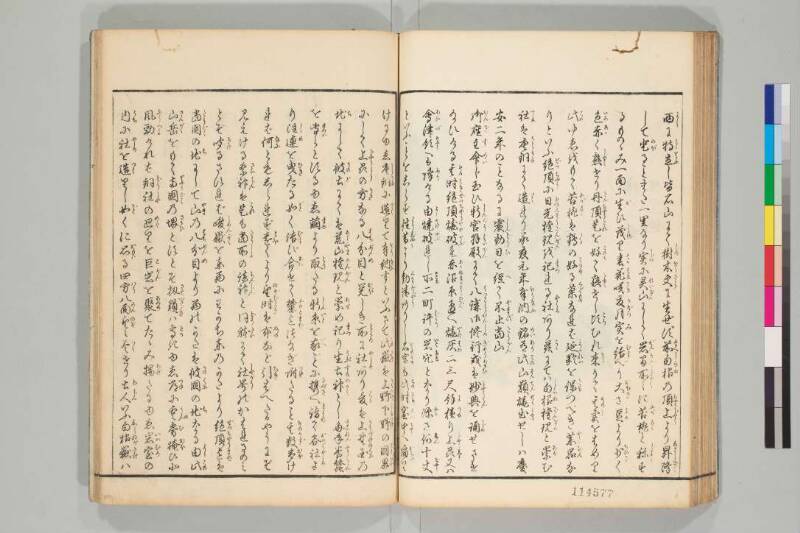
翻刻
【右丁】
西(にし)に特立(とくりふ)し皆石山にて樹木(じゆもく)更(さら)に生ぜず前白根(まへしらね)の頂上(ちやうじやう)より昇降(しようごう)
して登(のぼ)ることまた一里なり実(じつ)に㚑山(れいざん)にして岩間(がんかん)《振り仮名:所〻|しよ〳〵》に苦桃(にがもゝ)と称(しよう)す
るものゝみ一面に生(お)ひ茂(しげ)り春(はる)花咲(はなさき)夏月(かげつ)実(み)を結(むす)べり大(おほき)さ豆(まめ)より少(ちひさ)く
色(いろ)赤(あか)く熟(じゆく)せり丹頂(たんちやう)是(これ)を好(このみ)て熟(じゆく)せし頃(ころ)むれ來(きた)りて其実(そのみ)をはめり
此(この)ゆゑをもて苦桃(にがもゝ)は鶴(つる)の好(このめ)る菓(くだもの)なれば延齢(えんれい)を保(たも)つべき薬品(やくひん)な
りといふ絶頂(ぜつちやう)に日光權現(につくわうごんげん)を祀(まつ)れる社(やしろ)あり兹(こゝ)にては白根權現(しらねごんげん)と崇(あが)む
社(やしろ)は唐銅(からかね)にて造(つく)れり承應元年 奉納(ほうなふ)の銘(めい)有(あり)此(この)山巔(さんてん)燒出(せうしゆつ)せしは慶
安二年のことなるに震動(しんどう)日(ひ)を經(へ)て不止(やまず)當山(たうざん)【平出】
御座主(おんざす)命(めい)じ玉ひ新宮拝殿(しんぐうはいでん)にて八講(はつこう)御修行(おんしゆぎやう)或(あるひ)は妙典(みやうてん)を誦(じゆ)せさせ
給ひける其时(そのとき)絶頂(ぜつちやう)燒破(やけやぶ)れ赤沼原(あかぬまがはらの)邊(へん)へ燒灰(やけはひ)二三尺 餘(よ)積(つも)り上刕(じやうしう)又は
會津領(あひづりやう)へも降(ふり)ける由(よし)燒破(やけやぶ)れし所(ところ)二町 許(ばかり)の岩穴(いはあな)となり深(ふか)さ何(なん)十 丈(ぢやう)
といふことをしらず徃昔(わうじやく)より勸請(くわんじやう)ありし石宮(いしのみや)も此时(このとき)窟中(くつちゆう)へ䧟(おちい)り
【左丁】
けるゆゑ唐銅(からかね)に造(つく)りて奉納(ほうなふ)すといふさて此嶽(このたけ)は上野(かうつけ)下野(しもつけ)の國界(こくかい)
にして上刕(じやうしう)の方(かた)なる八分目(はちぶんめ)と覚(おぼ)しき所(ところ)に社(やしろ)あり爰(こゝ)は上㙒國(かうづけのくに)の
地(ち)にして彼土(かのど)にては荒山權現(あらやまごんげん)と崇(あが)め祀(まつ)り生土神(うぶすなのかみ)とし毎年(まいねん)養蠶(やうさん)
を專(もつは)らとするゆゑ繭(まゆ)より取(とり)たる新糸(しんいと)を家(いへ)ごとに携(たづさ)へ詣(まうで)て各(おの〳〵)社(やしろ)よ
り注連(しめ)を曳(ひき)たる如(ごと)く結(むす)び合(あは)せて麓(ふもと)迄(まで)つなぎ附(つけ)たること其数(そのかず)多(おほ)け
れば何(なに)ともしられず遠(とほ)くより望(のぞむ)时(とき)は布(ぬの)など引(ひき)はへたるやうにぞ
見えける祭神(さいじん)は是(これ)も當所(たうしよ)の鎮神(ちんじん)と同躰(どうたい)にて社号(しやがう)のかはれるのみ
とぞ聞(きけ)るさすれば峻嶽(しゆんがく)を東西にわかち東のかたより絶頂(ぜつちやう)迄(まで)は
當國(たうごく)の地(ち)にして山(やま)の八分目(はちぶんめ)より西のかたは彼國(かのくに)の地(ち)なる由(よし)此(この)
山岳(さんがく)をもて両国(りやうごく)の堺(さかひ)とすとぞ扨(さて)巔(いたゞき)は高(たか)きゆゑ常(つね)に雲霧(うんむ)掩(おほ)ひ北
風(ふう)勁(つよ)ければ銅社(どうしや)の廻(めぐ)りを巨岩(こがん)を聚(あつめ)てたゝみ揚(あげ)たるゆゑ岩室(いはむろ)の
内(うち)に社(やしろ)を造(つく)りし如(ごと)くに思(おもは)る四 方(はう)八 面(めん)望(のぞ)み尽(つく)せり土人(どじん)いふ白根嶽(しらねがたけ)は
現代語訳
【右丁】
西に独立してそびえ立ち、すべて石山で樹木はまったく生えない。前白根の頂上から上り下りして登ること、また一里である。実に霊山で、岩の間の所々に苦桃と呼ぶもののみが一面に生い茂り、春に花が咲き、夏には実を結ぶ。大きさは豆より小さく、色は赤く熟している。丹頂鶴はこれを好んで、熟した頃に群れをなして来てその実を食べる。このため苦桃は鶴の好む果物なので、延命長寿を保つべき薬品だという。絶頂に日光権現を祀る社がある。ここでは白根権現と崇めている。社は青銅で造られており、承応元年奉納の銘がある。この山頂が噴火したのは慶安二年のことで、震動が日を経ても止まなかった。当山御座主が命じられ、新宮拝殿で八講の御修行、あるいは妙典を読誦させなさった。その時、絶頂が噴火で破れ、赤沼原の辺りへ火山灰が二、三尺余り積もり、上州や会津領へも降った由である。噴火で破れた所は二町ばかりの岩穴となり、深さは何十丈かわからない。往昔より勧請があった石宮もこの時、洞窟の中へ落ち込んだ。
【左丁】
そのため青銅で造って奉納するという。さて、この岳は上野・下野の国境で、上州の方の八分目と思われる所に社がある。ここは上野国の地で、その土地では荒山権現と崇め祀り、産土神として毎年養蚕を専らとするため、繭から取った新糸を家ごとに携えて参詣し、各々が社から注連縄を引いたように結び合わせて麓まで繋ぎ付けた。その数が多いので何ともわからず、遠くから望む時は布などを引き延ばしたように見えた。祭神はこれも当所の鎮守神と同体で、社号が変わるのみだと聞いている。そうすれば険しい岳を東西に分かち、東の方から絶頂までは当国(下野国)の地で、山の八分目より西の方は彼の国(上野国)の地である由。この山岳をもって両国の境とするのである。さて頂は高いため常に雲霧に覆われ、北風が強いので銅社の回りを巨岩を集めて積み上げたため、岩室の内に社を造ったように思われる。四方八面を望み尽くせる。土地の人が言うには、白根岳は
英語訳
【Right Page】
Standing independently to the west, it is entirely a stone mountain where trees do not grow at all. Climbing up and down from the summit of Mae-Shirane, it is another ri (league) to ascend. It is truly a sacred mountain, and only what is called "nigamomo" (bitter peach) grows thickly in patches among the rocks. It blooms in spring and bears fruit in summer. The size is smaller than beans, red in color when ripe. Red-crowned cranes favor these, and when they ripen, flocks come to eat the fruit. For this reason, nigamomo is a fruit favored by cranes, so it is said to be a medicinal product that can preserve longevity. At the summit there is a shrine dedicated to Nikko Gongen. Here it is revered as Shirane Gongen. The shrine is made of bronze, with an inscription of dedication from the first year of Jōō (1652). This mountaintop erupted in the second year of Keian (1649), and the tremors continued for days without stopping. The head priest of our mountain commanded that Hakkō (eight lectures) religious practices be performed at the Shingu worship hall, or had the Myōten (Lotus Sutra) recited. At that time, the summit burst open from the eruption, volcanic ash accumulated two to three shaku deep around Akanuma Plain, and it also fell on Jōshū and Aizu domains. The place that burst open became a rock cave about two chō wide, with a depth of unknown tens of jō. The stone shrine that had been there since ancient times also fell into the cave at this time.
【Left Page】
Therefore, it was made of bronze and dedicated. Now, this peak is on the border between Kōzuke and Shimotsuke provinces, and there is a shrine at what appears to be the eighth-tenth mark on the Jōshū side. This is the land of Kōzuke Province, where it is revered and worshipped as Arayama Gongen, and as the tutelary deity. Since sericulture is their main occupation every year, each household brings new silk taken from cocoons when visiting, and from each shrine they tie together what looks like shimenawa (sacred ropes) stretching down to the foot of the mountain. The number is so great that it cannot be determined, and when viewed from afar, it looks like cloth stretched out. The deity enshrined is also the same as the tutelary god of our place, differing only in the shrine name, so I hear. Thus the steep peak is divided east and west, with the eastern side up to the summit being the land of our province (Shimotsuke), while from the eighth-tenth of the mountain westward is the land of that province (Kōzuke). This mountain serves as the boundary between the two provinces. Now, since the summit is high, it is always covered by clouds and mist, and because the north wind is strong, huge rocks are gathered and piled around the bronze shrine, making it appear as if the shrine were built inside a rock chamber. One can see in all directions. The local people say that Mount Shirane is...