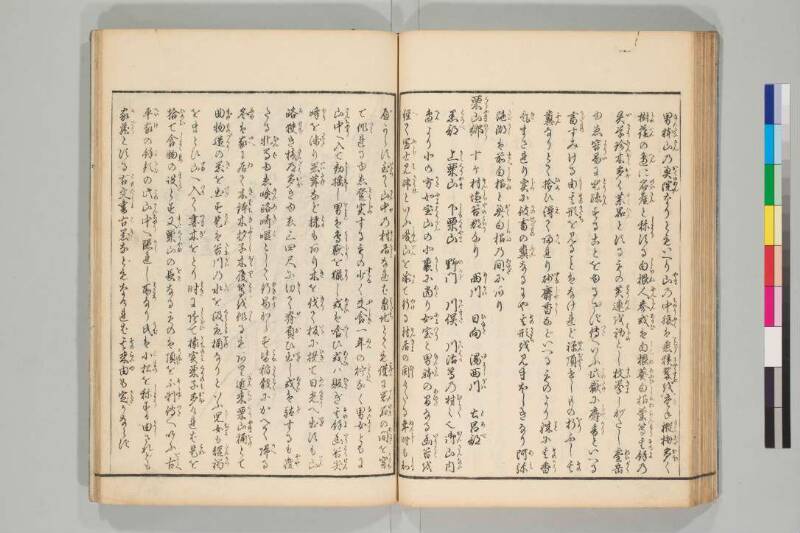
翻刻
【右丁】
男躰山(なんたいさん)の奥院(おくのゐん)なりともいへり山(やま)の中腹(ちゆうふく)は悉(こと〴〵く)積翠(しゆくすゐ)を重(かさ)ね樅(もみ)栂(とが)多(おほ)く
樹蔭(じゆいん)の邊(へん)に名產(めいさん)と称(しよう)する白根人参(しらねにんじん)或(あるひ)は白根葵(しらねあふひ)白根蘭(しらねらん)等(とう)其餘(そのよ)の
異草(いさう)珍木(ちんぼく)多(おほ)く薬品(やくひん)とするもの黄連(わうれん)を初(はじめ)とし枚挙(まいきよ)しがたし霊岳(れいがく)
ゆゑ容易(ようい)に登臨(とうりん)することをゆるさず傳(つた)へいふ此嶽(このたけ)に麝香(じやかう)といへる
畜(けだもの)すみける由(よし)其形(そのかたち)を見ることはなけれど禅頂(ぜんぢやう)せしもの折(をり)ふし其(その)
糞(ふん)なりとて拾(ひろ)ひ得(え)て帰(かへ)れり砂麝香(すなじやかう)などいへるものより殊(こと)に其(その)香(かう)
気(き)まされり実(じつ)に彼畜(かのけだもの)の糞(ふん)なるにや其形(そのかたち)を見まほしきなり阿弥(あみ)
陀湖(たがうみ)は前白根(まへしらね)と奥白根(おくしらね)の間(あいだ)にあり
栗山郷(くりやまのがう) 十ヶ村(そん)塩谷郡(しほやのこほり)なり 西川(にしかは) 日向(ひなた) 湯西川(ゆにしがは) 土呂部(とろべ)
黒部(くろべ) 上栗山(かみくりやま) 下栗山(しもくりやま) 野門(のかど) 川俣(かはまた) 川治(かははる)等の村(むら)〻(〳〵)也 御山内(おんさんない)
邊(へん)より北の方(かた)如宝山(によはうざん)の北 裏(うら)に當(あた)り如宝(によはう)と男躰(なんたい)の間(あひだ)なる幽谷(いうこく)を
經(へ)て冨士見峠(ふじみたうげ)といふ峻山(しゆんざん)を踰(けん)【こえヵ】て行(ゆけ)る村居(そんきよ)の開(ひら)けたる年时(ねんじ)も知(しる)
【左丁】
べからす至(いたつ)て山中(さん や)の村居(そんきよ)なれば畠地(はたち)とても僅(わづか)に岩石(がんぜき)の間(あひだ)を穿(うがち)
て作(つく)れるゆゑ登実(とうじつ)するもの少(すくな)く夫食(ぶじき)一 年(ねん)の貯(たくはへ)なく男女(なんによ)ともに
山中(さんちゆう)へ入て動揺(どうえう)し男(をとこ)は鳥獣(てうじう)を猟(かり)し或(あるひ)は喰(くら)ひ或(あるひ)は販(ひさ)ぎ其餘(そのよ)幽谷(いうこく)尖(せん)
峰(ほう)を渉(わた)り岩茸(いはたけ)など採(とる)もあり木(き)を伐(きり)て板(いた)に挽(ひき)て日光(につくわう)へ出(いだ)すも山(さん)
路(ろ)狹(せば)き棧道(さんだう)多(おほ)きゆゑ三四尺に切(きり)て脊負(せお)ひ出(いだ)し或(あるひ)は駄(だ)するも痩(やせ)
たる牝馬(ひんば)ゆゑ𡸴(けん)路(ろ)﨑嶇(きく)として行易(ゆきやす)からず皆(みな)稲穀(たうこく)にかへて帰(かへ)る
冬(ふゆ)は家(いへ)に居(ゐ)て木鉢(きばち)木(き)𪭜(じやく)子(し)木履(ぼくり)等(とう)を作(つく)るもあり近來(きんらい)栗山桶(くりやまをけ)とて
曲物造(まげものづくり)の器(き)を出(いだ)す是(これ)は谷川(たにがは)の水(みづ)を汲取(くみとる)桶(をけ)なりといふ児女(じぢよ)も短褐(たんかつ)
をまとひ山(やま)へ入(いり)て妻木(つまぎ)をとり时(とき)に随(したがひ)て橡実(とちのみ)栗子(くりのみ)多(おほ)ければ是(これ)を
拾(ひろひ)て食物(しよくもつ)の設(まうけ)とす又(また)栗山(くりやま)の長(をさ)なるものは項(うなじ)を不剃(そらず)傳(つた)へいふ古(いにしへ)
平家(へいけ)の餘類(よるゐ)の此(この)山中(さんちゆう)へ隠(かく)れし所(ところ)なり氏(うぢ)は小松(こまつ)を称(しよう)する由(よし)されども
家蔵(かざう)とする古文書(こもんしよ)古器(こき)などもなければ其(その)來由(らいゆ)も定(さだ)かならず
現代語訳
【右丁】
男体山の奥の院であるとも言われている。山の中腹はことごとく深い緑を重ね、樅や栂が多く、樹陰のあたりに名産と称する白根人参や白根葵、白根蘭等、その他の珍しい草や貴重な木が多く、薬品とするものは黄連をはじめとして数え切れない。霊山であるため容易に登ることを許さない。伝え聞くところでは、この岳に麝香鹿という獣が住んでいる由で、その形を見ることはないが、山に登った者が時折その糞だとして拾い得て帰った。砂麝香などというものより特にその香気が優れている。実にあの獣の糞であろうか、その形を見てみたいものである。阿弥陀湖は前白根と奥白根の間にある。
栗山郷 十ヶ村 塩谷郡である 西川 日向 湯西川 土呂部 黒部 上栗山 下栗山 野門 川俣 川治等の村々である。御山内辺りより北の方、如宝山の北裏に当たり、如宝と男体の間にある幽谷を経て、富士見峠という険しい山を越えて行く。村落が開かれた年代も知る
【左丁】
ことができない。極めて山中の村落なので、畑地といっても僅かに岩石の間を穿って作ったため、収穫するものは少なく、夫婦の食糧一年分の蓄えもない。男女ともに山中へ入って働き、男は鳥獣を狩って、あるいは食べ、あるいは売り、その他幽谷や尖った峰を渡り、岩茸などを採る者もある。木を伐って板に挽いて日光へ出すが、山路が狭く桟道が多いため、三、四尺に切って背負って出し、あるいは駄馬で運ぶが、痩せた雌馬なので険路は崎嶇として行きやすくない。皆稲穀と交換して帰る。冬は家にいて木鉢、木杓子、木履等を作る者もある。近頃栗山桶といって、曲物造りの器を出す。これは谷川の水を汲み取る桶であるという。女子も粗末な衣服をまとって山へ入り薪を取り、時に応じて橡の実、栗の実が多ければ、これを拾って食物の準備とする。また栗山の長たる者は髻を剃らない。伝え聞くところでは、古く平家の残党がこの山中へ隠れた所である。氏は小松を称する由であるが、家に蔵する古文書や古器などもないので、その来歴も定かでない。
英語訳
【Right Page】
It is also said to be the inner sanctuary (oku-no-in) of Mount Nantai. The mid-slopes of the mountain are entirely covered with layers of deep greenery, with many fir and hemlock trees. In the shaded areas of the trees, there are many famous local products called Shirane ginseng, Shirane hollyhock, Shirane orchid, and other rare grasses and precious trees. Medicinal products, beginning with coptis, are too numerous to enumerate. Because it is a sacred mountain, climbing it easily is not permitted. It is said that an animal called musk deer lives on this peak. Though no one has seen its form, those who have climbed the mountain occasionally pick up what they believe to be its droppings and return with them. The fragrance is especially superior to what is called sand musk. Whether it is truly the droppings of that animal, one would like to see its form. Lake Amida lies between Mae-Shirane and Oku-Shirane.
Kuriyama District: Ten villages in Shioya County - Nishikawa, Hinata, Yunishigawa, Torobe, Kurobe, Kami-Kuriyama, Shimo-Kuriyama, Nokado, Kawamata, Kawaharu and other villages. From the area around the sacred mountain precincts to the north, corresponding to the north side of Mount Nyohō, passing through the secluded valley between Nyohō and Nantai, crossing the steep mountain called Fujimi Pass. The era when the village settlements were established is also not known.
【Left Page】
It is extremely mountainous village settlement, so even the farmland is merely created by digging between rocks and stones, therefore the harvest is small, and they do not have a year's supply of food stored for husband and wife. Both men and women enter the mountains to work. Men hunt birds and beasts, either eating them or selling them, and others cross secluded valleys and sharp peaks to gather rock mushrooms. They cut trees and saw them into boards to take to Nikko, but because the mountain paths are narrow with many plank bridges, they cut them into three or four shaku lengths to carry on their backs, or transport them by pack horse, but since they are thin mares, the steep paths are rugged and not easy to traverse. They all exchange them for rice and grain before returning. In winter, some stay home and make wooden bowls, wooden ladles, wooden clogs, etc. Recently they produce containers made by bent-wood crafting called Kuriyama buckets. These are said to be buckets for drawing water from valley streams. Women and children also wear rough clothing and enter the mountains to gather firewood, and when acorns and chestnuts are abundant according to the season, they gather these as food preparation. Also, the leaders of Kuriyama do not shave their topknots. It is said that in ancient times, remnants of the Heike clan hid in these mountains. They claim the surname Komatsu, but since they have no ancient documents or old artifacts stored in their homes, their lineage is not certain.