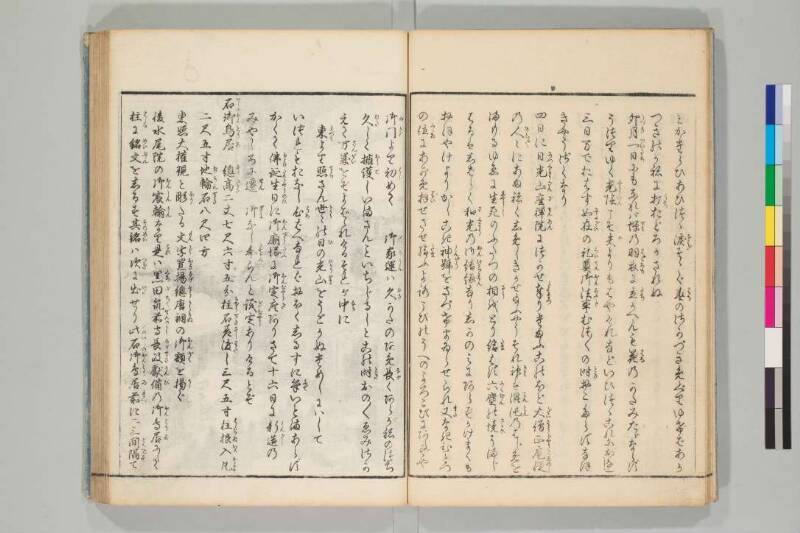
翻刻
【右丁】
とかたらひあひつゝ涙(なみだ)そゝぐ春(はる)のさかづきめぐりゆけばあか
つきのかねに打(うち)おどろかされぬ
夘月(うづき)一日(ついたち)にもなれば蝉(せみ)の羽衣(はごろも)に立(たち)かへんも花(はな)のかたみたゞならず
うつりゆく光陰(くわういん)こそ矢(や)よりもはやけれなどいひつゝこれにおなじ
三日までおはす如在(によざい)の礼奠(らいてん)御法事(おんほふじ)むつ〳〵の时(とき)おこたらずなほ
きやうざくなり
四日に日光山(につくわうざん)座禅院(ざせんゐん)につかせ奉(たてまつ)りたまふこのほど大僧正(だいそうじやう)扈従(こしゆう)
の人(ひと)〻(〴〵)にあまねくしめしきかせ給ふやうそれ神(かみ)は混沌(こんとん)のはじめを
まもるゆゑに生死(しやうし)のふたつの相(さう)をとり給(たま)はず六塵(ろくじん)の境(さかひ)にまじ
はるはしばらく和光(わくわう)の御結縁(おんけちえん)なりしかのみにあらずかけまくも
おほやけよりかしこき神號(しんがう)をさづけまゐらせられ又(また)なきひとつ
の位(くらゐ)にあがめ拝(はい)せさせ給(たま)ふよろこびのうへのよろこびにあらずや
【左丁】
御門(みかど)より初(はじ)めて 御家運(ごかうん)は久(ひさ)かたのあめ長(なが)くあらかねのつち
久(ひさ)しく擁護(おうご)しいまさんこといちじるしとこの时(とき)おの〳〵ゑみさか
えて万歳(ばんぜい)をぞよばられけるそれが中(なか)に
東(あづま)より照(てら)さん世(よ)〻(ゝ)の日(ひ)の光(ひかり)山(やま)をうごかぬためしにはして
いづれもおなし心(こゝろ)ばへなればおほくしるすに筆(ふで)いとまあらず
かくて佛(ほとけ)誕生日(たんじやうのひ)に御廟塔(おんべうたふ)に御定座(おんぢやうざ)ありさて十六日に新造(しんざう)の
みやしろに遷(せん) 御(ぎよ)なし奉(たてまつ)らんと議定(ぎぢやう)ありけるとぞ
石御鳥居(いしのおんとりゐ) 總髙(そうたかさ)二丈七尺六寸五分 柱石(ちゆうせき)差渡(さしわた)し三尺五寸 柱根入(はしらねいり)凡(およそ)
二尺五寸 地輪石(ぢりんせき)八尺四方
東照大権兼現と彫(ほり)たる文字(もんじ)置揚(おきあげ)總唐銅(そうからかね)の御額(おんがく)を掲(かゝ)ぐ
後水尾院の御宸翰(おんしんかん)なり是(これ)は黒田筑前守長政(くろだちくぜんのかみながまさ)獻備(けんび)の御鳥居(おんとりゐ)にして
柱(はしら)に銘文(めいぶん)をしるす其銘(そのめい)は次(つぎ)に出(いだ)せり此(この)石御鳥居(いしのおんとりゐ)前(まへ)に二三 間(げん)隔(へだて)て
現代語訳
【右丁】
とお話し合いながら涙を注ぐ春の盃が回っていくと、暁の鐘に打ち驚かされた。
卯月一日になると、蝉の羽衣のように生まれ変わろうとも、花の形見は尋常ではない。移りゆく時光は矢よりも速いなどと言いながら、これと同じく三日まで滞在された。如在の礼奠、御法事は親しく時を怠らず、なお興味深いものであった。
四日に日光山座禅院にお着きになった。このころ大僧正は扈従の人々に広くお示しになったことは次の通りである。「それ神は混沌の始めを守るゆえに、生死の二つの相をお取りにならない。六塵の境界に交わることは、しばらく和光の御結縁である。そればかりでなく、恐れ多くも朝廷より尊い神号を授けられ、またとない一つの位に崇め拝ませていただく喜びの上の喜びではないか。
【左丁】
御門より始めて御家運は久方の天長く、鉄の土久しく擁護し今後もすることは明らかである」と、この時それぞれが笑い栄えて万歳を呼ばれた。その中に
東より照らさん世々の日の光 山を動かぬ証として
いずれも同じ心映えなので、多くを記すのに筆の暇がない。
こうして仏誕生日に御廟塔に御定座があり、さて十六日に新造の宮社に遷御なし奉ろうと議定があったということである。
石御鳥居 総高二丈七尺六寸五分 柱石差渡し三尺五寸 柱根入およそ二尺五寸 地輪石八尺四方
「東照大権現」と彫った文字を置き上げ、総唐銅の御額を掲げる。後水尾院の御宸翰である。これは黒田筑前守長政が献備した御鳥居であって、柱に銘文を記す。その銘は次に出している。この石御鳥居の前に二三間隔てて
英語訳
【Right Page】
While conversing in this manner, they were startled awake by the dawn bell as tears flowed into the spring sake cups that were being passed around.
When the first day of the fourth month (uzuki) arrived, even if one were to be reborn like the cicada's feathered robe, the memento of flowers was extraordinary. Saying that the passing of time was swifter than an arrow, they stayed until the third day in the same manner. The ritual offerings for the presence of the spirit (nyozai no raiten) and Buddhist services were conducted intimately without neglecting the proper times, remaining deeply meaningful.
On the fourth day, they arrived at Zazen-in temple on Mount Nikko. Around this time, the Great High Priest widely demonstrated to his retinue: "The gods protect the beginning of chaos, therefore they do not take on the two aspects of life and death. Their involvement in the realm of the six dusts is temporarily a blessed connection through the harmonious light (wako). Not only that, but receiving the sacred title bestowed by the imperial court, and being worshipped in this unparalleled position - is this not joy upon joy?
【Left Page】
Beginning with the imperial gate, the family fortune will be protected for long like the eternal heavens and the enduring iron earth, and this will clearly continue in the future." At this time, everyone smiled and prospered, calling out "Banzai!" Among them:
The light of the sun that will shine from the east through the ages, making the mountains an immovable testament
Since everyone shared the same sentiment, there was no time for the brush to record much more.
Thus, on Buddha's birthday there was a regular seat at the imperial mausoleum tower, and it was decided that on the sixteenth day they would perform the ceremonial transfer to the newly constructed shrine.
Stone Torii Gate: Total height 2 jo 7 shaku 6 sun 5 bu; Pillar stone span 3 shaku 5 sun; Pillar foundation depth approximately 2 shaku 5 sun; Ground ring stone 8 shaku square
The characters "Tosho Daigongen" are carved and raised, with a bronze plaque hung above. This is the imperial calligraphy of Emperor Go-Mizuno-o. This is the torii gate donated by Kuroda Chikuzen-no-kami Nagamasa, with an inscription carved on the pillars. That inscription is presented next. In front of this stone torii gate, separated by two or three ken,