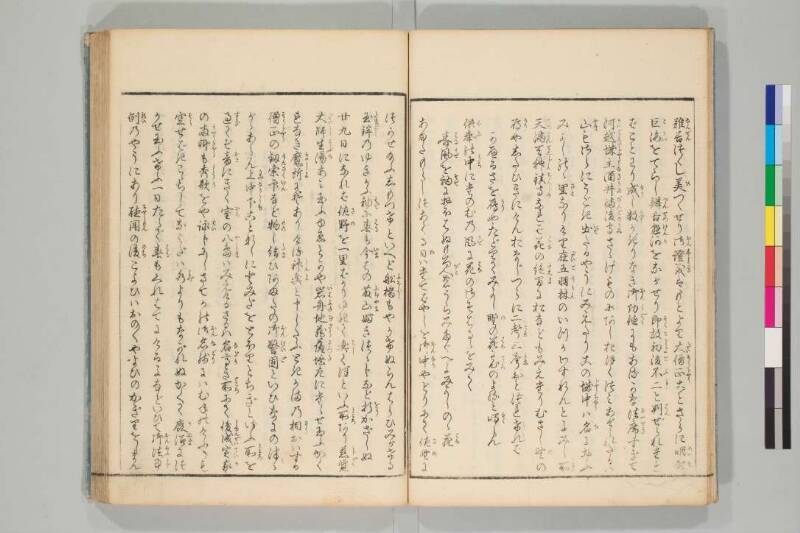
翻刻
【右丁】
難(なん)善(ぜん)つくし美(び)つくせり御證義(おんしようぎ)はもとより大僧正(だいそうじやう)ことさらに明智(めいち)
巨海(こかい)をてらし辨舌(べんせつ)懸河(けんか)をながせり即故初後不二(そくこしよごふじ)と判(はん)ぜられたれ
ばことわり成(なり)し数(かず)かぎりなき御功徳(おんくどく)にもあるかな法席(ほふせき)すぎて
河越城主(かはごえのじやうしゆ)酒井備後神(さかゐびんごのかみ)さゝげものにあしおほくつみあげられたるは
山(やま)もさらにうごき出(いで)たるやうにみえたりこの城中(じやうちゆう)は名(な)におふ
みよしのゝ里(さと)なりけり在五羽林(ざいごうりん)のいつかわすれんとよみし所(ところ)
天満天神(てんまんてんじん)鎮守(ちんじゆ)なれば花(はな)の絶間(たえま)に松などもみえたりむさし㙒(の)の
鴈(かり)やしたひきにけんおなじつらに二 聲(こゑ)三 聲(こゑ)おとづれければ
かへるさを鴈(かり)やたどりてみよし㙒(の)の花(はな)に心(こゝろ)のよると鳴(なく)らん
供奉(ぐぶ)の中(うち)にたのむの風(かぜ)に花(はな)のさそはるゝをみて
春風(はるかぜ)を袖(そで)におほはぬもろ人(びと)のうらみたぐへよみよしのゝ花(はな)
あまたもらしつあくる日(ひ)はたてばやしを御中(おんなか)やどりにて佐㙒(さの)に
【左丁】
つかせ給ふしもつけといへど舩橋(ふなばし)もやかけぬらんはらひみがける
玉鉾(たまぼこ)のゆきかふ袖(そで)に春(はる)も今(いま)はの藤(ふぢ)山(やま)ぶきつゝじなど折(をり)かざしぬ
廿九日になれば佐野(さの)を一里ばかりゆきて輿(こし)くぼといふ所(ところ)なり慈覚(じがく)
大師(だいし)生湯(うぶゆ)あみ玉ふゆゑとかや岩舟地蔵薩埵(いはふねぢざうさつた)左にたらせ玉ふかく
れなき魔所(ましよ)にぞありける神輿(しんよ)と申したふときかまの相(さう)おはする
僧正(そうじやう)の釼索印(けんさくいん)など物(もの)し給(たま)ひあまたの御警固(おんけいご)といひなにのつゝ
がらあらん上中下(かみなかしも)ことなくにとみだをとほりとちぎといふ所(ところ)を
過(すぎ)てぞ音(おと)にきく室(むろ)の八島(やしま)はみえけるさるは名高(なだか)き所(ところ)にて俊成(しゆんぜい)定家(ていか)
の両卿(りやうきやう)も秀歌(しうか)をや詠(えい)じにしさてかの御名残(おんなごり)にはむねのけふりも
空(そら)せばきこゝちしてなみだは水(みづ)よりもながれぬかくて鹿沼(かぬま)につ
かせ玉ふけふ一日たらで春(はる)もくれはてにけるよなどいひて御法事(おんほふじ)
例(れい)のやうにあり聴聞(ちやうもん)の後(のち)こよひはおの〳〵やよひのかぎりをしまん
現代語訳
【右丁】
質問も答弁も完璧に尽くされた。御証義はもちろん大僧正が特に明智を
大海に照らし、弁舌は激流のように流された。「即故初後不二」と判じられたので
道理が成立し、数限りない御功徳でもあることよ。法席が済んで
河越城主酒井備後守が供え物に多くの足(台)を積み上げられたのは
山もそのまま動き出したように見えた。この城中は名にし負う
美吉野の里であった。「在五羽林のいつか忘れん」と詠んだ所である。
天満天神が鎮守であるので、花の絶え間に松なども見えた。武蔵野の
雁が慕い来たのだろうか、同じ列に二声三声と鳴いたので、
帰る道を雁が辿って、美吉野の花に心が寄ると鳴くのであろう
供奉の中で、頼むの風に花が誘われるのを見て
春風を袖に覆わない多くの人々の恨みを重ねよ、美吉野の花よ
多くを漏らしてしまった。翌日は立林を御中泊として佐野に
【左丁】
お着きになった。下野といっても船橋も架けられているであろう。払い磨かれた
玉鉾の行き交う袖に春も今は盛りの藤、山吹、躑躅などを折って飾った。
二十九日になると佐野を一里ばかり行って輿窪という所である。慈覚
大師が産湯を浴びられた故とかいう。岩船地蔵薩埵を左にお垂らしになり、隠れ
ない魔所であった。神輿と申し上げる尊い鎌の相がおありになる。
僧正の剣索印などをお持ちになり、多くの御警固といい、何の支障が
あろうか。上中下の別なく富田を通り、栃木という所を
過ぎて、音に聞く室の八島が見えた。それは名高い所で、俊成・定家
両卿も秀歌を詠じた。さてその御名残には胸の煙も
空が狭く感じられ、涙は水よりも流れた。こうして鹿沼に
お着きになった。今日一日足らずで春も暮れ果ててしまったなどと言って御法事が
例のように行われた。聴聞の後、今夜はそれぞれ弥生の限りを惜しもう
英語訳
【Right Page】
Both questions and answers were perfectly exhausted. The testimony was naturally delivered by the Great High Priest, who particularly illuminated his wisdom over the vast sea, and his eloquence flowed like a rushing river. When he judged it as "immediate original first-last non-duality," the logic was established, representing immeasurable merit. After the dharma seat concluded, Sakai Bingo-no-kami, the lord of Kawagoe Castle, had many legs (stands) piled up with offerings, which looked as if the mountains themselves had started to move. This castle grounds was the renowned village of Miyoshino. This was the place where the poem "When shall I forget the five guards in residence" was composed. Since Tenman Tenjin is the guardian deity, pine trees could be seen among the intervals of flowers. Perhaps the geese of Musashino came in longing, as they cried in two or three voices in the same formation:
The geese must be tracing the return path, crying as their hearts are drawn to the flowers of Miyoshino
Among the retinue, seeing flowers being lured by the reliable wind:
Let the resentment of many people who do not shelter the spring wind in their sleeves accumulate, O flowers of Miyoshino
Much was left unspoken. The next day, using Tatebayashi as a midway lodging, they proceeded to Sano.
【Left Page】
They arrived there. Even though it is Shimotsuke, ship bridges must have been built. On the sleeves of the polished sacred spears going back and forth, they decorated themselves with wisteria, yamabuki, and azaleas, which were now at their spring peak.
On the 29th day, they traveled about one ri from Sano to a place called Koshikubo. It is said to be where Great Master Jigaku took his first bath as an infant. With Iwafune Jizo Satta hanging to the left, it was an unconcealed demonic place. There was a sacred appearance of what is called the divine palanquin's sickle.
The High Priest carried the sword-rope seal and other implements, and with many guards, what hindrance could there be? Without distinction of high, middle, or low rank, they passed through Tomida and beyond the place called Tochigi, where the famous Muro-no-Yashima came into view. It was a renowned place where both Lords Shunzei and Teika had composed excellent poems. In memory of them, the smoke from their hearts made the sky feel narrow, and tears flowed more than water. Thus they arrived at Kanuma. Saying that spring had ended in less than a full day, the Buddhist service was conducted as usual. After the sermon, tonight let us each lament the end of the third month.