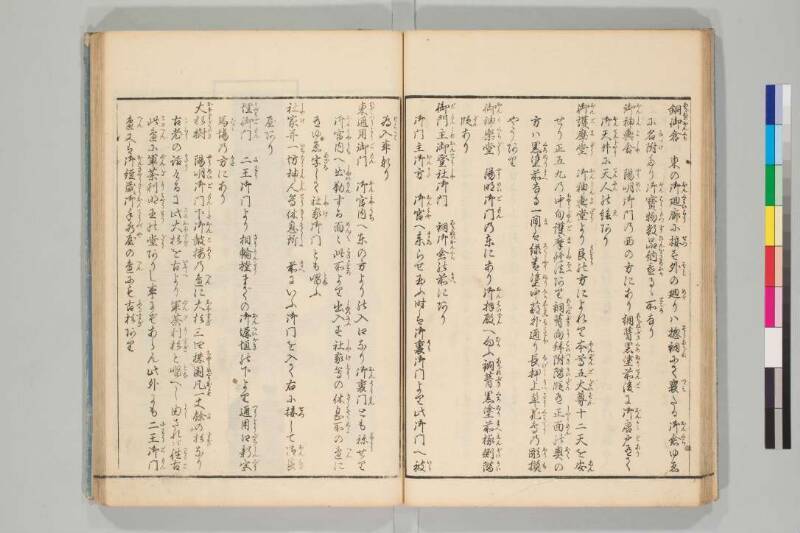
翻刻
【右丁】
銅御倉(あかゞねのおんくら) 東の御廽廊(おんくわいらう)に接(せつ)す外(そと)の廽(めぐ)りは揔銅(そうあかゞね)にて褱(つゝみ)たる御倉(おんくら)ゆゑ
に名附(なづけ)たり御寶物(おんはうもつ)数品(すひん)納置(をさめおか)るゝ所(ところ)なり
御神輿舍(おんしんよしや) 陽明(やうめい)御門の西の方にあり銅葺(あかゞねぶき)黒塗(くろぬり)前後(ぜんご)に御唐戸(おんからど)有(あり)て
御天井(おんてんじやう)に天人(てんにん)の絵(ゑ)あり
御護摩堂(おんごまだう) 御神輿堂(おんしんよだう)より艮(うしとら)の方によれり本尊(ほんぞん)五大尊(ごだいそん)十二天を安(あん)
せり正五九の中旬(ちゆうじゆん)護摩修法(ごましゆほふ)あり銅葺(あかゞねぶき)向拜附(かうはいつき)階段(かいだん)有 正面(しやうめん)の奥(おく)の
方は黒塗(くろぬり)前(まへ)なる一 間(ま)は緑青塗(ろくしやうぬり)中蔀(なかしとみ)外通(そととほ)り長押上(なげしうへ)草花鳥(さうくわてう)の彫(ほり)摸(も)
やうあり
御神樂堂(おんかくらだう) 陽明御門(やうめいごもん)の東にあり御拝殿(おんはいでん)へ向(むか)ふ銅葺(あかゞねぶき)黒塗(くろぬり)前椽側(まへえんがは)階(かい)
段(だん)あり
御門主御登社(ごもんしゆおんとうしや)御門 銅御倉(あかゞねのおんくら)の前(まへ)にあり【平出】
御門主 御方(おんかた) 御宮(おんみや)へ参(まゐ)らせ玉ふ时は御 裏(うら)御門より此御門へ被(いら)
【左丁】
為入(せらるゝ)事なり
東通用御門(ひがしつうようごもん) 御宮内(おんみやうち)へ東の方よりの入口なり御裏門(おんうらもん)とも称(しよう)せり
御宮内(おんみやうち)へ出勤(しゆつきん)する面(めん)〻(〳〵)此所(このところ)より出入(しゆつにふ)す社家等(しやけとう)の休息所(きうそくしよ)の邊(へん)に
有ゆゑ字(あざな)して社家(しやけ)御門とも唱(とな)ふ
社家(しやけ)并 一坊神人等休息所(いちばうしんじんとうきうそくしよ) 前(まへ)にいふ御門を入て右に接(せつ)して御長(おんなが)
屋あり
埋御門(うづみごもん) 二王(にわう)御門より相輪樘(さうりんたう)までの御塀垣(おんへいがき)の下より通用口(つうようぐち)新宮(しんぐう)
馬塲(ばゝ)の方(かた)にあり
大杉樹(おほすぎのき) 陽明御門下(やうめいごもんした)御皷楼(おんころう)の邊(へん)に大杉(おほすぎ)三四 株(ちゆう)圍(めぐり)凡(およそ)一丈 餘(よ)の杉(すぎ)なり
古老(こらう)の話(かたり)けるに此(この)大杉(おほすぎ)を古(いにしへ)より軍荼利杉(ぐんだりすぎ)と唱(とな)へし由(よし)されば徃古(わうご)
此邊(このへん)に軍荼利明王(ぐんだりみやうわう)の堂(だう)ありし事にぞあらん此外にも二王御門(にわうごもん)
邊(へん)又は御經蔵(おんきやうざう)御手水屋(おんてうづや)の邊(へん)にも古杉(ふるすぎ)あり
現代語訳
【右丁】
銅御倉 東の御回廊に接している。外の回りは総銅で包まれた御倉なので、この名が付けられた。御宝物数品を納め置かれる所である。
御神輿舎 陽明御門の西の方にある。銅葺き黒塗りで、前後に御唐戸があり、御天井に天人の絵がある。
御護摩堂 御神輿堂より北東の方に寄っている。本尊は五大尊、十二天を安置している。正月・五月・九月の中旬に護摩修法がある。銅葺きで向拝付き、階段がある。正面の奥の方は黒塗り、前の一間は緑青塗りで、中蔀、外通り、長押上に草花鳥の彫り模様がある。
御神楽堂 陽明御門の東にある。御拝殿へ向かう。銅葺き黒塗りで、前縁側に階段がある。
御門主御登社御門 銅御倉の前にある。御門主御方が御宮へ参られる時は、御裏御門よりこの御門へ入ら
【左丁】
れることである。
東通用御門 御宮内へ東の方よりの入口である。御裏門とも称する。御宮内へ出勤する面々がこの所より出入りする。社家等の休息所の辺にあるため、俗に社家御門とも唱える。
社家並びに一坊神人等休息所 前に言う御門を入って右に接して御長屋がある。
埋御門 二王御門より相輪橖までの御塀垣の下より通用口で、新宮馬場の方にある。
大杉樹 陽明御門下、御鼓楼の辺に大杉三四株、囲み凡そ一丈余の杉である。古老の話によると、この大杉を古より軍荼利杉と唱えた由である。されば往古この辺に軍荼利明王の堂があったことであろう。この外にも二王御門辺、又は御経蔵、御手水屋の辺にも古杉がある。
英語訳
【Right Page】
Copper Storehouse: This adjoins the eastern sacred corridor. The exterior is entirely wrapped in copper, hence the name. It is the place where several sacred treasures are stored.
Sacred Palanquin Hall: Located west of Yomei Gate. It has copper roofing and black lacquer, with Chinese doors front and rear, and paintings of celestial beings on the ceiling.
Sacred Fire Ritual Hall: Located northeast of the Sacred Palanquin Hall. The principal deities are the Five Great Venerable Ones and the Twelve Devas. Fire rituals are held in the middle ten days of the first, fifth, and ninth months. It has copper roofing with an attached worship hall and stairs. The rear of the main facade is black-lacquered, while the front section is painted with verdigris, with carved patterns of plants, flowers, and birds on the middle shutters, outer passages, and above the horizontal beams.
Sacred Music and Dance Hall: Located east of Yomei Gate, facing the Worship Hall. It has copper roofing and black lacquer, with stairs on the front veranda side.
Gate Master's Sacred Ascension Gate: Located in front of the Copper Storehouse. When the Gate Master visits the sacred shrine, he enters through this gate from the rear gate.
【Left Page】
This is the procedure.
Eastern Service Gate: This is the entrance to the shrine precincts from the east. It is also called the rear gate. All those who work within the shrine precincts enter and exit through this location. Since it is near the resting place of the shrine families, it is colloquially called the Shrine Family Gate.
Shrine Families and Temple Priests' Resting Place: Upon entering the aforementioned gate, there is a sacred longhouse attached to the right.
Buried Gate: This is a service entrance beneath the fence wall from Nio Gate to the Sorin Pagoda, located toward the New Shrine horse grounds.
Great Cedar Trees: Near Yomei Gate below the Sacred Drum Tower, there are three or four large cedars with a circumference of approximately one jo or more. According to the tales of elders, these great cedars have been called Gundari Cedars since ancient times. Therefore, in ancient times there must have been a hall of Gundari Myoo (Acalanatha) in this area. Besides these, there are also ancient cedars near Nio Gate and around the Sacred Sutra Repository and Sacred Water House.