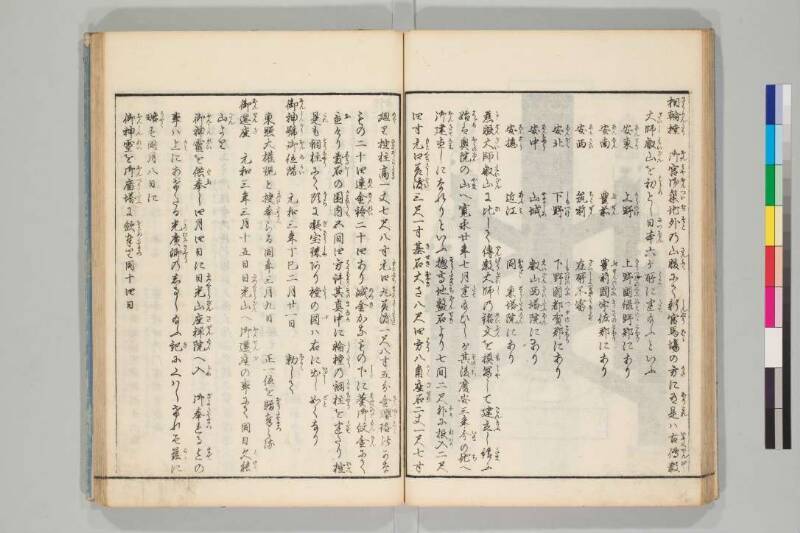
翻刻
【右丁】
相輪樘(さうりんたう) 御宮(おんみや)御築地(おんついぢ)外(そと)の山腹(さんふく)にて新宮(しんぐう)馬塲(ばゝ)の方(かた)に有(あり)是(これ)は古(いにしへ)傳敎(でんげう)
大師(だいし)叡山(えいざん)を初(はじめ)とし日本(につほん)六ヶ所(しよ)に建(たて)給ふといふ
安東(あんとう) 上野(かうつけ) 上野國(かうつけのくに)綠野郡(みとのゝこほり)にあり
安南(あんなん) 豊前(ぶぜん) 豊前國(ぶぜんのくに)宇佐郡(うさのこほり)にあり
安西(あんさい) 筑前(ちくぜん) 在所(ざいしよ)不審(つまびらかならず)
安北(あんぼく) 下野(しもつけ) 下野國(しもつけのくに)都賀郡(つがのこほり)にあり
安中(あんちゆう) 山城(やましろ) 叡山西塔院(えいざんさいたふゐん)にあり
安摠(あんそう) 近江(あふみ) 同(おなじく) 東塔院(とうたふゐん)にあり
慈眼大師(じげんだいし)叡山(えいざん)に比(ひ)して傳敎大師(でんげうだいし)の銘文(めいぶん)を摸冩(もしや)して建立(こんりふ)し給(たま)ふ
始(はじめ)は奥院(おくのゐん)の山(やま)へ寛永廿年七月 建(たて)給ひしが其後(そのゝち)慶安三年 今(いま)の地(ち)へ
御建直(おんたてなほ)しになれりといふ揔高(そうたかさ)地盤石(ちばんせき)より七間二尺 外(ほか)に根入(ねいり)二尺
四寸 元口(もとくち)差渡(さしわたし)三尺一寸 基石(きせき)大(おほき)さ八尺四 方(はう)八 角(かく)座石(ざせき)二丈一尺七寸
【左丁】
廽(めぐ)り控柱(ひかへばしら)髙(たかさ)一丈七尺八寸 元口(もとぐち)丸差渡(まろさしわたし)一尺八寸五分 金瓔珞(きんやうらく)のかな
もの二十四 連(れん)金鈴(きんれい)二十四あり滅金(めつき)かなもの下(した)に葵御紋(あふひごもん)金(きん)にて
置(お)けり敷石(しきいし)の圍内(かこひうち)五間四 方(はう)許(ばかり)其(その)真中(まなか)に輪樘(りんたう)の銅柱(とうちゆう)を建(たて)たり控(ひかへ)
是(これ)も銅柱(どうちゆう)にて頭(かしら)に凝(ぎ)【擬】宝珠(ばうしゆ)あり樘(たう)の図(づ)は右に出(いだし)し如(ごと)くなり
御神號御位階(おんしんがうおんゐかい) 元和三年丁巳二月廿一日 勅(ちよく)して【平出】
東照大權現と授(さづけ)奉(たてまつ)らる同年三月九日 正一位を贈(おくり)奉(たてまつ)らる
御遷座(おんせんざ) 元和三年三月十五日 日光山(につくわうざん)へ御遷座(おんせんざ)の事にて同日 久能(くのう)
山(ざん)より【平出】
御神靈(おんしんれい)を供奉(ぐぶ)し四月四日に日光山(につくわうざん)座禅院(ざぜんゐん)へ入(じゆ) 御(ぎよ)奉(たてまつ)れる迄(まで)の
事は上(かみ)にあげたる光廣卿(みつひろきやう)のしるし給ふ記(き)にくはしければ兹(こゝ)に
略(りやく)す同月八日に【平出】
御神靈(おんしんれい)を御庿塔(おんべうたふ)に歛(をさめ)【斂】奉(たてまつ)り同十四日【平出】
現代語訳
【右丁】
相輪橖(そうりんとう) 御宮の御築地外の山腹にて、新宮馬場の方にある。これは古く伝教大師が叡山を初めとして日本六ヶ所に建てられたという。
安東 上野 上野国緑野郡にあり
安南 豊前 豊前国宇佐郡にあり
安西 筑前 所在地不明
安北 下野 下野国都賀郡にあり
安中 山城 叡山西塔院にあり
安総 近江 同じく東塔院にあり
慈眼大師が叡山に倣って伝教大師の銘文を模写して建立された。
始めは奥院の山へ寛永二十年七月に建てられたが、その後慶安三年に今の地へ建て直されたという。総高は地盤石より七間二尺、ほかに根入り二尺四寸、元口差し渡し三尺一寸、基石の大きさ八尺四方八角、座石二丈一尺七寸
【左丁】
回り、控柱の高さ一丈七尺八寸、元口丸差し渡し一尺八寸五分、金瓔珞の金物二十四連、金鈴二十四あり。滅金の金物の下に葵の御紋を金で置いてある。敷石の囲い内五間四方ほど、その真中に輪橖の銅柱を建ててある。控えもこれも銅柱で、頭に擬宝珠がある。橖の図は右に出したとおりである。
御神号御位階 元和三年丁巳二月二十一日 勅して
東照大権現と授けられる。同年三月九日 正一位を贈られる。
御遷座 元和三年三月十五日 日光山へ御遷座のことで、同日久能山より
御神霊を供奉し、四月四日に日光山座禅院へお入れ申し上げるまでの
ことは上に挙げた光広卿が記された記録に詳しいので、ここでは
省略する。同月八日に
御神霊を御廟塔に納め奉り、同十四日
英語訳
【Right Page】
Sorin Pagoda (Sorintō) - Located on the mountainside outside the sacred precincts of the shrine, toward the direction of Shingu Horse Ground. This is said to have been built in ancient times by Dengyō Daishi, beginning with Mount Hiei, at six locations in Japan:
Antō Kōzuke Located in Midono District, Kōzuke Province
Annan Buzen Located in Usa District, Buzen Province
Ansai Chikuzen Location unknown
Anhoku Shimotsuke Located in Tsuga District, Shimotsuke Province
Anchū Yamashiro Located at Saitō-in of Mount Hiei
Ansō Ōmi Similarly at Tōtō-in
Jigen Daishi built this following the example of Mount Hiei, copying the inscription of Dengyō Daishi.
Initially it was built on Mount Oku-no-in in the 7th month of Kan'ei 20, but later in Keian 3 it was rebuilt at the present location. The total height from the foundation stone is 7 ken 2 shaku, with an additional root depth of 2 shaku 4 sun, base diameter of 3 shaku 1 sun, foundation stone size of 8 shaku square octagonal, seat stone 2 jō 1 shaku 7 sun.
【Left Page】
Around it, the supporting pillars are 1 jō 7 shaku 8 sun high, base diameter 1 shaku 8 sun 5 bu, with 24 sets of golden pendant ornaments and 24 golden bells. Below the gilded metalwork, the Tokugawa hollyhock crest is placed in gold. The enclosed area of laid stones is about 5 ken square, with a bronze pillar of the pagoda erected at its center. The supports are also bronze pillars with ornamental jewels at their tops. The diagram of the pagoda is as shown on the right.
Imperial Divine Title and Court Rank: On the 21st day of the 2nd month of Genwa 3 (1617), by imperial decree
he was granted the title Tōshō Daigongen. On the 9th day of the 3rd month of the same year, he was posthumously awarded the rank of Shōichii.
Imperial Enshrinement: On the 15th day of the 3rd month of Genwa 3, regarding the enshrinement at Mount Nikkō, on the same day from Mount Kunō
the divine spirit was reverently transported, and on the 4th day of the 4th month was enshrined at Zazen-in of Mount Nikkō. The details of these events
are recorded in detail in the writings of Lord Mitsuhiro mentioned above, so they are
omitted here. On the 8th day of the same month
the divine spirit was enshrined in the mausoleum pagoda, and on the 14th day