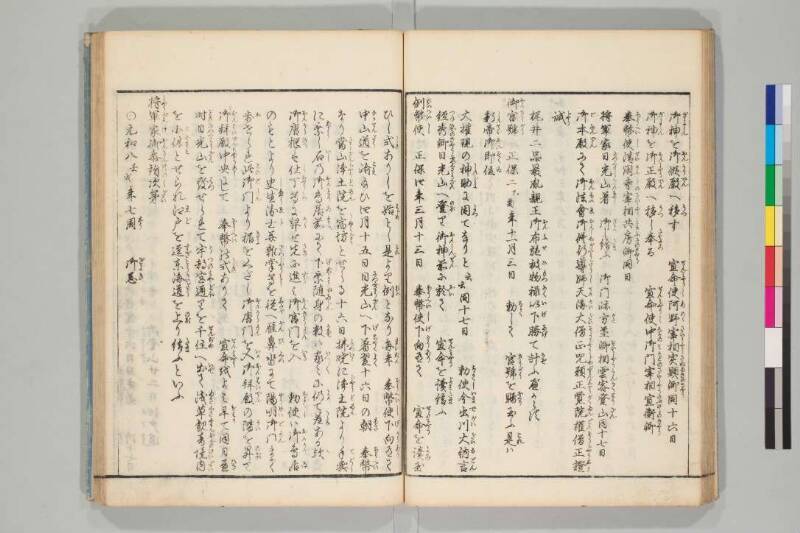
翻刻
【右丁】
御神(ぎよしん)を御假殿(おんかりでん)へ移(うつ)す 宣命使(せんみやうし)阿野宰相実顕卿(あのゝさいしやうさねあきのきやう)同十六日【平出】
御神(ぎよしん)を御正殿(おんしやうでん)へ移(うつ)し奉(たてまつ)る 宣命使(せんみやうし)中御門宰相宣衡卿(なかのみかどのさいしやうのぶひらのきやう)【平出】
奉幣使(ほうへいし)清閑寺宰相共房卿(せいかんじのさいしやうともふさのきやう)同日【平出】
将軍家 日光山(につくわうざん)着(ちやく) 御(ぎよ)し給(たま)ふ 御門跡 方(がた)並 卿相雲客(けいしやううんかく)登山(とうざん)同十七日【平出】
御本殿(ごほんでん)にて御法會(おんほふゑ)御修行(おんしゆぎやう)導師(だうし)天海大僧正(てんかいだいそうじやう)咒願(じゆぐわん)正覚院權僧正(しやうがくゐんごんそうじやう)證(しよう)
誠(じやう)【平出】
梶井二品最胤親王 御布施(おんふせ)被物禄(ひもつろく)以下(いげ)勝(あげ)て計(かぞ)ふべからず
御宮號(おんきうがう) 正保二《割書:乙| 酉》年十一月三日 勅(ちよく)して 宮號(きうがう)を贈(おくり)玉ふ是(これ)は【平出】
新帝(しんてい)御即位(おんそくゐ)【平出】
大權現の神助(しんじよ)に因(よつ)てなりと《割書:云| 云》同十七日 勅使(ちよくし)今出川大納言(いまでがはだいなごん)
經秀卿(つねひでのきやう)日光山(につくわうざん)へ登(のぼ)り御神前(おんしんぜん)に於(おい)て 宣命(せんみやう)を讀(よみ)給(たま)ふ
例幣使(れいへいし) 正保四年三月十三日 奉幣使(ほうへいし)下向(げかう)有(あり)て 宣命(せんみやう)を讀(よみ)玉
【左丁】
ひし式(しき)ありしを始(はじめ)とし是(これ)より例(れい)となり毎年(まいねん) 奉幣使(ほうへいし)下向(げかう)有(あり)て
中山道(なかせんだう)を踰(こえ)給ひ四月十五日 日光山(につくわうざん)へ下着(げちやく)翌(よく)十六日の朝 奉幣(ほうへい)
なり當山(たうざん)浄土院(じやうどゐん)を宿坊(しゆくばう)とせらる十六日 拂暁(ふつけう)に浄土院(じやうどゐん)より手輿(てごし)
に乗(じよう)し石(いし)の御鳥居前(おんとりゐまへ)にて下乗(げじよう)随身(ずゐじん)の数(かず)は家(いへ)〻(〳〵)に仍(より)て差(しな)ある欤(か)【平出】
御唐櫃(おんからひつ)は仕丁等(しちやうら)に舁(かゝ)せ先(さき)に進(すゝ)み御宮門(おんきうもん)を入(いる) 勅使(ちよくし)は御鳥居(おんとりゐ)
のもとより史生(ししやう)衛士(ゑじ)并 雜掌等(ざつしやうとう)を従(したが)へ雁鼻沓(がんびくつ)にて陽明御門(やうめいごもん)まで
歩(ほ)せられ此(この)御門(ごもん)より裾(きよ)をくだし御唐門(おんからもん)を入(いり)御拜殿(おんはいでん)の階(かい)を昇(のぼ)り
御拜殿(おんはいでん)中央(ちゆうあう)にして 奉幣(ほうへい)の式(しき)ありて 宣命(せんみやう)をよみ畢(をはり)て同日 昼(ひる)
时(どき)日光山(につくわうざん)を發(はつ)せられて宇都宮通(うつのみやどほ)りを千住(せんじゆ)へ出(いで)て浅草觀音境内(あさくさくわんおんのけいだい)
を小休(こやすみ)とせられ江戸(えど)を逕(すぎ)東海道(とうかいだう)を上(のぼ)り給(たま)ふといふ
将軍家御叅詣子第(しやうぐんけおんさんけいのしだい)
○元和八《割書:壬| 戌》年七周(しう) 御忌(ぎよき)【平出】
現代語訳
【右丁】
御神霊を御仮殿へ移す 宣命使阿野宰相実顕卿 同十六日
御神霊を御正殿へ移し奉る 宣命使中御門宰相宣衡卿
奉幣使清閑寺宰相共房卿 同日
将軍家が日光山に到着される 御門跡方並びに卿相雲客が登山 同十七日
御本殿にて御法会御修行 導師天海大僧正 咒願正覚院権僧正証誠
梶井二品最胤親王 御布施被物禄以下数え切れないほど
御宮号 正保二年十一月三日 勅して宮号を贈られる これは
新帝の御即位が
大権現の神助によるものであるという 同十七日 勅使今出川大納言
経秀卿が日光山へ登り御神前において宣命を読まれる
例幣使 正保四年三月十三日 奉幣使下向があって宣命を読まれ
【左丁】
た式があったのを始めとし、これより例となり毎年奉幣使下向があって
中山道を越えられ四月十五日に日光山へ下着、翌十六日の朝に奉幣
となる 当山浄土院を宿坊とされる 十六日払暁に浄土院より手輿
に乗り石の御鳥居前にて下乗 随身の数は家々により差があるか
御唐櫃は仕丁等に担がせ先に進み御宮門を入る 勅使は御鳥居
のもとより史生衛士並びに雑掌等を従え雁鼻沓にて陽明御門まで
歩かれ、この御門より裾を下し御唐門を入り御拝殿の階を昇り
御拝殿中央にして奉幣の式があって宣命を読み終わって同日昼
時に日光山を発せられて宇都宮通りを千住へ出て浅草観音境内
を小休みとされ江戸を過ぎ東海道を上られるという
将軍家御参詣の次第
○元和八年七周御忌
英語訳
【Right Page】
The divine spirit was moved to the temporary hall. Imperial messenger: Counselor Ano Saneaki. On the same 16th day,
the divine spirit was moved to the main hall. Imperial messenger: Counselor Nakamikado Nobuhira.
Imperial offering messenger: Counselor Seikanji Tomofusa. On the same day,
the Shogun arrived at Mount Nikkō. Temple abbots and court nobles climbed the mountain. On the 17th day,
a Buddhist ceremony was performed at the main hall. Chief priest: Great Monk Tenkai. Prayer leader: Acting Great Monk Shōgaku-in Shōjō.
Prince Kajii Second Rank Saiin. Imperial offerings, gifts, and stipends beyond counting.
Imperial Shrine Title: On the 3rd day of the 11th month of Shōhō 2 (1645), by imperial decree a shrine title was bestowed. This was because
the new emperor's accession
was due to the divine assistance of the Daigongen. On the 17th day, imperial messenger Great Counselor Imadegawa
Tsunehide climbed Mount Nikkō and read the imperial edict before the divine presence.
Annual Imperial Messengers: On the 13th day of the 3rd month of Shōhō 4 (1647), there was a dispatch of an offering messenger who read the imperial edict
【Left Page】
in a ceremony that became the beginning, and from this it became customary for annual offering messengers to be dispatched.
They cross the Nakasendō road and arrive at Mount Nikkō on the 15th day of the 4th month, with the offering ceremony on the morning of the following 16th day.
Jōdo-in of this mountain serves as their lodging. At dawn on the 16th, they ride in palanquins from Jōdo-in
and dismount at the stone torii gate. The number of attendants varies by household.
The imperial offering chest is carried by servants who proceed first and enter the shrine gate. The imperial messenger from the base of the torii
is accompanied by scribes, guards, and various functionaries, walking in ritual shoes to the Yōmei Gate.
From this gate they lower their hems, enter the Chinese-style gate, and ascend the steps of the worship hall.
At the center of the worship hall, the offering ceremony takes place and the imperial edict is read. Finished, on the same day at noon
they depart Mount Nikkō, take the Utsunomiya route to Senju, make a brief rest at Asakusa Kannon temple grounds,
pass through Edo, and ascend the Tōkaidō road.
Sequence of the Shogun's Pilgrimage
○Genwa 8 (1622) - Seventh anniversary memorial service