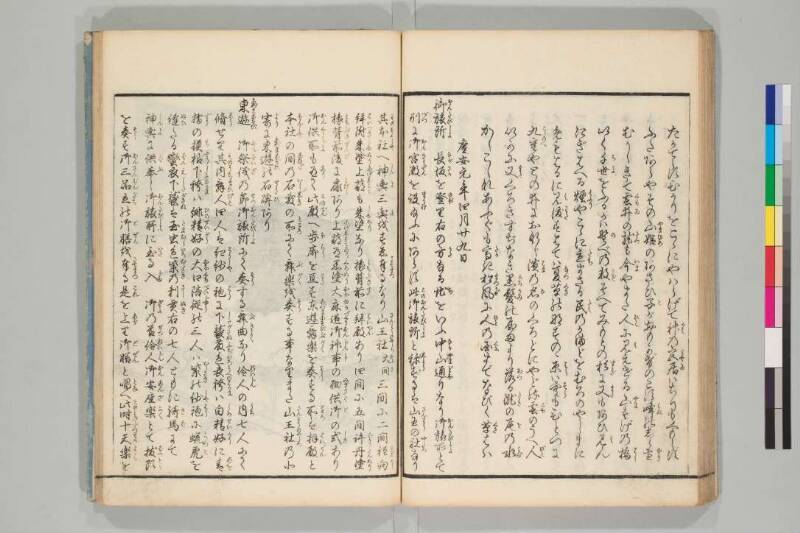
翻刻
【右丁】
たかてらすひかりをこゝにやはらげて神(かみ)の宮居(みやゐ)はちりもくもらず
ふたあらやその山姫(やまひめ)のあさひ子(こ)がおもかげのこす峰(みね)のしら雪(ゆき)
むかしきて雲井(くもゐ)の龍(たつ)も今(いま)やまた人(ひと)に見(み)えける山(やま)すげの橋(はし)
いく千世(ちよ)をふるかは㙒(の)べの数(かず)そへてみもとの杉(すぎ)に又(また)もあひ見(み)ん
にぎはへる煙(けふり)やこゝに立(たち)まさる民(たみ)のかまどをむろのやしまに
めもはるに見渡(みわた)すはては夏草(なつくさ)のなすのゝ原(はら)は空(そら)もひとつに
九重(こゝのへ)やとの井におなじ濵(はま)の名(な)のくろどにやどる雲(くも)のうへ人(びと)
いかに又(また)くろきすぢなき黒髪(くろかみ)のやまより落(おつ)る瀧(たき)の尾(を)の水(みづ)
かしこしれあふぐも高(たか)き松風(まつかぜ)に人(ひと)の国(くに)までなびく草(くさ)はは
慶安元年四月廿九日
御旅所(おんたびしよ) 長坂(ながさか)を登(のぼ)り右の方(かた)なる地(ち)をいふ中山通(なかやまどほ)りなり御旅所(おんたびしよ)とて
別(べつ)に御宮殿(おんきうでん)を設(まうけ)給ふにあらず此(この)御旅所(おんたびしよ)と称(しよう)するは山王(さんわう)の社(やしろ)なり
【左丁】
其(その)本社(ほんしや)へ神輿(しんよ)三輿( よ)をすゑ奉(たてまつ)るなり山王社(さんわうのやしろ)《割書:大間(おふま)》三間に二間 程(ほど)向(かう)
拜附(はいつき)朱塗(しゆぬり)上蔀(あげしとみ)も朱塗(しゆぬり)なり橡葺(とちぶき)前(まへ)に拜殿(はいでん)あり四間に五間 許(ばかり)丹塗(たんぬり)
橡葺(とちぶき)前後(ぜんご)に扉(とびら)あり上蔀(あげしとみ)有(あり)黒塗(くろぬり)大床造(おほゆかづくり)御神事(おんじんじ)の砌(みぎり)供御(ぐご)の式(しき)あり
御供所(おんくうじよ)も有(あり)て此殿(このでん)へ歩廊(ほらう)を亘(わた)す東逰(あづまあそび)舞樂(ぶがく)を奏(そう)する所(ところ)は拝殿(はいでん)と
本社(ほんしや)の間(あひだ)の石敷(いししき)の所(ところ)にて舞樂(ぶがく)を奏(そう)する事なりまた山王社(さんわうのやしろ)の北
寄(より)に東逰(あづまあそび)の石碑(せきひ)あり
東逰(あづまあそび) 御祭儀(おんさいぎ)の節(せつ)御旅所(おんたびしよ)にて奏(そう)する舞曲(ぶきよく)なり伶人(れいじん)の内(うち)七人にて
脩(しう)せり其内(そのうち)舞人(まひびと)四人は紅紗(こうしや)の袍(はう)に下襲(したがさね)藤色(ふじいろ)表袴(うへのはかま)は白(しろ)精好(せいこう)に青(あを)
摺(ずり)の摸様(もやう)下袴(したばかま)は緋(ひの)精好(せいがう)の大口(おほくち)陪従(べいじゆう)の三人は紫(むらさき)の紗袍(しやはう)に蝋虎(らつこ)【猟虎】を
縫(ぬひ)たる蠻衣(ばんえ)下襲(したがさね)は玉虫色(たまむしいろ)紫(むらさき)の刺貫(さしぬき)右の七人ともに騎馬(きば)にて【平出】
神輿(しんよ)に供奉(ぐぶ)し御旅所(おんたびしよ)に至(いた)る入(じゆ) 御(ぎよ)の節(せつ)伶人(れいじん)御安座樂(おんあんざらく)とて拔頭(ばつとう)
を奏(そう)す御三品立(おんさんぼんだち)の御膳(ごぜん)を奉(たてまつ)る是(これ)を上(あが)り御膳(ごぜん)と唱(とな)へ此时(このとき)十天樂(じつてんらく)を
現代語訳
【右丁】
高く照らす光をここに和らげて 神の宮居は塵も曇らず
二荒山のその山姫の朝日子が 面影残す峰の白雪
昔来て雲井の龍も今やまた 人に見えける山菅の橋
幾千世を経る川野辺の数添えて 御許の杉にまたも会い見ん
賑わえる煙やここに立ち勝る 民のかまどを室の八島に
目も遥に見渡す果ては夏草の 那須の野原は空も一つに
九重や殿の井に同じ浜の名の 黒戸に宿る雲の上人
いかにまた黒き筋なき黒髪の 山より落つる滝の尾の水
畏し知れ仰ぐも高き松風に 人の国まで靡く草葉は
慶安元年四月二十九日
御旅所 長坂を登り右の方にある地をいう。中山通りである。御旅所といって特別に御宮殿を設けるわけではない。この御旅所と称するのは山王の社である。
【左丁】
その本社へ神輿三輿を据え奉るのである。山王社(大間)は三間に二間ほど、向拝付きで朱塗り、上蔀も朱塗りである。橡葺きで、前に拝殿がある。四間に五間ほどで丹塗り、橡葺き、前後に扉があり、上蔀もある。黒塗りで大床造りである。御神事の際には供御の式があり、御供所もあって、この殿へ歩廊を渡している。東遊・舞楽を奏する所は拝殿と本社の間の石敷きの所で、舞楽を奏することになっている。また山王社の北寄りに東遊の石碑がある。
東遊 御祭儀の節に御旅所にて奏する舞曲である。伶人のうち七人で修められている。その内、舞人四人は紅紗の袍に下襲は藤色、表袴は白の精好に青摺りの模様、下袴は緋の精好の大口である。陪従の三人は紫の紗袍に蝋虎を縫った蕃衣、下襲は玉虫色、紫の刺貫である。右の七人ともに騎馬にて神輿に供奉し、御旅所に至る。入御の節、伶人は御安座楽として抜頭を奏する。御三品立ての御膳を奉る。これを上がり御膳と唱え、この時十天楽を
英語訳
【Right Page】
The high-shining light is softened here, and the divine dwelling place is unclouded by even a speck of dust
The mountain princess Asahiko of Mount Futarasan leaves her reflection on the white snow of the peaks
The dragon that once came from the cloud realm now again appears to people at the Yamaga Bridge
Through countless ages, adding to the numbers of the riverside fields, may we meet again at the cedars of your sacred presence
Does the bustling smoke rise higher here than the hearth fires of the people in the eight islands of Muro
As far as the eye can see in the distance, the summer grasses of the Nasu plains merge with the sky
In the nine-fold palace, at the well with the same name as the beach, cloud-dwelling nobles lodge at Kurodo
How is it that the water of Takino'o falls from the mountain of black hair without black streaks
Know this reverence: even the grass leaves that bend in the high pine wind that we look up to reach to other lands
Keian 1st year, 4th month, 29th day
Otabisho (Temporary Shrine): This refers to the area on the right side when climbing the Nagasaka slope. It is along the Nakayama road. It is not that a special palace is constructed for the otabisho. What is called this otabisho is the Sannō Shrine.
【Left Page】
Three portable shrines are placed in that main shrine. The Sannō Shrine (Ōma) is about three by two bays, with a worship hall attached, painted vermillion, and the raised bamboo blinds are also vermillion-painted. It has a horse chestnut bark roof, with a worship hall in front. This is about four by five bays, painted red, with a horse chestnut bark roof, doors front and back, raised bamboo blinds, black-painted, and built in the raised-floor style. During divine ceremonies there are rituals for food offerings, and there is also a food preparation area connected to this hall by a covered corridor. The place where Azuma-asobi and court dance are performed is on the stone-paved area between the worship hall and main shrine, where court dance is performed. Also, to the north of the Sannō Shrine there is a stone monument for Azuma-asobi.
Azuma-asobi: This is a dance performed at the otabisho during festival ceremonies. It is performed by seven court musicians. Among these, the four dancers wear red gauze robes with purple under-robes, white silk outer hakama with blue-dyed patterns, and red silk ōguchi lower hakama. The three attendants wear purple gauze robes with barbarian garments embroidered with tigers, beetle-colored under-robes, and purple sashinuki. All seven ride on horseback, accompanying the portable shrines to the otabisho. During the entry ceremony, the musicians perform Battō as the "divine seating music." The three-course meal is offered. This is called the "ascending meal," and at this time Jittenraku is