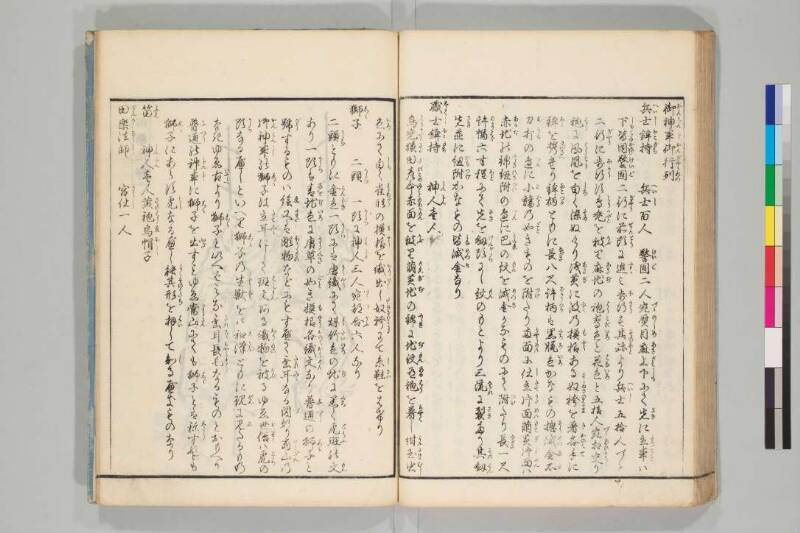
翻刻
【右丁】
御神事御行列(おんじんじおんぎやうれつ)
兵士鉾持(へいしほこもち) 兵士(へいし)百人 警固(けいご)二人 宛(づゝ)熨目(のしめ)麻上下(あさがみしも)にて先(さき)に立事(たつこと)は
下(しも)皆(みな)同(おなじ)警固(けいご)二行( ぎやう)に前頭(ぜんとう)に進(すゝ)み歩行(ほかう)す其跡(そのあと)より兵士(へいし)五拾人づゝ
二行( ぎやう)に歩行(ほかう)す鳥兠(とりかぶと)を被(かぶ)り麻地(あさぢ)の袍(はう)鳶色(とびいろ)と花色(はないろ)と五拾人 宛(づゝ)相交(あひまじ)り
袍(はう)に鳳凰(はうわう)を白(しろ)く染(そめ)ぬけり淺黄(あさぎ)に波(なみ)の摸様(もやう)ある奴袴(さしぬきのはかま)を着(き)各(おの〳〵)手(て)に
鉾(ほこ)を携(たづさへ)たり鉾(ほこ)柄(つか)ともに長(ながさ)八尺 許(ばかり)柄(つか)は黒臘(くろろ)【蝋ヵ】色(いろ)かなもの揔滅金(そうめつき)太(た)
刀打(ちうち)の邊(へん)に小旛(こばた)の如(ごと)きものを附(つけ)たり両面(りやうめん)に仕立(したて)片面(かためん)萠黃(もえぎ)片面(かためん)は
赤地(あかぢ)の錦(にしき)紐附(ひもつけ)の邊(へん)に巴(ともゑ)の紋(もん)を滅金(めつき)かなものにて附(つけ)たり長(ながさ)一尺
許(ばかり)幅(はゞ)六寸 程(ほど)にて先(さき)を剱頭(けんがしら)にし紋(もん)のもとより三流( ながれ)に裂(さき)たり其剱(そのけん)
先(さき)並に紐附(ひもつけ)かなもの皆(みな)滅金(めつき)なり
職士鉾持(しよくしほこもち) 神人(しんじん)壹人
鳥兠(とりかぶと)猿田彦命(さるだびこのみことの)赤面(あかめん)を被(かぶ)り萠黃地(もえぎぢ)の錦(にしき)に地紋(ぢもん)有(ある)袍(はう)を着(ちやく)し紺玉虫(こんたまむし)
【左丁】
色(いろ)にて白(しろ)く雀形(すゞめがた)の摸様(もやう)を織出(おりいだし)し奴袴(さしぬきのはかま)にて糸鞋(しかい)をはけり
獅子(しゝ) 二頭( かしら) 一頭( かしら)は神人(しんじん)三人 宛(づゝ)都合(つがふ)六人なり
二頭( かしら)ともに金色(こんじき)一頭( かしら)には唐織(からおり)にて煤竹色(すゝたけいろ)の地(ぢ)に黒(くろ)く虎斑(とらふ)の文(もん)
あり一頭( かしら)は青地色(あをぢいろ)に唐草(からくさ)の如(ごと)き摸様(もやう)各(おの〳〵)織文(おりもん)なり普通(ふつう)の獅子(しゝ)と
號(がう)するものは繪(ゑ)又(また)は彫物(ほりもの)などにもすべて垂耳(たれみゝ)なる図(づ)なり當山(たうざん)の
御神事(おんじんじ)の獅子(しゝ)は立耳(たてみゝ)にして斑文(はんもん)ある織物(おりおの)を被(かぶ)るゆゑ世俗(せぞく)は虎(とら)の
頭(かしら)なるべしといへり獅子(しゝ)の生獣(しやうじう)をば和漢(わかん)ともに現(げん)に見(み)たるもの
なきゆゑ古(いにしへ)より獅子(しゝ)といへばみな垂耳(たれみゝ)長毛(ちやうまう)なるものとおもへり
普通(ふつう)の神事(じんじ)に獅子(しゝ)を出(いだ)すことゆゑ當山(たうざん)にても獅子(しゝ)とは称(しよう)すれども
獅子(しゝ)にあらず虎(とら)なるべし能(よく)其形(そのかたち)を拝(はい)して知(し)るべきものなり
笛(ふえ) 神人(しんじん)壱人 黄袍(きのはう)烏帽子(ゑぼし)
田樂法師(でんかくほうし) 宮仕(きうし)一人
現代語訳
【右丁】
御神事御行列
兵士鉾持 兵士百人 警固二人ずつ。熨斗目麻上下を着て先に立つことは
下皆同じ。警固二行に前頭に進み歩行する。その跡より兵士五十人ずつ
二行に歩行する。鳥兜を被り麻地の袍、鳶色と花色と五十人ずつ相交じり、
袍に鳳凰を白く染め抜けり。浅黄に波の模様ある指貫袴を着、各々手に
鉾を携えたり。鉾柄ともに長さ八尺許り、柄は黒蝋色金物総滅金、太刀
打ちの辺りに小旗の如きものを付けたり。両面に仕立て、片面萌黄、片面は
赤地の錦。紐付けの辺りに巴の紋を滅金金物にて付けたり。長さ一尺
許り幅六寸程にて先を剣頭にし、紋の元より三流に裂けたり。その剣
先並びに紐付け金物皆滅金なり。
職士鉾持 神人一人
鳥兜、猿田彦命の赤面を被り、萌黄地の錦に地紋ある袍を着し、紺玉虫
【左丁】
色にて白く雀形の模様を織り出しし指貫袴にて糸鞋を履けり。
獅子 二頭 一頭は神人三人ずつ都合六人なり
二頭ともに金色。一頭には唐織にて煤竹色の地に黒く虎斑の文
あり。一頭は青地色に唐草の如き模様、各々織文なり。普通の獅子と
号するものは絵又は彫物などにもすべて垂れ耳なる図なり。当山の
御神事の獅子は立耳にして斑文ある織物を被るゆえ、世俗は虎の
頭なるべしと言えり。獅子の生獣をば和漢ともに現に見たるもの
なきゆえ、古より獅子と言えばみな垂れ耳長毛なるものと思えり。
普通の神事に獅子を出すことゆえ、当山にても獅子とは称すれども、
獅子にあらず虎なるべし。よくその形を拝して知るべきものなり。
笛 神人一人 黄袍烏帽子
田楽法師 宮仕一人
英語訳
【Right Page】
Divine Ritual Procession
Spear-bearing soldiers: One hundred soldiers with two guards each. Wearing noshime hemp formal dress, they lead at the front, which is
the same for all below. The guards advance in two rows at the front and walk in procession. Behind them, soldiers in groups of fifty each
walk in two rows. They wear bird helmets and hemp robes, fifty each in kite-brown and flower-colored alternately mixed,
with white phoenixes dyed on the robes. They wear light yellow hakama trousers with wave patterns, each carrying
a spear in hand. The spears including handles are about eight shaku long, the handles are black lacquered metal entirely gilded, with
small banner-like objects attached near the sword guard area. Made double-sided, one side yellow-green, the other side
red brocade. Near the cord attachment, tomoe crests are attached with gilded metal. About one shaku long,
about six sun wide, with sword-point tips, split into three streamers from the base of the crest. The sword
points and cord attachment metalwork are all gilded.
Professional spear-bearer: One shrine attendant
Wearing a bird helmet and red mask of Sarutahiko-no-mikoto, dressed in yellow-green brocade robe with ground patterns, dark iridescent
【Left Page】
colored sashinuki hakama with white sparrow-shaped patterns woven in, wearing thread shoes.
Lions: Two heads, with three shrine attendants per head, totaling six people
Both heads are golden. One has Chinese weaving with black tiger stripe patterns on a
soot-bamboo colored ground. The other has arabesque-like patterns on blue ground, each with woven designs. What are commonly called
lions in pictures or carvings all have drooping ears in their depictions. The lions in this mountain's
divine ritual have upright ears and wear spotted woven cloth, so common people say they must be tiger
heads. Since no one in Japan or China has actually seen live lions,
from ancient times when people spoke of lions, they all thought of them as having drooping ears and long hair.
Since lions appear in ordinary divine rituals, this mountain also calls them lions, but
they are not lions but must be tigers. One can know this well by observing their form.
Flute: One shrine attendant in yellow robe and court cap
Dengaku priest: One shrine servant