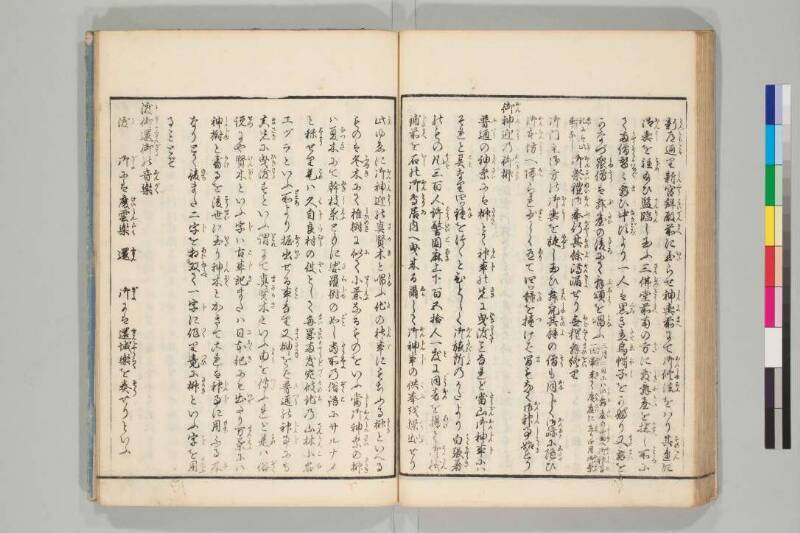
翻刻
【右丁】
新道通(しんみちとほ)り新宮(しんぐう)拜殿前(はいでんまへ)に至(いた)らせ神輿前(しんよまへ)にて御修法(おんしゆほふ)をはり其邊(そのへん)に
御輿(おんこし)を駐(とゞめ)給ひ監臨(かんりん)し玉ふ三佛堂前(さんぶつだうまへ)南の方(かた)に敷舞臺(しきぐたい)を搆(かまへ)し所(ところ)に
て両僧(りやうそう)《振り仮名:替〻|かはる〴〵》舞(ま)ひ中頃(なかごろ)より一人は黒(くろ)き立烏帽子(たてゑぼし)をかぶり又(また)舞(まひ)を
かなづ衆僧(しゆそう)は舞臺(ぶたい)の後(うしろ)にて舞頌(ぶしよう)を唱(とな)ふ《割書:三月二日には此(この)舞臺(ぶたい)の正面(しやうめん)へ御神馬(おんしんめ)|一匹( ひき)牽來(ひきき)て廣庭(ひろには)に立(たて)り四月 御祭(おんさい)》
《割書:礼(れい)には此(この)|事(こと)なし》御祭禮(おんさいれい)御奉行(おんぶぎやう)其餘(そのよ)蹲踞(そんきよ)せり無程(ほどなく)舞(まひ)終(をは)り【平出】
御門主御方の御輿(おんこし)を旋(めぐら)し玉ひ舞衆(まひしゆ)其餘(そのよ)の僧(そう)も同(おな)じく御跡(おんあと)に随(したが)ひ
御本坊(おんほんばう)へ帰(かへ)られ少(すこ)しく有(あり)て四ッ鐘(かね)を撞(つ)けば間(ま)もなく御神事(おんじんじ)始(はじま)れり
《振り仮名:御神迎の御榊|おんしんかう おんさかき》
普通(ふつう)の神祭(しんさい)には榊(さかき)とて神事(じんじ)の先(さき)に曳渡(ひきわたす)ことなれど當山(たうざん)御神事(おんじんじ)には
それと異(こと)なり四ッ鐘(かね)をつくとひとしく御旅所(おんたびしよ)のかたより白張着(はくちやうき)
のもの凡(およそ)三百人 許(ばかり)警固(けいご)麻上下(あさ )百五拾人一度( ど)に同音(どうおん)を揚(あげ)て御桟(おんさん)
敷前(じきまへ)を石(いし)の御鳥居(おんとりゐ)内へ曳來る爾(しか)して御神事(おんじんじ)の供奉(ぐぶ)を操出(くりいだ)せり
【左丁】
此(この)ゆゑに御神迎(おんしんかう)の真賢木(さかき)と唱(とな)ふ他(た)の神事(じんじ)にもちふる榊(さかき)といへる
ものは冬木(ふゆき)にて《振り仮名:椎𣗳|しひのき》に似(に)て小葉(せうえふ)なるものをいふ當御神祭(たうおんしんさい)の榊(さかき)
は夏木(なつき)にて幹(みき)枝葉(しえふ)ともに《振り仮名:娑羅𣗳|さらじゆ》の如(ごと)し當所(たうしよ)の俗語(ぞくご)にサルナメ
と称(しよう)せり是(これ)は久自良村(くじらむら)の役(やく)として每歳(まいさい)両度宛(りやうどづゝ)彼地(かのち)の山林(さんりん)小名(こな)
エヅラといふ所(ところ)より堀出(ほりいだ)せる事(こと)なり又(また)榊(さかき)をば普通(ふつう)の神事(じんじ)にも
真先(まさき)に曳渡(ひきわた)すといふ謂(いはれ)にて真賢木(まさかき)といふ由(よし)を傳(つた)ふれど是(これ)は俗(ぞく)
説(せつ)にや賢木(けんぼく)といふ字(じ)は古事記(こじき)または日本紀(にほんき)にも出(いで)たり万葉(まんえふ)には
《振り仮名:神𣗳|しんじゆ》と書(かけ)るを後世(こうせい)に至(いた)り神木(しんぼく)とかきてこれは神事(じんじ)に用(もち)ふる木(き)
なりとて後(のち)また二字( じ)を相双(あひならべ)て一字( じ)に作(つく)り竟(つひ)に榊(さかき)といふ字(じ)を用(もちふ)
ることとぞ
《振り仮名:渡御還御の音樂|とぎよくわんぎよ おんがく》
渡(と) 御(ぎよ)には慶雲樂(けいうんらく) 還(くわん) 御(ぎよ)には還城樂(くわんじやうらく)を奏(そう)せりといふ
現代語訳
【右丁】
新道通りを通って新宮拝殿前に至らせ、神輿前にて御修法を終え、その辺りに
御輿を止められ監臨し給う。三仏堂前南の方に敷舞台を構えた所に
て両僧が交互に舞い、中頃より一人は黒い立烏帽子をかぶり、また舞を
奏でる。衆僧は舞台の後ろにて舞頌を唱える《三月二日にはこの舞台の正面へ御神馬|一匹牽いて来て広庭に立てるが、四月御祭》
《礼にはこの|ことなし》。御祭礼御奉行その他蹲踞している。間もなく舞終わり
御門主御方の御輿を回し給い、舞衆その他の僧も同じく御跡に従い
御本坊へ帰られ、少しくあって四つ鐘を撞けば間もなく御神事始まれり。
《御神迎の御榊》
普通の神祭には榊とて神事の先に曳き渡すことであるが、当山御神事には
それと異なり、四つ鐘を撞くと等しく御旅所の方より白張着
のもの凡そ三百人許り、警固麻上下百五十人が一度に同音を上げて御桟
敷前を石の御鳥居内へ曳いて来る。そうして御神事の供奉を繰り出せり。
【左丁】
この故に御神迎の真賢木と唱える。他の神事に用いる榊といえる
ものは冬木にて《椎の木》に似て小葉なるものをいう。当御神祭の榊
は夏木にて幹枝葉ともに《娑羅樹》の如し。当所の俗語にサルナメ
と称せり。これは久自良村の役として毎歳両度ずつ彼地の山林小名
エヅラという所より掘り出せることなり。また榊をば普通の神事にも
真先に曳き渡すという謂れにて真賢木という由を伝えれど、これは俗
説にや。賢木という字は古事記または日本紀にも出でたり。万葉には
《神樹》と書けるを後世に至り神木と書きて、これは神事に用いる木
なりとて後また二字を相並べて一字に作り、ついに榊という字を用いる
こととぞ。
《渡御還御の音楽》
渡御には慶雲楽、還御には還城楽を奏せりという。
英語訳
【Right Page】
Proceeding along the new road route to arrive before the Shingū worship hall, completing the ritual prayers before the portable shrines, and
stopping the palanquin in that vicinity to oversee the proceedings. At a place where a dance stage was constructed on the south side of the Sanbutsu Hall,
the two monks dance alternately, and from the middle part one wears a black standing court cap and performs the dance.
The assembled monks chant dance songs behind the stage. 《On March 2nd, one sacred horse is|led to the front of this stage and stationed in the wide courtyard, but at the April festival》
《this does|not occur》. The festival magistrate and others sit in formal position. Soon the dance ends, and
His Eminence the Gate Master turns his palanquin around, while the dancers and other monks likewise follow behind
and return to the main temple. After a short while, when the four o'clock bell is struck, the divine ritual soon begins.
《Sacred Sakaki for Welcoming the Deities》
In ordinary divine festivals, sakaki branches are drawn forward at the beginning of the ritual, but in this mountain's divine ritual
it differs from that. As soon as the four o'clock bell is struck, from the direction of the temporary shrine, those in white robes
numbering about three hundred, with one hundred fifty guards in hemp formal dress, raise their voices in unison and draw them before the viewing
pavilion into the stone torii gate area. Thus they bring forth the attendants for the divine ritual.
【Left Page】
For this reason it is called the true sakaki for welcoming the deities. What is called sakaki used in other divine rituals
are winter trees resembling《shiinoki (chinquapin oak)》with small leaves. The sakaki of this divine festival
are summer trees with trunk, branches and leaves all like《sala trees》. In the local dialect they are called
Saruname. These are the responsibility of Kujira village, and every year twice they are dug up from the mountain forest subdivision
called Ezura in that area. Also, regarding sakaki being drawn forward first in ordinary divine rituals,
the tradition explains this as the origin of calling them "true sakaki," but this may be folk
explanation. The characters for "sakaki" appear in the Kojiki and Nihon Shoki. In the Man'yōshū it is
written as《divine tree》, but in later ages it came to be written as "sacred tree," meaning trees used in divine rituals,
and later the two characters were combined into one character, finally coming to use the character "sakaki."
《Music for Procession and Return》
For the procession, Keiun-gaku music is performed, and for the return, Kanjō-gaku music is performed.