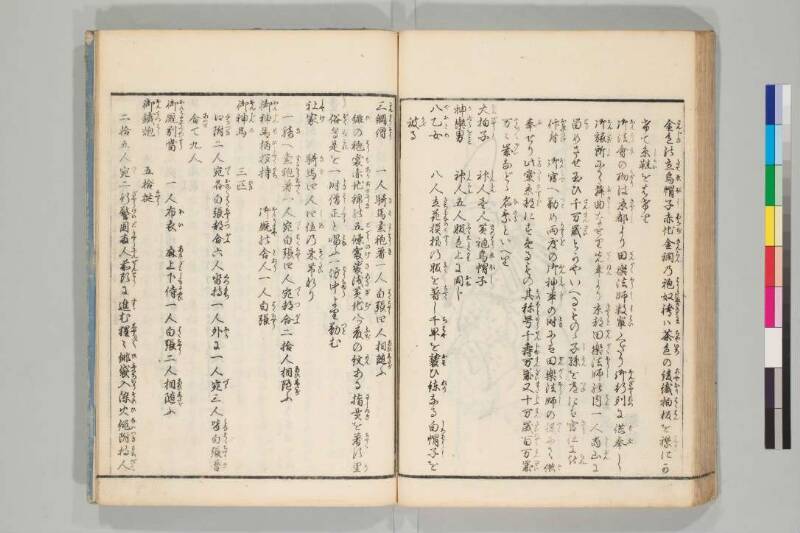
翻刻
【右丁】
金色(こんじき)の立烏帽子(たてゑぼし)赤地(あかぢ)金襴(きんらん)の袍(はう)奴袴(さしぬきのはかま)は茶色(ちやいろ)の綾織(あやおり)拍板(はくはん)を襟(えり)にか
けて糸鞋(しかい)をはけり【平出】
御法會(おんほふゑ)の砌(みぎり)は京都(きやうと)より田樂法師(てんがくほうし)数軰(すはい)くだり御行列(おんぎやうれつ)に供奉(ぐぶ)し
御旅所(おんたびしよ)にて舞曲(ぶきよく)なせり先年(せんねん)より京都田樂法師(きやうとでんがくほうし)の内(うち)一人 當山(たうざん)に
畄(とゞ)めさせ玉ひ千万歳(せんまんざい)とかやいへるものゝ子孫(しそん)を常(つね)には宮仕(きうし)に被(られ)
仰付(おほせつけ) 御宮(おんみや)へ勤(つと)め両度(りやうど)の御神事(おんしんじ)の时(とき)には田樂法師(でんがくほうし)の役(やく)にて供(ぐ)
奉(ぶ)せり此黨(このたう)京都(きやうど)にすめるもの其(その)称号(しようがう)千壽万歳(せんじゆまんざい)又(また)十万歳(じふまんざい)百万歳(ひやくまんざい)
《振り仮名:万〻歳|まん〳〵ざい》などゝ名乗(なのる)といへり
大拍子(おほびやうし) 神人(しんじん)壱人 黄袍(きのはう)烏帽子(ゑぼし)
神樂男(かぐらをとこ) 神人(しんじん)五人 服色(ふくしよく)上(かみ)に同(おな)じ
八乙女(やおとめ) 八人 立花摸様(たちばなのもやう)の服(ふく)を着(ちやく)し千早(ちはや)を襲(おそ)ひ練(ねり)なる白帽子(しろばうし)を
被(かぶ)る
【左丁】
三綱僧(さんかうそう) 一人 騎馬(きば)素袍着(すはうき)一人 白張(はくちやう)四人 相随(あひしたが)ふ
緋(ひ)の袍(はう)裳(も)赤地(あかぢの)錦(にしき)の五條袈裟(ごでうのけさ)淺黄地(あさぎぢ)《振り仮名:八ッ藤| ふぢ》の紋(もん)ある指貫(さしぬき)を着(ちやく)す里(り)
俗等(ぞくら)是(これ)を一时僧正( ときそうじやう)と唱(とな)ふ一坊中( ばうちゆう)より勤(つと)む
社家(しやけ) 騎馬(きば)四人 四位(しゐ)の束帯(そくたい)なり
一騎( き)へ素袍着(すはうちやく)一人 宛(づゝ)白張(はくちやう)四人 宛(づゝ)都合(つがふ)二拾人 相随(あひしたが)ふ
御神馬柄拶持(おんじんめひしやくもち) 御厩(おんうまや)の舎人(とねり)一人 白張(はくちやう)
御神馬(おんじんめ) 三匹( ひき)
口附(くちつき)二人 宛(づゝ)各(おの〳〵)白張(はくちやう)都合(つがふ)六人 沓持(くつもち)一人 外(ほか)に一人 宛(づゝ)三人 皆(みな)白張(はくちやう)着(き)
合(あはせ)て九人
御厩別當(おんうまやべつたう) 一人 布衣(ほい) 麻上下(あさがみしも)侍(さふひ)一人 白張(はくちやう)二人 相随(あひしたが)ふ
御鐡炮(おんてつはう) 五拾挺( ちやう)
二拾五人 宛(づゝ)二行( ぎやう)警固(けいご)両人(りやうにん)前頭(ぜんとう)に進(すゝ)む《振り仮名:猩〻|しやう〴〵》緋袋入(ひふくろいり)染火縄(そめひなは)附持人(つきもちびと)
現代語訳
【右丁】
金色の立烏帽子、赤地金襴の袍、奴袴は茶色の綾織で、拍板を襟にかけて糸鞋を履いている。
御法会の際は、京都より田楽法師数名が下向し、御行列に供奉して御旅所にて舞曲を演じた。先年より京都田楽法師の内一人を当山に留めさせられ、千万歳とかいうものの子孫を常には宮仕えに仰せ付けられ、御宮へ勤めて両度の御神事の時には田楽法師の役にて供奉している。この党で京都に住むものは、その称号を千寿万歳、また十万歳、百万歳(万々歳)などと名乗るという。
大拍子 神人一人 黄袍烏帽子
神楽男 神人五人 服色は上に同じ
八乙女 八人 立花模様の服を着し千早を重ね、練りなる白帽子を被る
【左丁】
三綱僧 一人 騎馬、素袍着一人、白張四人が相随う
緋の袍裳、赤地錦の五条袈裟、浅黄地八つ藤の紋ある指貫を着す。里俗等はこれを一時僧正と唱う。一坊中より勤む。
社家 騎馬四人 四位の束帯なり
一騎へ素袍着一人宛、白張四人宛、都合二十人が相随う
御神馬柄杓持 御厩の舎人一人 白張
御神馬 三匹
口付二人宛、各々白張、都合六人。沓持一人、外に一人宛三人、皆白張着、合わせて九人
御厩別当 一人 布衣 麻上下侍一人、白張二人が相随う
御鉄砲 五十挺
二十五人宛二行、警固両人が前頭に進む。猩々緋袋入り、染火縄付持人
英語訳
【Right Page】
[The dengaku priest wears] a golden tate-eboshi (tall court cap), a red and gold brocade hō (court robe), and tea-colored twill sashinuki hakama (court trousers), with hakuhan (wooden clappers) hanging from the collar and wearing shikai (silk shoes).
During the religious ceremonies, several dengaku priests come down from Kyoto to participate in the procession and perform dance music at the御旅所 (temporary shrine). Since some years ago, one of the Kyoto dengaku priests has been retained at this mountain, and descendants of one called Senman-zai have been regularly appointed to shrine service, serving at the shrine and participating as dengaku priests during the two annual shrine festivals. Members of this group living in Kyoto are said to use titles such as Senju-man-zai, Jūman-zai, Hyakuman-zai (man-man-zai), and so forth.
Ōbyōshi (large drum): One shrine attendant, wearing yellow robes and eboshi
Kagura-otoko (sacred dance men): Five shrine attendants, same dress as above
Ya-otome (eight maidens): Eight people, wearing robes with tachibana (orange blossom) patterns, layered with chihaya (white ceremonial garments), and wearing white silk caps
【Left Page】
Sankō-sō (three-rank monk): One person on horseback, with one person in plain robes and four in white robes accompanying
Wearing crimson robes and skirts, five-stripe kesa (Buddhist stole) of red brocade, and sashinuki with eight-wisteria crests on light yellow ground. The common people call this the "temporary archbishop." [This position is] served by members of the temple community.
Shake (shrine families): Four horsemen in fourth-rank court dress
One person in plain robes and four in white robes accompany each rider, totaling twenty people
Sacred horse ladle-bearer: One stable attendant in white robes
Sacred horses: Three horses
Two grooms each, all in white robes, totaling six people. One shoe-bearer, plus one additional person each (three people), all wearing white robes, totaling nine people
Stable superintendent: One person in court dress, with one retainer in hemp dress and two in white robes accompanying
Sacred firearms: Fifty guns
Twenty-five men each in two rows, with two guards advancing at the front. [Guns in] bright red bags with dyed match cords, with bearers