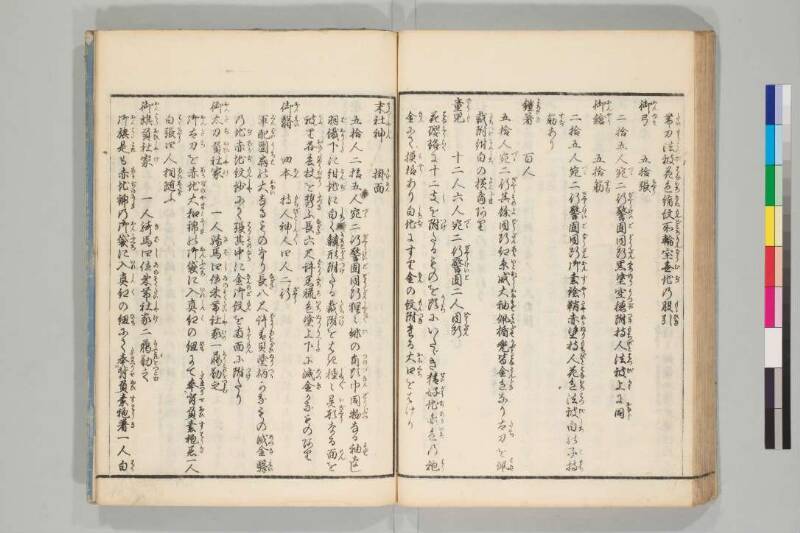
翻刻
【右丁】
帯刀(たいたう)法被(はつぴ)《振り仮名:花色𥿻|はないろきぬ》紋所(もんどころ)輪宝(りんばう)無地(むぢ)の股引(もゝひき)
御弓(おんゆみ) 五拾張( ちやう)
二拾五人 宛(づゝ)二行( ぎやう)警固(けいご)同断(どうだん)黒塗(くろぬり)空穂(うつぼ)附持人(つきもちびと)法被(はつぴ)上(かみ)に同(おなじ)
御鎗(おんやり) 五拾筋( すぢ)
二拾五人 宛(づゝ)二行( ぎやう)警固(けいご)同断(どうだん)御素鎗(おんすやり)鞘(さや)赤塗(あかぬり)持人(もちびと)花色(はないろ)法被(はつぴ)白(しろ)の子持(こもち)
筋(すじ)あり
鎧着(よろひき) 百人
五拾人 宛(づゝ)二行( ぎやう)其餘(そのよ)同断(どうだん)紅糸威(あかいとおどし)大袖(おほそで)佩楯(はいだて)兠(かぶと)皆(みな)金色(こんじき)なり太刀(たち)を佩(はき)
裁附(たちつけ)紺白(こんしろ)の横島(よこじま)あり
童児(どうじ) 十二人六人 宛(づゝ)二行( ぎやう)警固(けいご)二人 同断(どうだん)
花瓔珞(はなえうらく)に十二支( し)を附(つけ)たるものを頭(かしら)にいたゞき精好(せいがう)地(ぢ)赤色(あかいろ)の袍(はう)
金(きん)にて摸様(もやう)あり白地(しろぢ)にすり金(きん)の紋(もん)附(つき)たる大口(おほくち)をはけり
【左丁】
末社神(まつしやじん) 掛面(かけめん)
五拾人二拾五人 宛(づゝ)二行( ぎやう)警固(けいご)同断(どうだん)《振り仮名:猩〻|しやう〴〵》緋(ひ)の角頭巾(つのづきん)同物(どうぶつ)なる袖(そで)なし
羽織下(ばおりした)に紺地(こんぢ)に白(しろ)く鱗形(うろこがた)附(つけ)たる裁附(たちつけ)をはき《振り仮名:種〻|しゆ〴〵》異形(いぎやう)なる面(めん)を
被(かぶ)り各(おの〳〵 )兵仗(ひやうぢやう)を携(たづさ)ふ長(ながさ)六尺 許(ばかり)黒臘色塗(くろろいろぬり)上下(うえした)に滅金(めつき)かなものあり
御翳(おんえい) 四本( ほん) 持人(もちびと)神人(しん〴〵)四人 二行( ぎやう)
軍配團扇(ぐんばいうちは)の大(おほい)なるものなり長(ながさ)八尺 許(ばかり)青貝塗(あをがひぬり)柄(つか)かなもの滅金(めつき)翳(えい)
の地(ぢ)赤(あか)地紋紗(ぢもんしや)にて張(はり)其中(そのなか)に金御紋(きんのごもん)を両面(りやうめん)に附(つけ)たり
御太刀負社家(おんたちおひしやけ) 一人 騎馬(きば)四位束帯(しゐのそくたい)《振り仮名:社家一﨟|しやけの らう》勤之(これをつとむ)
御太刀(おんたち)を赤地大和錦(あかぢのやまとにしき)の御袋(おんふくろ)に入(いれ)真紅(しんく)の紐(ひも)にて奉(たてまつり)_二背負(せおひ)_一素袍着(すはうき)一人
白張(はくちやう)四人 相随(あひしたが)ふ
御旗負社家(おんはたおひしやけ) 一人 騎馬(きば)四位束帯(しゐのそくたい)《振り仮名:社家二﨟|しやけ らふ》勤之(これをつとむ)
御旗(おんはた)是(これ)も赤地錦(あかぢのにしき)の御袋(おんふくろ)に入(いれ)真紅(しんく)の紐(ひも)にて奉(たてまつり)_二背負(せおひ)_一素袍着(すはうき)一人 白(はく)
現代語訳
【右丁】
帯刀、法被(花色絹)紋所は輪宝、無地の股引
御弓 五十張
二十五人ずつ二行、警固も同様。黒塗りの空穂付き、持人の法被は上に同じ
御槍 五十筋
二十五人ずつ二行、警固も同様。御素槍、鞘は赤塗り、持人は花色法被で白の子持筋あり
鎧着 百人
五十人ずつ二行、その他同様。紅糸威の大袖、佩楯、兜は皆金色なり。太刀を佩き、裁付は紺白の横縞あり
童児 十二人、六人ずつ二行、警固二人も同様
花瓔珞に十二支を付けたものを頭に頂き、精好地赤色の袍で金にて模様あり。白地にすり金の紋付きたる大口を履けり
【左丁】
末社神 掛面
五十人、二十五人ずつ二行、警固も同様。猩々緋の角頭巾、同物なる袖なしの羽織、下に紺地に白く鱗形付けたる裁付を履き、種々異形なる面を被り各々兵仗を携う。長さ六尺ばかり、黒漆色塗り、上下に鍍金の金物あり
御翳 四本 持人は神人四人、二行
軍配団扇の大なるものなり。長さ八尺ばかり、青貝塗りの柄、金物は鍍金。翳の地は赤地紋紗にて張り、その中に金御紋を両面に付けたり
御太刀負社家 一人 騎馬、四位束帯 社家一老がこれを勤む
御太刀を赤地大和錦の御袋に入れ、真紅の紐にて背負う。素袍着一人、白張四人が相随う
御旗負社家 一人 騎馬、四位束帯 社家二老がこれを勤む
御旗もこれも赤地錦の御袋に入れ、真紅の紐にて背負う。素袍着一人、白張
英語訳
【Right Page】
[Those with] swords wear happi coats (flower-colored silk) with rinbō (wheel treasure) family crests, and plain momohiki (leg coverings)
Sacred bows: Fifty bows
Twenty-five men each in two rows, guards the same. Black-lacquered quivers attached, bearers' happi coats same as above
Sacred spears: Fifty spears
Twenty-five men each in two rows, guards the same. Plain sacred spears with red-lacquered sheaths, bearers wear flower-colored happi coats with white komochi stripes
Armored warriors: One hundred men
Fifty men each in two rows, others the same. Red-threaded armor with large sleeves, leg guards, helmets all golden. Wearing swords, with navy-blue and white horizontal-striped tachitsuke
Child attendants: Twelve children, six each in two rows, two guards the same
Wearing flower garlands with the twelve zodiac animals on their heads, red robes of fine silk with gold patterns. Wearing ōkuchi with gold-printed crests on white ground
【Left Page】
Subsidiary shrine deities: Masked figures
Fifty people, twenty-five each in two rows, guards the same. Bright red pointed hoods, sleeveless garments of the same material, wearing tachitsuke with white scale patterns on navy ground underneath, each wearing various strange masks and carrying weapons. About six feet long, black-lacquered, with gilt metal fittings above and below
Sacred fans: Four fans, carried by four shrine attendants in two rows
These are large military fans. About eight feet long with mother-of-pearl lacquered handles and gilt metal fittings. The fan surface is covered with red figured gauze with gold imperial crests on both sides
Sacred sword-bearing shrine family: One person on horseback in fourth-rank court dress, served by the first-ranking shrine family member
The sacred sword is placed in a bag of red Yamato brocade and carried on the back with crimson cords. One person in plain robes and four in white robes accompany
Sacred banner-bearing shrine family: One person on horseback in fourth-rank court dress, served by the second-ranking shrine family member
The sacred banner is also placed in a bag of red brocade and carried on the back with crimson cords. One person in plain robes, white-robed [attendants...]