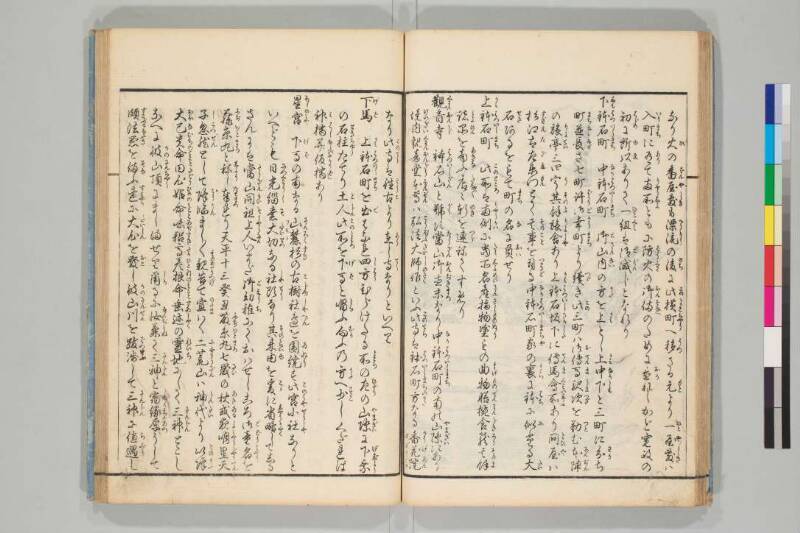
翻刻
【右丁】
なり火(ひ)の番(ばん)屋敷(やしき)も漂流(へうりう)の後(のち)に此(この)横町(よこちやう)へ移(うつ)さる元(もと)より一屋敷(ひとやしき)は
入町(いりまち)に有(あり)て両所(りやうしよ)ともに防火(ばうくわ)の御備(おんそなへ)のために置(おか)れしかど寛政の
初(はじめ)に所以(ゆゑ)ありて一組(ひとくみ)は御減(ごげん)じとなれり
下鉢石町(しもはついしまち) 中鉢石町(なかはついしまち) 御山内(ごさんない)の方(かた)を上(うえ)とし上中下(かみなかしも)と三町に分(わか)ち
町並(まちなみ)長(なが)さ七町 許(ばかり)御幸町(ごかうまち)より續(つゞ)き此(この)三町は御傳馬(おてんま)駅次(うまつぎ)を勤(つと)む本陣(ほんぢん)
の旅亭(りよてい)三四 宇(う)其(その)餘(よ)旅舎(りよしや)あり上鉢石坂下(かみはついしさかした)に傳馬(てんま)會所(くわいしよ)あり問屋(とひや)は
杉江太左衛門(すぎえたざゑもん)とて其(その)事(こと)を司(つかさど)る中鉢石町家(なかはついしまちや)の裏(うら)に鉢(はち)に似(に)たる大(たい)
石(せき)あるをもて町(まち)の名(な)に負(おは)せり
上鉢石町(かみはついしまち) 此(この)所(ところ)は両側(りやうかは)に當所(たうしよ)名産(めいさん)指物(さしもの)塗(ぬり)もの曲物(まげもの)膳椀(ぜんわん)食籠(じきろう)其(その)餘(よ)
諸品(しよひん)を商(あきな)ふ《振り仮名:店〻|たな〴〵》軒(のき)を連(つら)ねてすめり
觀音寺(くわんおんじ) 鉢石山(はついしざん)と號(がう)【号+乕】す當山(たうざん)御直末(おぢきまつ)なり中鉢石町(なかはついしまち)の南の山際(やまぎは)にあり
境内(けいだい)観音堂(くわんおんだう)本尊(ほんぞん)は弘法大師(こうぼふだいしの)作(さく)といふ此(この)寺(てら)は鉢石町(はついしまちの)方(かた)なる香花院(かうげゐん)【「ボダイシヨ」左ルビ】
【左丁】
なり此(この)寺(てら)は徃古(わうこ)より在(あり)し寺(てら)なりといへり
下馬(げば) 上鉢石町(かみはついしまち)を出(で)はなれ四方(しはう)ひらけたる所(ところ)の左(ひだり)の山際(やまぎは)に下乗(げじよう)
の石柱(せきちゆう)たてり土人(どじん)此(これ)所(ところ)を下馬(げば)と唱(とな)ふ向(むか)ふの方(かた)へ少(すこ)しくだれば
神橋(みはし)并(ならびに)仮橋(かりばし)あり
星宮(ほしのみや) 下馬(げば)の南なる山麓(さんろく)【「フモト」左ルビ】杉(すぎ)の古樹社(こじゆしや)邊(へん)を圍繞(ゐねう)す此(この)宮(みや)小社(せうしや)なりと
いへども日光(につくわう)緇素(しそ)大切(たいせつ)なる社頭(しやとう)なり其(その)来由(らいゆ)を爰(こゝ)に省略(しやうりやく)してしる
さんには當山(たうざん)開祖上人(かいそしやうにん)いまだ御幼稚(ごえうち)にておはせしころ御童名(ごどうみやう)を
藤糸丸(ふぢいとまろ)と称(しよう)し奉(たてまつ)れり天平十三癸丑 藤糸丸(ふぢいとまろ)七 歳(さい)の秋(あき)或(ある)夜(よ)明星天(みやうじやうてん)
子(し)忽然(こつぜん)として降臨(ごうりん)まし〳〵親告(まのあたりつげ)て宣(のたま)はく二荒山(にくわうざん)は神代(じんだい)より以降(このかた)
大己貴命(おほなむちのみこと)田心姫命(たごりひめのみこと)味耜高彦根命(あぢすきたかひとねのみこと)垂迹(すゐしやく)の靈地(れいち)にして三神(さんじん)とこし
なへに彼(かの)山頂(さんちやう)にましませり爾(しか)るに汝(なんぢ)兼(かね)て三神(さんじん)と宿縁(しゆくえん)厚(あつ)うして
頗(すこぶる)法器(ほふき)を備(そな)ふ速(すみやか)に大心(たいしん)を發(おこ)し彼(かの)山川(さんせん)を跋渉(ばつせふ)して三神(さんじん)に値遇(ちぐう)し
現代語訳
【右丁】
火の番屋敷も天明の大火の後にこの横町へ移された。元々一つの屋敷は入町にあって、両所ともに防火の備えのために置かれていたが、寛政の初めに理由があって一組は廃止となった。
下鉢石町・中鉢石町 御山内の方を上とし、上中下と三町に分かち、町並みの長さは七町ほど。御幸町より続き、この三町は御伝馬駅次を勤める。本陣の旅亭が三、四軒、その他旅舎がある。上鉢石坂下に伝馬会所があり、問屋は杉江太左衛門といってその事を司る。中鉢石町家の裏に鉢に似た大石があることをもって町の名前とした。
上鉢石町 この所は両側に当所名産の指物、塗り物、曲物、膳椀、食籠、その他諸品を商う店々が軒を連ねて住んでいる。
観音寺 鉢石山と号す。当山御直末である。中鉢石町の南の山際にあり、境内に観音堂がある。本尊は弘法大師の作という。この寺は鉢石町の方々の菩提所である香花院である。
【左丁】
この寺は往古より在った寺であるという。
下馬 上鉢石町を出離れ、四方に開けた所の左の山際に下乗の石柱が立てられている。土地の人はこの所を下馬と唱える。向こうの方へ少し下れば神橋並びに仮橋がある。
星宮 下馬の南なる山麓、杉の古樹が社辺を囲繞している。この宮は小社であるといっても、日光の僧俗にとって大切な社頭である。その来歴をここに省略して記さないのは、当山開祖上人がまだ幼稚でおられた頃、御童名を藤糸丸と称し奉った。天平十三年癸丑、藤糸丸七歳の秋、ある夜明星天子が忽然として降臨なさって親しく告げて宣うには「二荒山は神代より以降、大己貴命、田心姫命、味耜高彦根命垂迹の霊地にして、三神がとこしなえにかの山頂におられる。しかるに汝はかねて三神と宿縁厚くして頗る法器を備えている。速やかに大心を発し、かの山川を跋渉して三神に値遇し」
英語訳
【Right page】
The fire watch stations were also moved to this side street after the great fire of Tenmei era. Originally, one station was in Iri-machi, and both locations were established for fire prevention, but at the beginning of the Kansei era, one group was abolished for certain reasons.
Shimo-Hatsuishi-machi and Naka-Hatsuishi-machi: Taking the direction toward the sacred mountain precincts as "upper," they are divided into three towns: upper, middle, and lower. The street extends for about seven chō. Continuing from Gokō-machi, these three towns serve the official post-horse relay station. There are three or four honjin (official inns) and other lodgings. At the bottom of Kami-Hatsuishi slope is the post-horse office, and the wholesale agent Sugie Tazaemon oversees these matters. Behind the houses of Naka-Hatsuishi-machi is a large stone resembling a bowl, from which the town takes its name.
Kami-Hatsuishi-machi: This place has shops on both sides selling local specialties including joinery work, lacquerware, bent woodwork, trays and bowls, food containers, and various other goods, with their eaves lined up in a row.
Kannon-ji Temple: Called Hatsuishi-zan. It is a direct branch temple of our mountain. Located at the foot of the mountain south of Naka-Hatsuishi-machi, with a Kannon Hall in the precincts. The principal image is said to be the work of Kōbō Daishi. This temple serves as the bodai-sho (family temple) called Kōge-in for the people of Hatsuishi-machi.
【Left page】
This temple is said to have existed since ancient times.
Geba (Dismounting Place): Leaving Kami-Hatsuishi-machi, at the foot of the mountain to the left of an area that opens in all directions, a stone pillar for dismounting is erected. Local people call this place "Geba." Going down a little toward the opposite side, there are the Sacred Bridge and a temporary bridge.
Hoshi-no-miya (Star Shrine): At the foot of the mountain south of Geba, ancient cedar trees surround the shrine area. Though this shrine is small, it is a sacred place of great importance to both clergy and laity of Nikkō. The reason for omitting its detailed history here is [as follows]: When the founding patriarch of our mountain was still very young, his childhood name was Fujito-maru. In the 13th year of Tenpyō, year of the Metal Ox, when Fujito-maru was seven years old, one autumn night, the Bright Star Heavenly Child suddenly descended and personally announced: "Nikō-zan has been since the age of the gods a sacred land where Ōnamuchi-no-mikoto, Tagori-hime-no-mikoto, and Ajisuki-takahikone-no-mikoto have manifested, and the three deities eternally reside on that mountain peak. You have deep karmic connections with the three deities and possess considerable spiritual capacity. Quickly develop great resolve, traverse those mountains and rivers, and encounter the three deities."