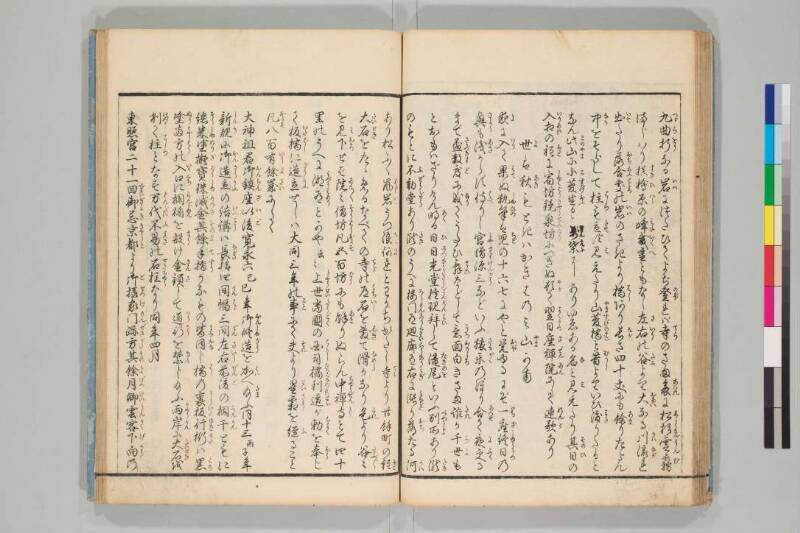
翻刻
【右丁】
九曲折(つゞらをり)なる岩(いは)につたひてよぢ登(のぼ)れば寺(てら)のさま哀(あはれ)に松杉(しようさん)雲霧(うんむ)
まじはり槇檜原(まきひはら)の峰(みね)幾重(いくへ)ともなし左右(さいう)の谷(たに)より大(おほい)なる川(かは)流(なが)れ
出(いで)たり落合(おちあふ)處(ところ)の岩(いは)のさきより橋(はし)あり長(なが)さ四十丈にも餘(あま)りたらん
中(なか)をそらして柱(はしら)も立(たて)ず見(み)えたり山菅橋(やますげのはし)と昔(むかし)よりいひ渡(わた)りたると
なん此(この)山(やま)に小菅(こすげ)生(おふ)ると萬葉(まんえふ)にありゆゑある名(な)と見(み)えたり其(その)日(ひ)の
入相(いりあひ)の程(ほど)に宿坊(しゆくばう)鏡泉坊(きやうせんばう)につきぬ頓(やが)て翌日(よくじつ)座禅院(ざぜんゐん)にて連歌(れんが)あり
世(よ)は秋(あき)もときはかきはのみ山(やま)かな
夜(よ)に入(いり)て果(はて)ぬ執筆(しゆひつ)は児(ちご)の十六七にやと覚(おぼ)ゆるにぞ一座(いちざ)終日(しゆうじつ)の
興(きよう)も浅(あさ)からず侍(はべ)りし宮増源三(みやますげんざう)などいふ猿楽(さるがく)のぼり合(あわせ)て夜(よ)更(ふく)る
まで盃(さかづき)数度(すど)に成(なり)てうたひ舞(まひ)などして意(こゝろ)面白(おもしろ)きさま誰(たれ)か千世(ちよ)も
とおもはざりけん明(あく)る日(ひ)日光堂權現(につくわうだうごんげん)拜(はい)して滝尾(たきのを)といふ別所(べつしよ)あり瀧(たき)
のもとに不動堂(ふどうだう)あり瀧(たき)のうへに楼門(ろうもん)有(あり)廽廊(くわいらう)有(あり)右(みぎ)に漲(みなぎ)り落(おち)たる河(かは)
【左丁】
あり松ふく嵐(あらし)岩(い[は])うつ浪(なみ)何(いづ)れとわかちがたし寺(てら)より廿餘町の程(ほど)
大石(たいせき)をたゝめるなべての寺(てら)の道石(みちいし)を敷(しき)て滑(なめら)かなり是(これ)より《振り仮名:谷〻|たに〴〵》
を見下(みおろ)せば《振り仮名:院〻|ゐん〳〵》僧坊(そうばう)凡(およそ)五百 坊(ばう)にも餘(あま)りぬらん中禅寺(ちゆうぜんじ)とて四十
里のうへに湖(みづうみ)有(あり)とかや《割書:云| 〻》上世(じやうせい)當國(たうごく)の国司(こくし)橘年遠(たちばなのとしとほ)が勅(ちよく)を奉(ほう)じ
て板橋(いたばし)に造立(ざうりふ)せしは大同三年の事(こと)にて夫(それ)より星霜(せいさう)を經(ふ)ること
凡(およそ)八百 有餘歳(いうよさい)にして
大神祖君 御鎮座(おんちんざ)以後(いご)寛永六《割書:己| 巳》年 御修造(おんしゆざう)を加(くは)へ給(たま)ふ同十三《割書:丙| 子》年
新規(しんき)に御造立(おんざうりふ)の結構(けつこう)は長(ながさ)拾四 間(けん)幅(はゞ)三 間(げん)左右前後(さいうぜんご)の欄干(らんかん)ともに
總(そう)朱塗(しゆぬり)擬寶珠(ぎばうしゆ)滅金(めつき)其(その)餘(よ)手摺(てすり)かなもの皆(みな)同(おな)じ橋(はし)の裏板(うらいた)行桁(ゆきけた)は黒(くろ)
塗(ぬり)両方(りやうはう)の入口(いりくち)に欄楯(らんじゆん)を設(まう)け金鎖(きんさ)して通行(つうかう)を禁(きん)じ給ふ両岸(りやうがん)に大石(たいせき)を
削(けづり)て柱(はしら)となす万代(ばんだい)不易(ふえき)の石柱(せきちゆう)なり同年四月
東照宮二十一囬(くわい)御忌(ぎよき)京都(きやうと)より御攝家門跡(ごせつけもんぜき)方(がた)其(その)餘(よ)月卿雲客(げつけいうんかく)下向(げかう)の
現代語訳
【右丁】
九曲折(つづらおり)になった岩につたって登っていくと、寺の様子は趣深く、松杉が雲霧と混じり合い、槇檜原の峰が幾重にも重なっている。左右の谷から大きな川が流れ出ており、落ち合う所の岩の先に橋がある。長さは四十丈余りもあろうか。中空に架かって柱も立てずに見える。山菅橋と昔から言い伝えられているという。この山に小菅が生えると万葉集にあるので、由緒ある名前と見える。その日の入相の頃に宿坊の鏡泉坊に着いた。すぐに翌日、座禅院で連歌があった。
世は秋もときはかきはのみ山かな
夜になって終わった。執筆は稚児の十六、七歳かと思われる者で、一座終日の興も浅くはなかった。宮増源三などという猿楽師も登ってきて、夜更けまで盃を重ね、歌い舞うなどして心面白い様子は、誰もが千年もと思わずにはいられなかった。明くる日、日光堂権現を拝して滝尾という別所がある。滝のもとに不動堂があり、滝の上に楼門がある。廻廊があり、右に激流が落ちている川がある。
【左丁】
松を吹く嵐と岩を打つ波のどちらとも区別しがたい。寺から二十余町ほどの道程で、大石を畳んだようになっており、全ての寺への道は石を敷いて滑らかである。ここから谷々を見下ろすと、院々僧坊がおよそ五百坊余りもあろう。中禅寺といって四十里の上に湖があるという。上世、当国の国司橘年遠が勅を奉じて板橋に造立したのは大同三年のことで、それから星霜を経ることおよそ八百有余歳にして、大神祖君御鎮座以後、寛永六年(己巳)に御修造を加えられ、同十三年(丙子)に新規に御造立された結構は、長さ十四間、幅三間、左右前後の欄干ともに総朱塗り、擬宝珠は滅金、その余の手摺や金物は皆同じである。橋の裏板、行桁は黒塗り、両方の入口に欄楯を設け、金鎖をして通行を禁じられている。両岸に大石を削って柱となし、万代不易の石柱である。同年四月、東照宮二十一回御忌に京都より御摂家門跡方、その余月卿雲客が下向の
英語訳
【Right page】
Climbing along the rocks that wind in nine zigzag turns, the temple appears deeply moving, with pines and cedars mingling with clouds and mist, and the peaks of the maki-cypress plains stretching layer upon layer. Large rivers flow from the valleys on both sides, and at the point where they converge, there is a bridge extending from the tip of the rocks. Its length must be more than forty jō. It appears to span through the air without any supporting pillars. It has been called Yamasuge Bridge since ancient times. Since the Man'yōshū mentions that kosuge (small sedge) grows on this mountain, it appears to be a name with historical significance. Around sunset that day, we arrived at the lodging temple Kyōsen-bō. The following day, there was a renga poetry session at Zazen-in.
"The world—autumn too, on this evergreen mountain"
It ended at night. The scribe appeared to be a young acolyte of about sixteen or seventeen years old, and the day-long entertainment of the gathering was quite substantial. A sarugaku performer named Miyamasu Genzō and others had also come up the mountain, and they spent cups of sake repeatedly until late at night, singing and dancing in such an amusing manner that everyone could not help but wish it would last a thousand years. The next day, after worshipping at Nikkō-dō Gongen, there is a separate temple called Takino-o. There is a Fudō Hall at the base of the waterfall, and above the waterfall there is a tower gate. There is a covered corridor, and to the right there is a river with rushing water falling.
【Left page】
The storm blowing through the pines and the waves striking the rocks are indistinguishable from each other. The path from the temple is about twenty-odd chō, with large stones laid like tatami mats, and all the temple paths are paved with stones and smooth. Looking down at the valleys from here, there appear to be about five hundred or more temple halls and monks' quarters. There is a place called Chūzen-ji with a lake forty ri above. In ancient times, the provincial governor of this province, Tachibana no Toshitōo, following imperial orders, established it at Itabashi in the third year of Daidō, and after the passage of about eight hundred and some years since then, after the enshrinement of the Great Divine Ancestor, repairs were made in the sixth year of Kan'ei (1629), and in the thirteenth year (1636) the newly constructed structure was fourteen ken long and three ken wide, with railings on all sides painted in vermillion lacquer, with gilt bronze ornamental tops, and all other handrails and metal fittings the same. The bridge's backing boards and crossbeams are painted black, with barrier rails set at both entrances and golden chains prohibiting passage. Large stones on both banks are carved to form pillars—eternal stone pillars that will not change for ten thousand generations. In April of the same year, for the twenty-first memorial service of Tōshō-gū, noble families and temple abbots from Kyoto, as well as other court nobles came down...