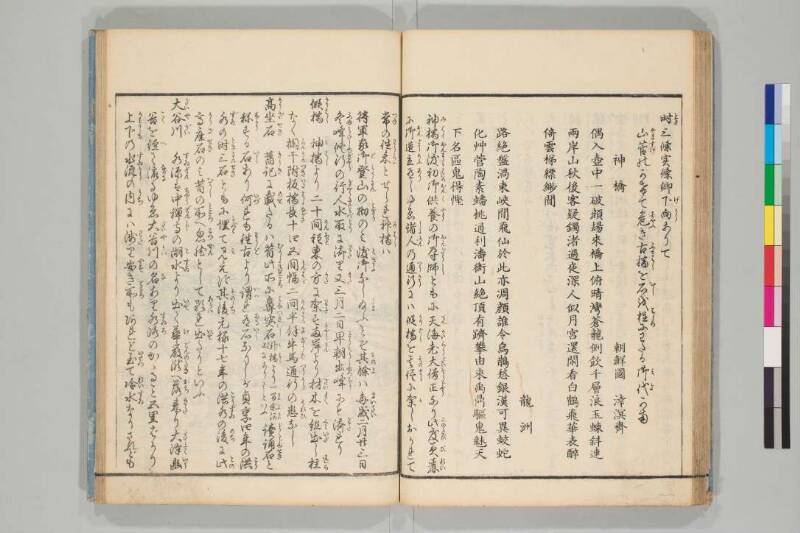
翻刻
【右丁】
时(とき)三條実條卿 下向(げかう)ありて
山菅(やますげ)のかけて危(あやふ)き古橋(ふるはし)を石(いし)を柱(はしら)にわたる御代(みよ)かな
神 橋 朝鮮國 涬溟齋
偶入壺中一破顔■【去+易・朅ヵ】來橋上俯晴灣蒼龍倒飲千層浪玉蝀斜連
兩岸山秋後客疑鐲渚過夜深人似月宮還閑看白鶴飛華表醉
倚雲梯縹緲閒
龍 洲
路絶盤渦束峽閒飛仙於此亦凋顔誰令烏鵲愁銀漢可異蛟蛇
化艸菅陶素蟠桃通利濤衡山絶頂有躋攀由來禹𪔂驅鬼魅天
下名區鬼得慳
神橋(みはし)御渡初(おんわたりはじめ)御供養(おんくやう)の御導師(おんだうし)ともに天海老大僧正(てんかいらうだいそうじやう)なり此(この)度(たび)美麗(びれい)
に御造立(おんざうりふ)有(あり)しゆゑ諸人(しよにん)の通行(つうかう)には假橋(かりばし)を其(その)侭(まゝ)に架(か)しおかれて
【左丁】
常(つね)の徃来(わうらい)とせられ神橋(みはし)は
将軍家 御登山(ごとうさん)の砌(みぎり)のみ渡御(とぎよ)なし給(たま)ふとぞ其(その)餘(よ)は每歳(まいさい)二月廿三日
冬峰(ふゆみね)修行(しゆぎやう)の行人(ぎやうにん)水取(みづとり)に済(わた)り又(また)三月二日 早朝(さうてう)出峰(しゆつほう)にも済(わた)れり
假橋(かりはし) 神橋(みはし)より二十 間(けん)程(ほど)東の方(かた)に架(わた)す両岸(りやうがん)より材木(ざいもく)を組出(くみいだ)し柱(はしら)
なく欄干(らんかん)附(つき)板橋(いたはし)長(ながさ)十四五 間(けん)幅(はゞ)二 間(けん)半(はん)餘(よ)牛馬(ぎうば)通行(つうかう)の患(うれひ)なし
高坐石(かうざせき) 《振り仮名:𦾔記|きうき》に載(のせ)たるは昔(むかし)此(この)所(ところ)に鼻突石(はなつきいし)《割書:神橋(みはし)より一 間(けん)余(よ)河(かは)|上(かみ)にありしといふ》讀誦石(どくじゆせき)と
称(しよう)する石(いし)あり何(いづ)れも徃古(わうご)より謂(いは)れ有(ある)石(いし)なりしが貞享四年の洪(こう)
水(ずゐ)の时(とき)三石(さんせき)ともに埋(うづみ)て見(み)えず其(その)後(ゝち)元祿十七年の洪水(こうずゐ)の後(のち)に此(この)
高座石(かうざせき)のみ昔(むかし)の所(ところ)へ忽然(こつぜん)として顕(あらは)れ出(いで)たりといふ
大谷川(だいやがは) 水源(すゐげん)は中禅寺(ちゆうぜんじ)の湖水(こすゐ)より出(いで)て華厳瀧(けごんのたき)へ落(おち)来(きた)り大澤(だいたく)幽(いう)
谷(こく)を經(へ)て流(ながる)るゆゑ大谷川(だいやかは)の名(な)あり水路(すゐろ)のかゝること五里ばかり
上下(かみしも)の水流(すゐりう)の内(うち)には渉(わた)り安(やす)き所(ところ)もあれど至(いたつ)て冷水(れいすゐ)なりされども
現代語訳
【右丁】
その時、三条実条卿が下向されて
山菅の懸けて危うき古橋を石を柱に渡る御代かな
神橋 朝鮮国 涬溟齋
偶々壺中に入りて一破顔、橋上より晴れた湾を俯瞰す。蒼龍は倒れて千層の浪を飲み、玉虹は斜めに両岸の山に連なる。秋後の客は疑う、渚を過ぎて夜深く人は月宮に還るが如し。閑かに白鶴の華表に飛ぶを看、酔いて雲梯の縹緲たるに倚りて閑なり。
龍洲
路は絶え盤渦は峡間を束ね、飛仙ここに於いて亦た顔を凋ます。誰か烏鵲をして銀漢を愁えしむ。蛟蛇の草菅に化するを異とすべし。陶素蟠桃通利の濤、衡山絶頂に躋攀有り。由来禹は鬼魅を駆り、天下の名区鬼も得て慳なり。
神橋の御渡り初め、御供養の御導師はともに天海老大僧正である。この度美麗に御造立があったため、諸人の通行には仮橋をそのまま架けておかれて
【左丁】
常の往来とされ、神橋は将軍家が御登山の時のみ渡御なさるという。その他は毎年二月二十三日の冬峰修行の行人が水取りに渡り、また三月二日早朝の出峰にも渡る。
仮橋 神橋より二十間ほど東の方に架ける。両岸より材木を組み出し、柱はなく欄干付きの板橋で、長さ十四、五間、幅二間半余り、牛馬通行の憂いなし。
高座石 旧記に載せているのは、昔この所に鼻突石(神橋より一間余り河上にありしという)、読誦石と称する石があり、いずれも往古より謂れのある石であったが、貞享四年の洪水の時、三石とも埋まって見えず、その後元禄十七年の洪水の後に、この高座石のみ昔の所へ忽然として現れ出たという。
大谷川 水源は中禅寺の湖水より出て華厳滝へ落ち来たり、大沢幽谷を経て流れるゆえ大谷川の名がある。水路のかかることおよそ五里ばかり。上下の水流の内には渡り安き所もあれど、至って冷水なり。されども
英語訳
【Right page】
At that time, Lord Sanjō Sanejō came down from the capital and composed:
"The old bridge of yamasuge grass, hanging precariously—now in this reign it spans with stone pillars"
Divine Bridge Korea Gyeongmyeong-chai
Accidentally entering the pot-shaped valley with a smile, looking down at the clear bay from the bridge. The azure dragon drinks the thousand-layered waves while fallen, and the jade rainbow connects diagonally to the mountains on both banks. Autumn travelers wonder—passing the shore in the deep night, people seem to return to the moon palace. Leisurely watching white cranes fly to the ornamental pillars, drunk and leaning against the misty cloud ladder in tranquility.
Ryūshū
The road is cut off, swirling waters bind the narrow gorge, where flying immortals also lose their color. Who makes the magpies grieve over the Milky Way? How strange that dragons and serpents transform into grass and sedge. The waves of Taosupantao flow freely, with climbing paths to the peak of Mount Heng. Since ancient times, Yu drove away demons and spirits—even ghosts in this famous region under heaven are miserly.
The first crossing ceremony and memorial service for the Divine Bridge were both conducted by the elderly Grand Monk Tenkai. Because of the beautiful construction this time, a temporary bridge was left in place for the passage of ordinary people,
【Left page】
serving as the regular crossing, while the Divine Bridge is used only when the Shogun family makes their mountain pilgrimage. Otherwise, ascetic practitioners cross it on February 23rd each year during winter peak training for water-drawing ceremonies, and also cross during the dawn descent on March 2nd.
Temporary Bridge: Built about twenty ken east of the Divine Bridge. Timber is extended from both banks without pillars, a plank bridge with railings, fourteen to fifteen ken long and two and a half ken wide, with no concern about cattle and horse traffic.
Kōza Stone: According to old records, there used to be stones here called Hanatsuki Stone (said to have been about one ken upstream from the Divine Bridge) and Dokuju Stone, both historically significant stones since ancient times. However, during the flood of Jōkyō 4 (1687), all three stones were buried and disappeared. Later, after the flood of Genroku 17 (1704), only this Kōza Stone suddenly reappeared in its original location.
Daiya River: The water source emerges from Lake Chūzen-ji and falls to Kegon Falls, then flows through large marshes and deep valleys, hence the name Daiya River. The waterway extends about five ri. While there are places in the upper and lower streams that are easy to cross, the water is extremely cold. However,