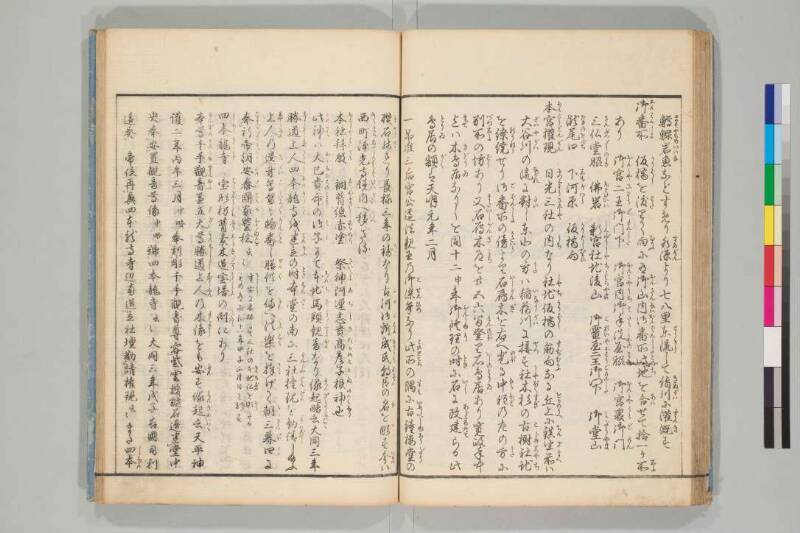
翻刻
【右丁】
鱒(ます)鰥(やもめ)岩魚(いはな)などすめり水源(すゐげん)より七八里 東流(とうりう)して絹川(きぬがは)に灌漑(くわんき)す
御番所(おんばんしよ) 仮橋(かりばし)を渡(わた)りて向(むかふ)に有 御山内(おんさんない)御番所(おんばんしよ)此(この)地(ち)を合(あは)せて拾一ヶ所(しよ)
あり 御宮(おんみや)二王御門(にわうごもん)下(した) 御宮内(おんみやうち)御手洗屋(みたらしやの)脇(わき) 御宮(おんみや)裏御門(うらごもん)
三仏堂(さんぶつだうの)脇(わき) 佛岩(ほとけいは) 新宮社地(しんぐうしやち)後山(うしろやま) 御靈屋(ごれいや)二王御門(にわうごもん)下(した) 御堂山(みだうやま)
瀧尾口(たきのをぐち) 下河原(しもがはら) 仮橋向(かりばしむかひ)
本宮權現(ほんぐうごんげん) 日光(につくわう)三社(さんしや)の内(うち)なり社地(しやち)仮橋(かりばし)の筋向(すぢむかふ)なる丘上(をかのうへ)に鎭坐(ちんざ)前(まへ)は
大谷川(だいやがは)の流(ながれ)に對(たい)し東北の方(かた)は稲荷川(いなりがは)に接(せつ)す社木(しやぼく)杉(すぎ)の古樹社地(こじゆしやち)
を繚繞(れうねう)せり御番所(ごばんしよ)の傍(かたはら)より石鴈木(いしがんぎ)を右へ登(のぼ)る中程(なかほど)の左の方(かた)に
別所(べつしよ)の坊(ばう)あり又(また)石鴈木(いしがんぎ)道(みち)を廿五六 間(けん)登(のぼ)り石鳥居(いしのとりゐ)あり寛政年中
迠(まで)は木鳥居(きどりゐ)なりしを同十二《割書:申》年 御修理(おんしゆり)の时(とき)に石(いし)に改(あらため)建(たて)らる此
鳥居(とりゐ)の額(がく)は天明元年二月
一品准三后宮公道法親王の御染筆(ごせんひつ)なり此(この)所(ところ)の隅(すみ)に古(いにしへ)鐘楼堂(しゆろうだう)の
【左丁】
礎石(そせき)残(のこ)れり長禄三年の鋳(たう)なり古河御所成氏朝臣(こがごしよなりうぢあそん)の名(な)を彫(てう)す今(いま)は
西町(にしまち)浄光寺(じやうくわうじ)境内(けいだい)へ移(うつ)さる
本社(ほんしや)拜殿(はいでん) 銅葺(あかゞねぶき)總(そう)赤塗(あかぬり) 祭神(さいじん)阿遲志貴高彦子根神(あぢしきたかひここねのかみ)也(なり)
此(この)神(かみ)は大己貴命(おほなむちのみこと)の御子(みこ)にて本地(ほんち)馬頭觀音(ばとうくわんおん)なり縁起略(えんぎりやくに)云(いはく)大同三年
勝道上人(しようだうしやうにん)四本龍寺(しほんりうじ)を建立(こんりふ)の时(とき)本堂(ほんだう)の南に三社權現(さんじやごんげん)を勸請(くわんじやう)し給(たま)ふ
上人(しやうにん)の遺㐧等(ゐていら)《振り仮名:替〻|かはる〴〵》輪番(りんばん)し膳供(ぜんぐ)を備(そな)へ法楽(はふらく)を捧(さゝ)げて朝三暮四(てうさんぼし)に
奉(たてまつる)_レ祈(いのり)_二帝朝(ていてう)安泰(あんたい)國家(こくか)豊念(ほうねんを)_一《割書:云| 〻》《割書:重宝(ちようはう)に木板にて三社の本地仏(ほんちぶつ)を彫(ほり)たる|もの有承和十一年甲子正月日と刻(こく)す》
四本龍寺(しほんりうじ) 宝形(はうぎやう)栃葺(とちぶき)素木(しらき)造(づくり)宝塔(はうたふ)の側(かたはら)にあり
本尊(ほんぞん)千手觀音(せんじゆくわんおん)並 五大尊(ごだいそん)勝道上人(しようだうしやうにん)の木像(もくざう)をも安(あん)す縁起(えんぎに)云(いはく)天平神
護二年丙午三月《割書:中略》奉_レ刻_二-彫千手觀音尊容_一紫雲靉靆石邉建_レ堂中
央奉_レ安_二-置観音尊像_一《割書:中略》號_二 四本龍寺_一《割書:云| 〻》大同三年戊子告_二國司利
遠_一奏_二 帝位_一再_二-興四本龍寺_一寺辺南造_二-立社壇_一勸_二-請権現_一《割書:云| 〻》また四本(しほん)
現代語訳
【右丁】
鱒(ます)、鰥(やもめ)、岩魚(いわな)などが生息している。水源より七八里東流して絹川に灌漑する。
御番所 仮橋を渡って向かいにある。御山内御番所はこの地を合わせて十一ヶ所ある。
御宮二王御門下、御宮内御手洗屋の脇、御宮裏御門、三仏堂の脇、仏岩、新宮社地後山、御霊屋二王御門下、御堂山、瀧尾口、下河原、仮橋向かい。
本宮権現 日光三社の内である。社地は仮橋の筋向かいの丘上に鎮座し、前は大谷川の流れに対し、東北の方は稲荷川に接する。社木の杉の古樹が社地を取り囲んでいる。御番所の傍らより石雁木を右へ登る。中程の左の方に別所の坊がある。また石雁木道を二十五六間登ると石鳥居がある。寛政年中までは木鳥居であったが、同十二年の御修理の時に石に改め建てられた。この鳥居の額は天明元年二月、一品准三后宮公道法親王の御染筆である。この所の隅に古い鐘楼堂の
【左丁】
礎石が残っている。長禄三年の鋳造である。古河御所成氏朝臣の名を彫る。今は西町浄光寺境内へ移されている。
本社拝殿 銅葺き、総赤塗り。祭神は阿遅志貴高彦子根神である。この神は大己貴命の御子で、本地は馬頭観音である。縁起略に云うには、大同三年、勝道上人が四本龍寺を建立の時、本堂の南に三社権現を勧請し給う。上人の遺弟等が代々輪番し、膳供を備え、法楽を捧げて朝三暮四に帝朝安泰、国家豊年を祈り奉った。
四本龍寺 宝形、栃葺き、素木造り。宝塔の側にある。本尊は千手観音並びに五大尊、勝道上人の木像をも安置する。縁起に云うには、天平神護二年丙午三月(中略)千手観音尊容を刻彫し奉り、紫雲靉靆として石辺に堂を建て、中央に観音尊像を安置し奉る。(中略)四本龍寺と号する。大同三年戊子、国司利遠に告げ、帝位に奏し、再び四本龍寺を興し、寺辺南に社壇を造立し、権現を勧請した。また四本
英語訳
【Right page】
Trout (masu), yamame, and char (iwana) inhabit these waters. The river flows eastward for seven to eight ri from its source and irrigates the Kinugawa River.
Guard Station: Located across the temporary bridge. There are eleven guard stations within the sacred mountain precincts combined with this area: below the Niō Gate of the main shrine, beside the purification hall within the shrine grounds, the rear gate of the main shrine, beside the Three Buddha Hall, Buddha Rock, behind Shingu shrine grounds, below the Niō Gate of the mausoleum, Midōyama, Takino-o entrance, Shimogawara, and across from the temporary bridge.
Hongū Gongen: One of the three Nikko shrines. The shrine grounds are located on a hill directly across from the temporary bridge, facing the flow of the Daiya River to the front, with the Inari River adjoining to the northeast. Ancient cedar trees surround the shrine grounds. From beside the guard station, one climbs the stone steps to the right. Partway up on the left side is Bessho-no-bō temple. Climbing the stone steps another 25-26 ken, there is a stone torii gate. Until the Kansei period, it was a wooden torii, but during repairs in Kansei 12, it was rebuilt in stone. The plaque on this torii was inscribed in the second month of Tenmei 1 by Prince Kōdō Hōshin'ō. In a corner of this area remain the foundation stones of an ancient bell tower.
【Left page】
These foundation stones remain from a bell cast in Chōroku 3, carved with the name of Lord Nariuji of the Koga Palace. It has now been moved to the grounds of Jōkōji temple in Nishimachi.
Main Hall and Worship Hall: Copper-roofed, entirely painted red. The enshrined deity is Ajishikitakahikone-no-kami. This deity is a child of Ōnamuchi-no-mikoto, with Batō Kannon as the original ground. According to the abbreviated origin story, in Daidō 3, when Saint Shōdō established Shihonryūji temple, he enshrined the Three Shrine Gongen to the south of the main hall. The saint's disciples served in rotation, offering meals and dedicating religious services, praying morning and evening for imperial peace and national prosperity.
Shihonryūji Temple: Hōgyō style, thatched with Japanese horse chestnut, plain wood construction. Located beside the treasure pagoda. The principal image is Thousand-Armed Kannon along with the Five Great Deities, and also enshrines a wooden statue of Saint Shōdō. According to the origin story, in Tenpyō Jingo 2 (766), third month... they carved and dedicated the sacred form of Thousand-Armed Kannon, and with purple clouds gathering, built a hall by the rocks and enshrined the Kannon statue in the center... called it Shihonryūji Temple. In Daidō 3, they reported to Provincial Governor Ritō, petitioned the imperial court, revived Shihonryūji Temple again, constructed a shrine platform to the south of the temple, and enshrined gongen deities. Also, the four hon...