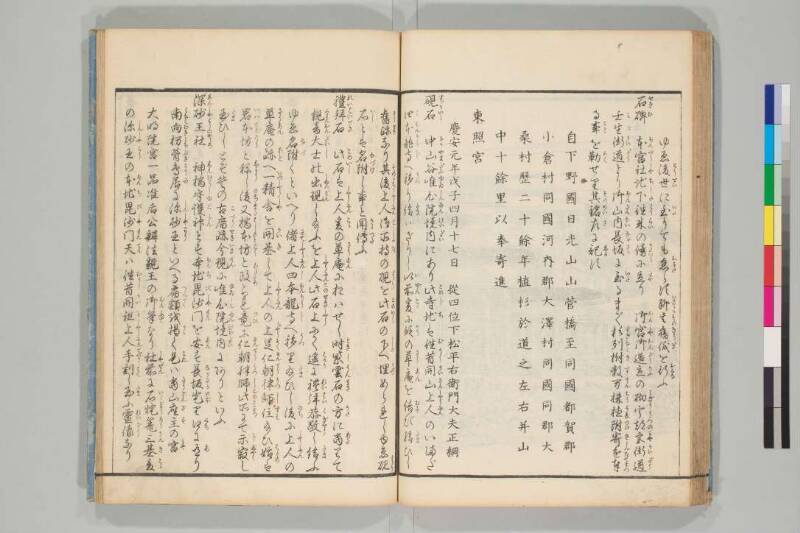
翻刻
【右丁】
ゆゑ後世(こうせい)に至(いた)りても怠(おこた)らず聊(いさゝか)其(その)《振り仮名:𦾔儀|きうぎ》を行(おこな)ふ
石碑(せきひ) 本宮(ほんぐう)社地(しやち)下(した)徃来(わうらい)の傍(かたはら)に立(たて)り 御宮(おんみや)御造立(おんざうりふ)の砌(みぎり)宇都宮(うつのみや)街道(かいだう)
壬生(みぶ)街道(かいだう)より御山内(おんさんない)長坂(ながさか)に至(いた)るまで杉列樹(すぎなみき)数万株(すまんちう)植附(うゑつけ)寄進(きしん)奉(たてまつ)
る事(こと)を勒(ろく)せり其(その)銘(めい)左(さ)に記(しる)す
自 下 野 國 日 光 山 山 菅 橋 至 同 國 都 賀 郡
小 倉 村 同 國 河 内 郡 大 澤 村 同 國 同 郡 大
桑 村 歷 二 十 餘 年 植 杉 於 道 之 左 右 并 山
中 十 餘 里 以 奉 寄 進
東照宮
慶安元年戊子四月十七日 從四位下松右衛門大夫正綱
硯石(すゞりいし) 中山谷(なかやまだに)唯心院(ゆゐしんゐん)境内(けいだい)にあり此(この)寺地(じち)は徃昔(むかし)開山上人(かいさんしやうにん)のいまだ
四本龍寺(しほんりうじ)へ移(うつ)り給(たま)はざりし以前(いぜん)爰(こゝ)に假(かり)の草庵(さうあん)を結(むす)び給(たま)ひし
【左丁】
《振り仮名:𦾔跡|きうせき》なり其後(そのゝち)上人(しやうにん)御所持(ごしよじ)の硯(すゞり)を此石(このいし)の下(した)へ埋(うづ)められしゆゑ硯(すゞり)
石(いし)とは名附(なづけ)し事と聞傳(きゝつた)ふ
禮拜石(れいはいせき) 此石(このいし)は上人(しやうにん)爰(こゝ)の草庵(さうあん)におはせし时(とき)紫雲石(しうんせき)の方(かた)に當(あた)りて
觀音大士(くわんおんだいし)の出現(しゆつげん)し給ふを上人(しやうにん)此(この)石上(せきしやう)にて遥(はるか)に禮拜(れいはい)恭敬(くぎやう)し給(たま)ふ
ゆゑ名附(なづ)くといへり偖(さて)上人(しやうにん)四本龍寺(しほんりうじ)へ移(うつ)り給(たま)ひし後(のち)に上人(しやうにん)の
草庵(さうあん)の跡(あと)へ一(いつ)精舎(しやうしや)を開基(かいき)して上人(しやうにん)の上足(じやうそく)仁朝律師(にんてうりつし)住(すみ)給ひ始(はじめ)は
岩本坊(いはもとばう)と称(しよう)し後(のち)又(また)橋本坊(はしもとばう)と改(あらため)られ竟(つひ)に仁朝律師(にんてうりつし)此所(このところ)にて示寂(じじやく)し
玉(たま)ひしとぞその古庿跡(こべうせき)今(いま)現(げん)に唯心院(ゆゐしんゐん)境内(けいだい)にありといふ
深砂王社(しんしやわうのやしろ) 神橋(しんけう)守護神(しゆごじん)とす本地(ほんち)毘沙門(びしやもん)を安(あん)す長坂(ながさか)登(のぼ)り口(くち)に有(あ)り
南向(みなみむき)栃葺(とちぶき)鳥居(とりゐ)に深砂王(しんしやわう)といへる扁額(へんがく)を掲(かゝ)く是(これ)は當山(たうざん)座主(ざす)の宮(みや)【平出】
大明院宮一品准后公辨法親王の御筆(おんふで)なり社前(しやぜん)に石燈篭(いしどうろう)三基(さんき)爰(こゝ)
の深砂王(しんしやわう)の本地(ほんち)毘沙門天(びしやもんてん)は徃昔(むかし)開祖上人(かいそしやうにん)手(てづから)刻(こく)し玉(たま)ふ靈像(れいざう)なり
現代語訳
【右丁】
そのため後世に至っても怠らず、わずかながらその旧儀を行っている。
石碑 本宮社地の下、往来の傍らに立っている。御宮御造立の際、宇都宮街道・壬生街道より御山内長坂に至るまで、杉並木数万株を植え付けて寄進申し上げることを刻んでいる。その銘を左に記す。
下野国日光山山菅橋より同国都賀郡小倉村、同国河内郡大沢村、同国同郡大桑村に至り、二十余年にわたって道の左右並びに山中十余里に杉を植えて寄進申し上げる。
東照宮
慶安元年戊子四月十七日 従四位下松平右衛門大夫正綱
硯石 中山谷唯心院境内にある。この寺地は往昔、開山上人がまだ四本龍寺へ移られる以前、ここに仮の草庵を結ばれた
【左丁】
旧跡である。その後、上人が御所持の硯をこの石の下へ埋められたので、硯石と名付けたことと聞き伝えている。
礼拝石 この石は上人がここの草庵におられた時、紫雲石の方に向かって観音大士が出現されるのを、上人がこの石上にて遥かに礼拝恭敬されたので名付けるという。さて上人が四本龍寺へ移られた後に、上人の草庵の跡へ一精舎を開基して、上人の上足仁朝律師が住まれ、初めは岩本坊と称し、後にまた橋本坊と改められ、ついに仁朝律師がこの所にて示寂されたという。その古廟跡が今現に唯心院境内にあるという。
深砂王社 神橋の守護神とする。本地毘沙門を安置する。長坂登り口にあり、南向き、栃葺きで、鳥居に深砂王という扁額を掲げる。これは当山座主の宮大明院宮一品准后公辨法親王の御筆である。社前に石灯籠三基がある。ここの深砂王の本地毘沙門天は、往昔開祖上人が手ずから刻まれた霊像である。
英語訳
【Right page】
Therefore, even in later generations, they do not neglect this practice and continue to perform these old ceremonies, albeit modestly.
Stone Monument: Standing beside the public road below the Hongū shrine grounds. It records the donation and planting of tens of thousands of cedar trees along the roadsides from the Utsunomiya and Mibu highways to the Nagasaka slope within the sacred mountain precincts during the construction of the shrine. The inscription is recorded as follows:
From Yamasuge Bridge at Mount Nikkō in Shimotsuke Province to Ogura Village in Tsuga District of the same province, Ōsawa Village in Kawachi District of the same province, and Ōkuwa Village in the same district, over more than twenty years, cedars were planted on both sides of the roads and throughout more than ten ri of mountain paths as a donation.
Tōshōgū
Keian 1st year, year of the Earth Rat, 4th month, 17th day: Matsudaira Uemon-no-taifu Masatsuna, Junior Fourth Rank Lower Grade
Inkstone Stone: Located within the precincts of Yuishin-in temple in Nakayama Valley. This temple site is the
【Left page】
old site where the founding master once built a temporary grass hermitage before moving to Shihonryūji temple. Later, the master buried his inkstone beneath this stone, hence it came to be called the Inkstone Stone, according to tradition.
Worship Stone: This stone is so named because when the master resided in the grass hermitage here, Kannon Bodhisattva appeared in the direction of Shiun Rock, and the master worshipped respectfully from atop this stone, gazing into the distance. After the master moved to Shihonryūji temple, a monastery was established at the site of his former hermitage, where his chief disciple, Vinaya Master Ninchō, came to reside. Initially called Iwamoto-bō, it was later renamed Hashimoto-bō, and finally Vinaya Master Ninchō passed away at this location. The site of this ancient temple remains within the current precincts of Yuishin-in.
Jinshaō Shrine: Serves as the guardian deity of the Sacred Bridge. It enshrines Bishamonten as its honji. Located at the entrance to Nagasaka slope, facing south with a tochi bark roof, it displays a placard reading "Jinshaō" on its torii gate. This is written in the hand of the head priest of this mountain, Prince Kōben, First Rank Quasi-Empress of Daimyō-in Palace. Three stone lanterns stand before the shrine. The Bishamonten statue, which serves as the honji of Jinshaō here, is a sacred image carved by the founding master's own hands in ancient times.