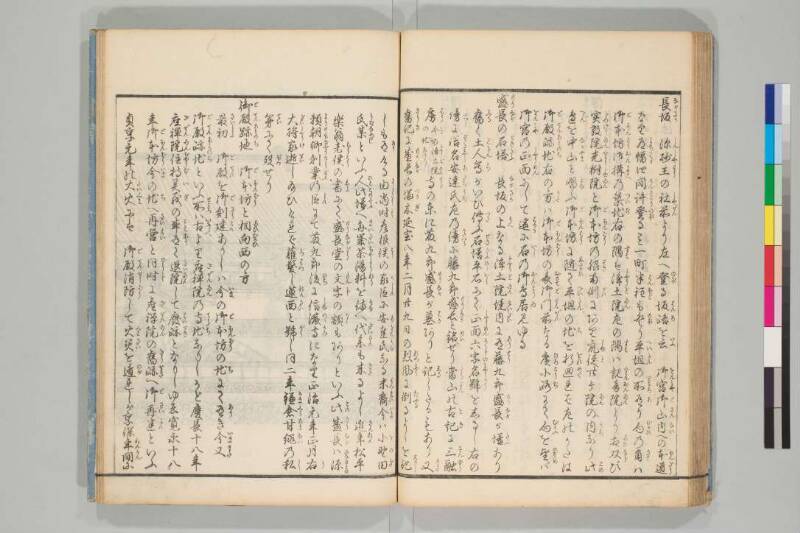
翻刻
【右丁】
長坂(ながさか) 深砂王(しんしやわう)の社前(しやぜん)より左へ登(のぼ)る坂路(はんろ)を云(いふ) 御宮(をんみや)御山内(ごさんない)への本道(ほんだう)
なり道幅(みちはゞ)四 間(けん)許(ばかり)登(のぼ)ること一町 半(はん)程(ほど)も登(のぼ)り平坦(へいたん)の所(ところ)有(あ)り向(むかひ)の角(かど)は
御本坊(ごほんばう)御構(おんかまへ)の築地(ついぢ)右の隅(すみ)は浄土院(じやうどゐん)左の隅(すみ)は観音院(くわんおんゐん)より相(あい)双(なら)び
実敎院(じつけうゐん)光樹院(くわうじゆゐん)と御本坊(ごほんばう)の脇(わき)南 側(がは)にあり衆徒(しゆと)廿ヶ院(ゐん)の内(うち)なり此(この)
邊(へん)を中山(なかやま)と唱(とな)ふ御本坊(ごほんばう)に随(したがひ)て平坦(へいたん)の地(ち)を打(をれ)廽(めぐ)れば左のかたは
御殿跡地(ごてんあとのち)右の方(かた)は御本坊(ごほんばう)の表御門前(おもてごもんぜん)なる廣小路(ひろこうぢ)にて向(むかふ)を望(のぞめ)ば
御宮(をんみや)の正面(しやうめん)にして遥(はるか)に石(いし)の御鳥居(おんとりゐ)見ゆる
盛長(もりなが)の石塔(せきたふ) 長坂(ながさか)の上(うえ)なる浄土院(じやうどゐん)境内(けいだい)に有(あり)藤(とう)九郎 盛長(もりなが)が塔(たふ)あり
《振り仮名:𦾔|ふる》く土人(どじん)等(ら)がいひ傳(つた)ふ石塔(せきたふ)平石(ひらいし)にて正面(しやうめん)六字名號(ろくじのみやうがう)をしるし右の
傍(かたはら)に俗名(ぞくみやう)安達氏(あだちうぢ)左の傍(かたはら)に藤九郎 盛長(もりなが)と銘(めい)ぜり當山(たうざん)の古記(こき)に三融(さんゆう)
房(ばう)《割書:今(いま)の浄土院(じやうどゐん)|の地(ち)なり》寺(てら)の東に藤九郎 盛長(もりなが)が墓(はか)ありと記(しる)したるもあり又(また)
《振り仮名:𦾔記|きうき》に盛長(もりなが)の塚木(つかぎ)延宝八年二月廿九日の烈風(れつふう)に倒(たふる)るよしを記(しるし)
【左丁】
しも有(あり)ける由(よし)當时(たうじ)彦根 侯(こう)の家臣(かしん)に安達氏(あだちうぢ)なる末裔(ばつえい)今(いま)は小㙒田(をのだ)
氏(うぢ)某(なにがし)といふ人(ひと)此(この)塔(たふ)へ每歳(まいさい)茶湯料(ちやたうれう)を備(そな)へ代参(だいさん)も来(きた)るよし近年(きんねん)松平
樂翁 老侯(らうこう)の書(しよ)にて盛長堂(もりながだう)の文字(もんじ)の額(がく)もありといふ此(この)盛長(もりなが)は源(みなもとの)
賴朝卿(よりともきやう)創業(さうげふ)の臣(しん)にて藤九郎 後(のち)に信濃守(しなのゝかみ)になり正治元年正月 右(う)
大将家(だいしやうけ)逝(せい)し給ひければ薙髪(ちはつ)し蓮西(れんさい)と號(がう)し同二年 鎌倉(かまくら)甘繩(あまなは)の私(し)
第(てい)にて歿(ぼつ)せり
御殿跡地(ごてんあとのち) 御本坊(ごほんばう)と相(あひ)向(むかひ)西の方
最初(さいしよ) 御殿(ごてん)と御創建(ごさうこん)ありしは今(いま)の御本坊(ごほんばう)の地(ち)にて有(あり)き今(いま)又(また)【平出】
御殿跡地(ごてんあとのち)といふ所(ところ)は古(いにしへ)より座禅院(ざぜんゐん)の寺地(てらち)なりしかど慶長十八年
座禅院(ざぜんゐん)住持(ぢゆうぢ)異義(いぎ)の事(こと)有(あり)て退院(たいゐん)して廢跡(はいせき)となりしゆゑ寛永十八
年 御本坊(ごほんばう)今(いま)の地(ち)へ再営(さいえい)と同时(どうじ)に座禅院(ざぜんゐん)の《振り仮名:舊跡|きうせき》へ御再建(ごさいこん)といふ
貞享元年の大火(たいくわ)には 御殿(ごてん)消防(せうばう)して火災(くわさい)を遁(のが)れしが享保 年間(ねんかん)に
現代語訳
【右丁】
長坂 深砂王の社前より左へ登る坂道をいう。御宮御山内への本道である。道幅四間ほど、登ること一町半ほども登ると平坦な所がある。向かいの角は御本坊御構えの築地、右の隅は浄土院、左の隅は観音院より相並び、実教院・光樹院と御本坊の脇南側にある。衆徒二十ヶ院の内である。この辺りを中山と唱える。御本坊に従って平坦な地を折れ曲がると、左の方は御殿跡地、右の方は御本坊の表御門前なる広小路にて、向かいを望めば御宮の正面にして遥かに石の御鳥居が見える。
盛長の石塔 長坂の上なる浄土院境内にある。藤九郎盛長の塔がある。古く土地の人等が言い伝える石塔で、平石にて正面に六字名号を記し、右の傍らに俗名安達氏、左の傍らに藤九郎盛長と銘を刻んでいる。当山の古記に三融房(今の浄土院の地である)の寺の東に藤九郎盛長の墓ありと記したものもある。また旧記に盛長の塚木が延宝八年二月二十九日の烈風に倒れたよしを記
【左丁】
したものもある。当時彦根侯の家臣に安達氏なる末裔、今は小野田氏某という人がこの塔へ毎歳茶湯料を備え、代参も来るという。近年松平楽翁老侯の書にて盛長堂の文字の額もあるという。この盛長は源頼朝卿創業の臣にて、藤九郎、後に信濃守になり、正治元年正月右大将家が逝去されたので剃髪し蓮西と号し、同二年鎌倉甘縄の私第にて歿した。
御殿跡地 御本坊と相向かい西の方。
最初に御殿と御創建ありしは今の御本坊の地であった。今また御殿跡地という所は古より座禅院の寺地なりしかど、慶長十八年座禅院住持に異義のことありて退院して廃跡となったので、寛永十八年御本坊が今の地へ再営と同時に座禅院の旧跡へ御再建という。貞享元年の大火には御殿は消防して火災を逃れたが、享保年間に
英語訳
【Right page】
Nagasaka: Refers to the slope road ascending to the left from in front of Jinshaō Shrine. This is the main road to the shrine and sacred mountain precincts. The road width is about four ken, and after climbing about one and a half chō, there is a flat area. The corner ahead features the earthen walls of the Head Temple's compound, with Jōdo-in on the right corner, Kannon-in on the left corner, followed by Jitsukyō-in and Kōjuin on the south side of the Head Temple. These are among the twenty temple residences of the monks. This area is called Nakayama. Following along the Head Temple grounds around the flat area, the left side is the former palace site, and the right side is the broad street in front of the main gate of the Head Temple, from which one can see toward the front of the shrine and glimpse the stone torii gate in the distance.
Morinaga's Stone Pagoda: Located within the precincts of Jōdo-in above Nagasaka slope. There stands a pagoda for Tō Kurō Morinaga. According to ancient local tradition, this stone pagoda is made of flat stone with the six-character sacred name inscribed on the front, the secular name "Adachi clan" inscribed on the right side, and "Tō Kurō Morinaga" inscribed on the left side. Some ancient records of this mountain note that there is a grave of Tō Kurō Morinaga to the east of Sanyūbō temple (which is the current site of Jōdo-in). Old records also mention that Morinaga's grave tree was toppled by fierce winds on the 29th day of the 2nd month of Enpō 8.
【Left page】
At that time, a descendant of the Adachi clan who served the Lord of Hikone, now called Onoda, comes to offer tea ceremony donations to this pagoda annually and sends representatives for worship. In recent years, there is also said to be a plaque with the characters "Morinaga Hall" written by the retired Lord Matsudaira Rakuō. This Morinaga was a retainer during the founding period of Lord Minamoto no Yoritomo, initially called Tō Kurō, later becoming Shinano no Kami. When the Right General passed away in the first month of Shōji 1, he took the tonsure and adopted the name Rensai, dying in his private residence at Amanawa in Kamakura in the second year.
Former Palace Site: Located to the west, facing the Head Temple.
Initially, the palace was first built on the current site of the Head Temple. The area now called the former palace site was originally the temple grounds of Zazen-in, but in Keichō 18, the head priest of Zazen-in had doctrinal disputes and was forced to retire, leaving the site abandoned. In Kanei 18, when the Head Temple was rebuilt at its current location, the palace was simultaneously reconstructed at the former site of Zazen-in. During the great fire of Jōkyō 1, the palace was protected by firefighting efforts and escaped the disaster, but during the Kyōhō period...