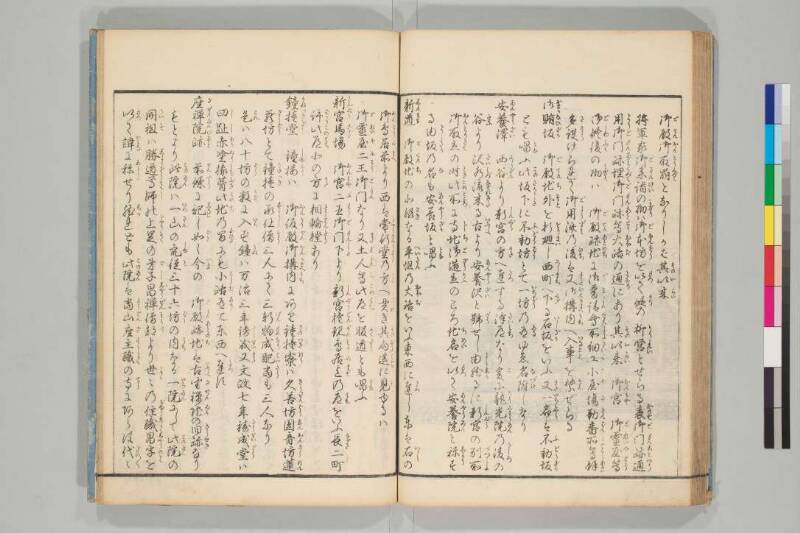
翻刻
【右丁】
御殿(ごてん)御取崩(おんとりくづし)となりしかば其(その)以来(いらい)
將軍家 御参詣(ごさんけい)の砌(みぎり)は御本坊(ごほんばう)を以(もつ)て假(かり)の 柳営(りうえい)とせらる表御門(おもてごもん)跡(あと)通(つう)
用御門(ようごもん)跡(あと)埋御門(うづみごもん)跡(あと)等(とう)大路(おほぢ)の通(とほり)にあり其(その)以来(いらい) 御宮(おんみや) 御靈屋(ごれいや)等(とう)
御修復(ごしゆふく)の砌(みぎり)は 御殿跡地(ごてんあとのち)に御普請會所(ごふしんくわいしよ)細工小屋塲(さいくこやば)勤番所(きんばんしよ)等(とう)餘(あま)
多(た)設(まう)けられて御用濟(ごようずみ)の後(のち)は又(また)御構内(おんかまへうち)へ入(いる)事(こと)を禁(きん)ぜらる
御賄坂(おまかなひざか) 御殿地(ごてんち)外(そと)を折廽(をりまは)し西町(にしまち)へ下(くだ)る石坂(いしざか)をいふ又(また)一名(いちみやう)は不動坂(ふどうざか)
とも唱(とな)ふ此(この)坂下(さかした)に不動坊(ふどうばう)とて一坊(いちばう)の有(ある)ゆゑ名附(なづけ)しなり
安養澤(あんやうざは) 西谷(にしだに)より新宮(しんぐう)の方(かた)へ達(たつ)する澤道(さはみち)なり爰(こゝ)に龍光院(りうくわうゐん)の後(うしろ)の
谷(たに)より沢水(さはみづ)流来(ながれきた)る古(いにしへ)より安養沢(あんやうざは)と號(がう)せし由(よし)然(しか)るに新宮(しんぐう)の別所(べつしよ)
御取立(おんとりたて)の时(とき)此(この)所(ところ)に寺地(じち)御造立(ござうりふ)のころ地名(ちめい)を以(もつ)て安養院(あんやうゐん)と称(しよう)す
る由(よし)坂(さか)の名(な)も安養坂(あんやうざか)と唱(とな)ふ
新道(しんみち) 御殿地(ごてんち)の北 脇(わき)なる平坦(へいたん)の大路(おほぢ)をいふ東西に達(たつ)し東は石(いし)の
【左丁】
御鳥居(おんとりゐ)前(まへ)より西は常行堂(じやうぎやうだう)の方(かた)へ貫(つらぬ)き其(その)向(むかふ)遥(はるか)に見(み)ゆるは
御靈屋(ごれいや)二王御門(にわうごもん)なり又(また)土人(どじん)等(ら)此(この)道(みち)を服道(ふくだう)とも唱(とな)ふ
新宮馬塲(しんぐうばゞ) 御宮(おんみや)仁王御門(にわうごもん)下(した)より新宮権現(しんぐうごんげん)鳥居(とりゐ)迄(まで)の道(みち)をいふ長(ながさ)二町
許(ばかり)此(この)道(みち)北の方(かた)に相輪摚(さうりんたう)あり
鐘撞堂(かねつきだう) 鐘楼(しゆろう)は 御仮殿(おんかりでん)御構(おんかまへ)内(うち)にあり鐘撞寮(かねつきれう)は久善坊(きうぜんばう)圓音坊(ゑんおんばう)蓮(れん)
蔵坊(ざうばう)とて鐘撞(かねつき)の承仕僧(しようしそう)三人にて三 軒(げん)物成(ものなり)配當(はいたう)も三人なり
是(これ)は八十 坊(ばう)の数(かず)に入(いら)ず鐘(かね)は万治三年 鋳成(たうせい)又(また)文政七年 鋳成(たうせい)堂(だう)は
四趾(しし)赤塗(あかぬり)橡葺(とちぶき)此(この)地(ち)の間(あひだ)にも小路(こうぢ)有(あり)て東西に達(たつ)す
座禅院跡(ざぜんゐんのあと) 前條(ぜんでう)に記(しるし)し如(ごと)く今(いま)の 御殿跡地(ごてんあとのち)は古(いにしへ)坐禅院(ざぜんゐん)の旧跡(きうせき)なり
もとより此(この)院(ゐん)は一山(いつさん)の衆徒(しゆと)三十六 坊(ばう)の内(うち)なる一院(いちゐん)にして此(この)院(ゐん)の
開祖(かいそ)は勝道尊師(しようだうそんし)の上足(じやうそく)の㐧子(でし)昌禅僧都(しやうぜんそうづ)より《振り仮名:世〻|よゝ 》の住職(ぢゆしよく)昌(しやうの)字(じ)を
以(もつ)て諱(いみな)に称(しよう)せり然(しか)れども此(この)院(ゐん)は當山(たうざん)座主職(ざすしよく)の寺(てら)にあらず《振り仮名:代〻|だい〳〵》
現代語訳
【右丁】
御殿が取り壊されてからは、将軍家が参詣される際には御本坊を仮の将軍の宿所とされるようになった。表御門跡、通用御門跡、埋御門跡などは大路沿いにある。その後、御宮や御霊屋などを修復される際には、御殿跡地に御普請会所、細工小屋場、勤番所などが数多く設けられ、御用が済んだ後は再び御構内への立ち入りが禁止される。
御賄坂 御殿地の外を迂回して西町へ下る石坂をいう。また一名を不動坂とも呼ぶ。この坂下に不動坊という一坊があるため、この名が付けられた。
安養沢 西谷から新宮の方へ通じる沢道である。ここに龍光院の後ろの谷から沢水が流れてくる。古くから安養沢と号していた由である。しかるに新宮の別所を御取立ての時、この所に寺地を御造立の頃、地名をもって安養院と称する由。坂の名も安養坂と唱える。
新道 御殿地の北脇にある平坦な大路をいう。東西に通じ、東は石の
【左丁】
御鳥居前から西は常行堂の方へ貫いて、その向こう遥かに見えるのは御霊屋二王御門である。また土地の人々はこの道を服道とも唱える。
新宮馬場 御宮仁王御門下から新宮権現鳥居までの道をいう。長さ二町ほど。この道の北の方に相輪塔がある。
鐘撞堂 鐘楼は御仮殿御構内にある。鐘撞寮は久善坊、円音坊、蓮蔵坊といって、鐘撞きの承仕僧三人で三軒、物成配当も三人である。これは八十坊の数には入らない。鐘は万治三年鋳成、また文政七年鋳成。堂は四脚、赤塗り、橡葺き。この地の間にも小路があって東西に通じる。
座禅院跡 前条に記したように、今の御殿跡地は古く座禅院の旧跡である。もとよりこの院は一山の衆徒三十六坊の内の一院であって、この院の開祖は勝道尊師の上足の弟子昌禅僧都より代々の住職は昌の字を諱に称した。しかしながらこの院は当山座主職の寺ではなかった。
英語訳
【Right page】
Since the palace was demolished, when the Shogun family makes pilgrimages, the main temple (honbo) has been used as a temporary shogunal residence. The sites of the main gate, service gate, and buried gate are located along the main road. Since then, when repairing the shrine and mausoleum, many structures such as construction offices, workshop sites, and duty stations have been established on the former palace grounds, and after official business is completed, entry into the compound is again prohibited.
Omakanaizaka (Catering Slope) - Refers to the stone slope that goes around the outside of the palace grounds and descends to Nishimachi (West Town). It is also called Fudo Slope, named after a temple called Fudobo located at the bottom of this slope.
Anyo Marsh - A marsh road leading from the west valley toward Shingu. Here, marsh water flows from the valley behind Ryukoin Temple. It has been called Anyo Marsh since ancient times. However, when the Shingu branch temple was established and temple grounds were constructed at this location, it came to be called Anyoin after the place name. The slope is also called Anyo Slope.
New Road - Refers to the flat main road on the north side of the palace grounds. It runs east-west, from the stone
【Left page】
torii gate in the east to the Jogyo Hall in the west, and what can be seen far beyond is the Nio Gate of the mausoleum. Local people also call this road Fukudo.
Shingu Horse Ground - Refers to the road from below the Nio Gate of the shrine to the torii gate of Shingu Gongen. It is about two cho in length. To the north of this road stands a pagoda with a spire.
Bell Tower - The bell tower is within the temporary shrine compound. The bell-ringing quarters consist of three monks - Kyuzenbo, Enonbo, and Renzōbo - who serve as bell-ringing attendants in three buildings, with provisions also distributed among the three. This is not included in the count of eighty temples. The bell was cast in Manji 3 (1660) and recast in Bunsei 7 (1824). The hall has four pillars, red lacquer finish, and a horse chestnut bark roof. There are also small roads between these grounds running east-west.
Site of Zazen Temple - As recorded in the previous section, the current site of the former palace was originally the old site of Zazen Temple. This temple was one of the thirty-six temples among the mountain community's monks, and its founder was Shōzen Sōzu, a leading disciple of the venerable Shōdō. Successive head priests used the character "Shō" in their Buddhist names. However, this temple was not one of the head temples of the mountain.