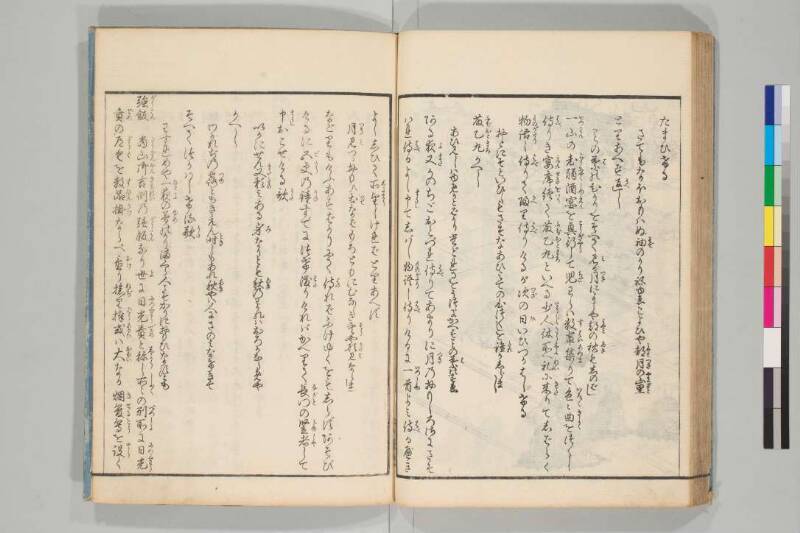
翻刻
【右丁】
たまひける
さてもなほおもはぬ袖(そで)のかりねゆゑこよひや都(みやこ)月(つき)の山里(やまざと)
とりあへず返(かへ)し
ことの葉(は)のひかりをそへて見(み)る月(つき)によしや都(みやこ)の秋(あき)もしのばし
一山(いつさん)の老弱(らうにやく)酒宴(しゆえん)を興行(こうぎやう)して児(ちご)わらは数輩(すはい)集(あつま)りて色(いろ)〻(〳〵)曲(きよく)をつくし
侍(はべ)りき宴席(えんせき)終(をはり)て藤乙丸(ふぢおとまろ)といへる少人(せうじん)休所(きうしよ)へ礼(れい)に来(きた)りてしばらく
物語(ものがたり)し侍(はべ)りて帰(かへ)り侍(はべ)りけるが次(つぎ)の日(ひ)いひつかはしける
おとにそといひしもさそなあひみての心つくしを誰(たれ)かしらまし
藤乙丸(ふじおとまろ)かへし
あひ見しはゆめかとばかりたどれるをうつにかへすことの葉(は)のすゑ
ある夜(よ)又(また)かのちごおとづれ侍(はべ)りてあまりに月(つき)のおもしろさにさそ
はれ侍(はべ)るよし申(まうし)てしばし物語(ものがたり)し侍(はべ)りけるに一首(いつしゆ)よみ侍(はべ)るべき
【左丁】
よししひて所望(しよまう)しければとりあへず
月(つき)見(み)つゝおもひ出(いで)なばもろともにむなしき空(そら)や形見(かたみ)ならまし
なごりもけふあすばかりにて侍(はべ)ればふけゆくをもしらずあそび
けるに五更(ごかう)の鐘(かね)すでにつげ渡(わた)りければかへりて長門(ながと)の竪者(じゆしや)して
申(まうし)おこせける歌(うた)
いかにせん又(また)頼(たの)みある身(み)なりとも秋(あき)のわかれはおろかならめや
かへし
わかれぢの露(つゆ)ともきえん时(とき)しもあれ秋(あき)やは人にさのみなけきて
そへてつかはしける歌(うた)
わすれめや一夜(ひとよ)の夢(ゆめ)のかりまくら人こそかりにおもひなすとも
強飯(がうはん) 當山(たうざん)御吉例(おんきちれい)の強飯(がうはん)なり世(よ)に日光責(につくわうぜめ)と称(しよう)し所(しよ)〻(〳〵)の別所(べつしよ)に日光(につくわう)
責(ぜめ)の道具(だうぐ)を数品(すひん)掛(かけ)ならべ置(おけ)り捻(ねぢ)り棒(ばう)或(あるひ)は大(おほい)なる烟管(きせる)等(とう)を設(まう)く
現代語訳
【右丁】
賜った
さてもなお思わぬ袖の仮寝ゆえ今夜や都月の山里
とりあえず返し
言の葉の光を添えて見る月によしや都の秋も偲ばせ
一山の老若が酒宴を催して稚児童数名が集まって色々な曲を尽くし
ました。宴席が終わって藤乙丸という若者が休所へ礼に来てしばらく
物語をして帰りましたが、次の日に言い送ってきた
音にぞと言ったのもそうであろう逢い見ての心尽くしを誰が知ろうか
藤乙丸の返し
逢い見たのは夢かとばかり辿れるを現実に返す言の葉の末
ある夜また、その稚児が訪れて、あまりに月の美しさに誘
われますと申してしばし物語をしましたが、一首詠むべき
【左丁】
よしと強いて所望したのでとりあえず
月を見つつ思い出すならば共に虚しき空や形見となろうか
名残も今日明日ばかりでありますので更けゆくのも知らずに遊び
ましたが、五更の鐘がすでに告げ渡ったので帰って長門の使者として
申し送ってきた歌
いかにしよう、また頼みある身なりとも秋の別れは疎かであろうか
返し
別れ路の露とも消えん時しもあれ秋やは人にさのみ嘆きて
添えて遣わした歌
忘れようか一夜の夢の仮枕人こそ仮に思いなすとも
強飯 当山御吉例の強飯なり。世に日光責めと称し、所々の別所に日光
責めの道具を数品掛け並べ置いてある。捻り棒或いは大なる煙管等を設ける
英語訳
【Right Page】
[The Prince] bestowed [this poem]:
Even so, due to this unexpected temporary sleep, tonight perhaps this mountain village is like the moon over the capital
[Someone] replied immediately:
Adding the radiance of words to the moon we see, let it remind us of the autumn in the capital
The old and young of the entire mountain held a banquet, and several young acolytes gathered to perform various musical pieces.
After the banquet ended, a young man called Fujiotomaro came to the resting place to pay his respects, and after talking for a while, he returned home. The next day he sent this message:
"That which was spoken of by reputation—who would know the devotion of heart from having met face to face?"
Fujiotomaro's reply:
"What we saw in meeting—was it but a dream I wonder—these words bring me back to reality"
Another night, that same acolyte visited again, saying he was drawn by the exceptional beauty of the moon, and after talking for a while, he earnestly requested that [I] compose a poem
【Left Page】
So I composed this impromptu verse:
"Gazing at the moon, if we should remember, would the empty sky become our memento together?"
Since this was to be our last night or two together, we played without noticing how late it grew,
but when the bell of the fifth watch had already sounded, he returned home and sent this poem through a messenger from Nagato:
"What shall I do? Even if this body has hope for the future, how can autumn's parting be taken lightly?"
My reply:
"There is a time when I too shall vanish like dew on the path of parting—why must people lament so much about autumn?"
A poem sent along with it:
"How could I forget? Even if people think of it as merely a temporary pillow of one night's dream"
Gōhan (Forced Rice): This is the traditional gōhan ceremony of our mountain. It is commonly called "Nikkō-zeme" (Nikkō torture), and at various sub-temples, several implements for Nikkō-zeme are hung and arranged. Twisting sticks or large tobacco pipes are set up.