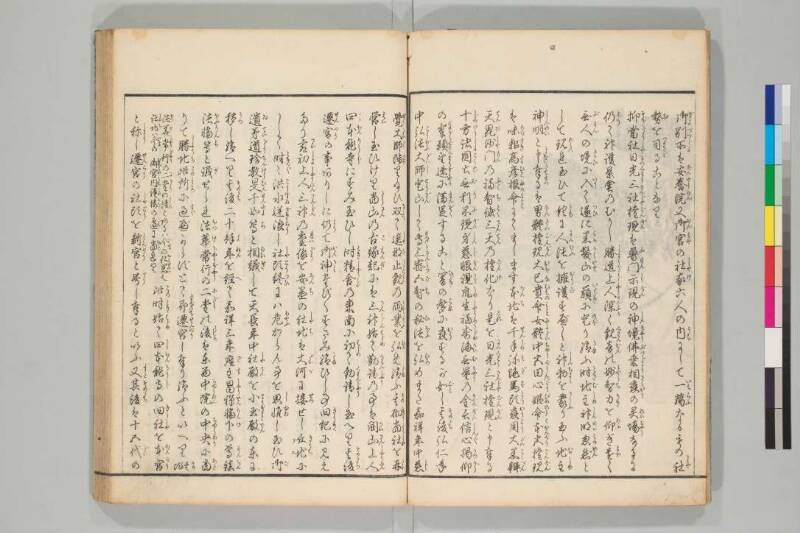
翻刻
【右丁】
御別所(ぎよべつしよ)は安養院(あんやうゐん)又 御宮(おんみや)の社家(しやけ)六人の内(うち)にして一﨟(いちらふ)なるもの社(しや)
務(む)を司(つかさど)ることなり
抑(そも〳〵)當社(たうしや)日光三社權現(につくわうさんじやごんげん)は普門示現(ふもんじげん)の神境(しんきやう)佛乗(ぶつじよう)相應(さうおう)の㚑塲(れいぢやう)なるに
仍(より)て神護景雲のむかし勝道上人(しようだうしやうにん)深(ふか)く観音(くわんおん)の妙智力(みやうちりき)を仰(あふ)ぎ遠(とほ)く
無人(ぶにん)の境(さかい)に入(いり)て遂(つひ)に黒髪山(くろかみやま)の巔(いたゞき)に登(のぼ)り給(たま)ふ时(とき)地主(ぢしゆ)神明(しんめい)忽然(こつぜん)と
して現(あらは)れ玉ひて倶(とも)に人法(にんほふ)を擁護(おうご)すべし神勅(しんちよく)を蒙(かうふ)り玉ふ地主(ぢしゆ)
神明(しんめい)と申奉(まをしたてまつ)るは男體權現(なんたいごんげん)大己貴命(おほなむちのみこと)女體中宮(によたいちゆうぐう)田心姫命(たごりびめのみこと)本宮權現(ほんぐうごんげん)
は味耜高彦根命(あぢすきたかひこねのみこと)にてまします本地(ほんち)は千手(せんじゆ)弥陀(みだ)馬頭(ばとう)應用(おうよう)大黒(だいこく)辨(べん)
天(てん)毘沙門(びしやもん)の福智德(ふくちとく)三天(さんてん)の權化(ごんげ)なり是(これ)を日光三社權現(につくわうさんじやごんげん)と申奉る
十方(じつはう)諸國土(しよこくど)無利(むり)不現身(むげんしん)慈眼視(じげんじ)衆生(しゆしやう)福寿海(ふくじゆかい)無量(むりやう)の金言(きんげん)信心(しん〴〵)掲(かつ)【渇】仰(がう)
の輩(ともがら)願望(ぐわんまう)速(すみやか)に満足(まんぞく)すること響(ひゞき)の聲(こゑ)に應(おう)ずるが如(ごと)し其後(そのゝち)弘仁年
中 弘法大師(こうぼふだいし)登山(とうざん)して專(もつはら)三密(さんみつ)五智(ごち)の秘法(ひほふ)を弘(ひろ)めまた嘉祥年中 慈(じ)
【左丁】
覺大師(がくたいし)陟(のぼ)り給ひ双(ならべ)て遮那(しやな)止觀(しくわん)の両業(りやうげふ)を弘(ひろ)め給(たま)ふ其(その)砌(みぎり)當社(たうしや)を再(さい)
営(えい)し玉ひけり當山(たうさん)の古縁起(こえんぎ)には三神(さんじん)始(はじめ)て勸請(くわんじやう)の事は開山上人(かいさんしやうにん)
四本龍寺(しほんりうじ)にすみ玉ひし时(とき)精舎(しやうじや)の東南に初(はじめ)て勸請(くわんじやう)し玉へり其後(そのゝち)
遷宮(せんぐう)の事ありしに仍(より)て御神(おんかみ)たび〳〵すさみ給(たま)ひし事 旧記(きうき)に見え
たり最初(さいしよ)上人(しやうにん)三神(さんじん)の靈像(れいざう)を安置(あんち)の社地(しやち)は大河(だいが)に接(せつ)せし丘地(きうち)【「ヲカ」左ルビ】に
して时(とき)〻(〴〵)洪水(こうすゐ)逆浪(げきらう)し社頭(しやとう)終(つひ)には危(あやふ)からん事を思惟(しゆゐ)し玉ひ御(ご)
遺㐧(ゐてい)道珍(だうちん)敎旻(けうひん)千如(せんによ)等(ら)と相議(あひぎ)して天長年中 社殿(しやでん)を小玉殿(せうぎよくでん)の東に
移(うつ)し給へり其後(そのゝち)二十 餘年(よねん)を經(へ)て嘉祥三年 座主(ざす)昌禅(しやうぜん)輪下(りんげ)の尊鎮(そんちん)
法輪(ほふりん)等(ら)と議(ぎ)せられ法華(ほつけ)常行(じやうぎやう)の二堂(にだう)の後(うしろ)は東西 中院(ちゆうゐん)の中央(ちゆうあう)に當(あた)
りて勝地(しようち)此所(このところ)に過(すぐ)べからずとて即(すなはち)遷宮(せんぐう)し奉り給ふといへり《割書:其(その)|頃(この)》
《割書:法華(ほつけ)常行(じやうぎやう)の二堂(にだう)の後(うしろ)とあるは今(いま)の仏岩(ほとけいは)也|社地(しやち)は今(いま)の御宮内(おんみやうち)鐘楼(しゆろう)の邊(へん)に當(あた)れり》此时(このとき)始(はじめ)て四本龍寺(しほんりうじ)の旧社(きうしや)を本宮(ほんぐう)
と称(しよう)し遷宮(せんくう)の社頭(しやとう)を新宮(しんぐう)と号(がう)し奉るといふ又(また)其後(そのゝち)は十五 代(だい)の
現代語訳
【右丁】
御別所(ごべっしょ)は安養院といい、また御宮の社家六人の内で一老格の者が社務を司ることである。
そもそも当社の日光三社権現は、観音菩薩が様々な姿で現れる神聖な境地であり、仏教の教えに相応しい霊場である。そのため神護景雲の昔、勝道上人は深く観音の妙なる智慧の力を仰ぎ、遠く人のいない境地に入って、ついに黒髪山の頂上に登られた時、地主神明が忽然として現れ、共に仏法と人を守護するようにとの神勅を受けられた。地主神明と申し上げるのは、男体権現・大己貴命、女体中宮・田心姫命、本宮権現・味耜高彦根命でいらっしゃる。本地仏は千手観音、阿弥陀如来、馬頭観音で、応用としては大黒天、弁天、毘沙門天という福智徳の三天の権化である。これを日光三社権現と申し上げる。
「十方の諸国土に利益のないところはなく現身しない場所はない。慈悲の眼で衆生を見守り、福寿の海は無量である」との金言の通り、信心深く渇仰する人々の願望は速やかに満たされること、響きが声に応じるようである。その後弘仁年中に弘法大師が登山して専ら真言密教の三密五智の秘法を弘め、また嘉祥年中には慈
【左丁】
覚大師が登られ、並んで大日如来の教えと天台の止観の両業を弘められた。その際に当社を再営されたのである。当山の古縁起には、三神を最初に勧請したことについて、開山上人が四本龍寺にお住まいの時、精舎の東南に初めて勧請されたとある。その後遷宮のことがあったため、御神がたびたび機嫌を損ねられたことが旧記に見える。
最初に上人が三神の霊像を安置した社地は、大河に接した丘地であって、時々洪水で逆浪し、社頭がついには危険になることを思慮され、御遺弟の道珍・教旻・千如等と相談して、天長年中に社殿を小玉殿の東に移された。その後二十余年を経て嘉祥三年、座主昌禅が輪下の尊鎮・法輪等と議せられ、法華・常行の二堂の後ろは東西中院の中央に当たって、勝地はこの所に過ぎるものはないとして、即座に遷宮し奉られたという。《割書:その頃法華・常行の二堂の後ろとあるのは今の仏岩である。社地は今の御宮内鐘楼の辺りに当たる》この時初めて四本龍寺の旧社を本宮と称し、遷宮の社頭を新宮と号し奉るという。また、その後は十五代の
英語訳
【Right page】
The Gobessho (Sacred Retreat) is called Anyo-in, and among the six shrine families of the Omiya, the senior-ranking member serves as the administrator of shrine affairs.
Indeed, the Nikko Sansha Gongen of our shrine is a sacred realm where Kannon Bodhisattva manifests in various forms, a spiritual site befitting Buddhist teachings. Therefore, in ancient times during the Jingo-keiun era, Saint Shodo deeply revered the marvelous wisdom and power of Kannon, entered remote uninhabited territories, and finally ascended to the peak of Kurokami Mountain. At that time, the tutelary deities suddenly appeared and bestowed divine commands to jointly protect the Buddhist law and people. The tutelary deities are: Nantai Gongen (Onamuchi-no-mikoto), Nyotai Chugu (Tagorihime-no-mikoto), and Hongu Gongen (Ajisukitakahikone-no-mikoto). Their original Buddhist forms are Senju Kannon, Amida Buddha, and Bato Kannon, with practical manifestations as Daikokuten, Benzaiten, and Bishamonten - the three heavenly beings embodying fortune, wisdom, and virtue. This is what we call Nikko Sansha Gongen.
According to the golden words, "In all directions and all lands there is no place without benefit, no place where [the Buddha] does not manifest. With compassionate eyes watching over all beings, the sea of fortune and longevity is boundless," the wishes of those who have deep faith and earnest devotion are fulfilled as swiftly as an echo responds to a voice. Later, during the Konin era, Kobo Daishi climbed the mountain and exclusively propagated the esoteric teachings of the Three Mysteries and Five Wisdoms. Also during the Kasho era, Jikaku
【Left page】
Daishi ascended and equally propagated both the Shana (Dainichi) teachings and the Shikan (cessation and contemplation) practices of Tendai Buddhism. On that occasion, he rebuilt our shrine. According to the ancient records of our mountain, regarding the first enshrinement of the three deities, when the founding saint resided at Shihonryu-ji temple, he first enshrined them to the southeast of the monastery. Later there was a shrine relocation, and because of this the deities became displeased on several occasions, as recorded in old documents.
The original shrine ground where the saint first installed the sacred images of the three deities was on a hill adjacent to a large river, and from time to time floods would cause reverse waves, making the saint consider that the shrine precincts would eventually become dangerous. He consulted with his disciples Dochin, Kyomin, Sennyo and others, and during the Tencho era moved the shrine buildings to the east of Shogyoku-den. After more than twenty years had passed, in the third year of Kasho, Head Priest Shozen deliberated with his subordinates Sonchin, Horin and others, noting that behind the two halls of Hokke and Jogyo, in the center between the eastern and western Chuin temples, there was no better sacred site than this location, and immediately relocated the shrine there. {{Marginal note: At that time, "behind the two halls of Hokke and Jogyo" refers to present-day Hotoke-iwa (Buddha Rock). The shrine site corresponds to the area around the present bell tower within the Omiya precincts.}} At this time, they first called the old shrine of Shihonryu-ji "Hongu" (Main Shrine) and designated the relocated shrine precincts as "Shingu" (New Shrine). Subsequently, for fifteen generations...