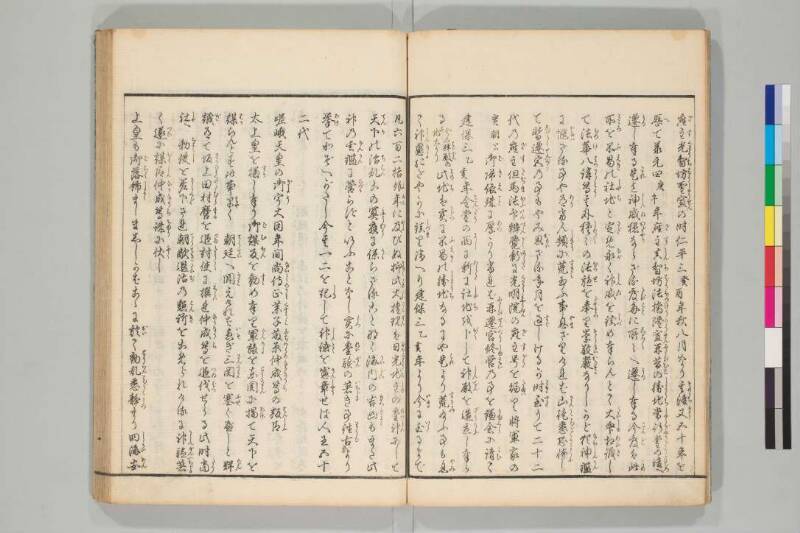
翻刻
【右丁】
座主(ざす)光智坊(くわうちばう)聖宣(しやうせん)の时仁平三《割書:癸| 酉》年秋八月なり其後(そのゝち)又(また)五十年を
歷(へ)て承元四《割書:庚| 午》年 座主(ざす)真智坊(しんちばう)法橋(ほつけう)隆宣(りうせん)再(ふたゝび)昔(むかし)の勝地(しようち)常行堂(しやうぎやうだう)の後(うしろ)へ
遷(うつ)し奉る是(これ)を神威(しんゐ)穏(おだやか)ならざる度毎(たびこと)に所(しよ)〻(〳〵)へ遷(うつ)し奉る今度(こんど)は此(この)
所(ところ)を不易(ふえき)な社地(しやち)と定(さだ)め永(なが)く神威(しんゐ)を鎮(しづ)め奉らんとて大衆(たいしゆ)相議(あいき)し
て法華(ほつけ)八講(はつかう)等(とう)其 外(ほか)種(しゆ)〻(〴〵)の法施(ほつせ)を奉(たてまつ)り崇敬(そうけい)嚴(おごそか)なりしかど猶(なほ)神鑑(しんかん)
に愜(かなは)ざる事や有(あり)けん頻(しきり)に荒(すさみ)玉ふ事 息(やま)ざりければ山徒(さんと)悉(こと〴〵く)恐怖(きようふ)し
て暫(しばらく)遷宮(せんぐう)の事もやみ思(おもは)ざる年月を過(すぐ)しけるが时(とき)至(いた)りて二十二
代の座主(ざす)但馬法印(たぢまほふいん)辨覺(べんがく)新(あらた)に光明院(くわうみやうゐん)の座主号(ざすがう)を賜(たまは)り将軍家の
《割書:實朝公》御帰依(ごきえ)殊(こと)に厚(あつ)かりければ再(ふたゝび)遷宮(せんぐう)修営(しゆえい)の事を鎌倉(かまくら)に請(こひ)て
建保三《割書:乙| 亥》年 金堂(おんだう)の西(にし)に新(あらた)に社地(しやち)を卜(ぼく)して神殿(しんでん)を造立(ざうりふ)し奉ら
る《割書:今の拜殿(はいでん)の|地(ち)なり》此地(このち)は実(じつ)に不易(ふえき)の勝地(しようち)なるにや是(これ)より荒(すさみ)給ふ事も息(やみ)
て神慮(しんりよ)おだやかに鎮(しづま)り給へり建保三《割書:乙| 亥》年より今(いま)に至(いた)るまで
【左丁】
凡六百二拾 餘年(よねん)に及(およ)びぬ抑(そも〳〵)此(この)大權現(だいごんげん)は日光(につくわう)地主(ぢしゆ)の靈神(れいじん)にして
天下(てんか)の治乱(ちらん)この冥應(みやうおう)に係(かゝ)らざることなく海内(かいだい)の吉凶(きつきよう)もまた此
神の玄鑑(げんかん)に管(あづか)らずといふことなし実(じつ)に靈験(れいげん)の著(いちじる)き事 徃古(わうご)より
挙(あけ)てかぞへがたし今は一二を記(しる)して神德(しんとく)を憲章(けんしやう)せば人王五十
二代
嵯峨天皇の御宇(ぎよう)大同年間 尚侍正(ないしのかみ)薬子(くすりこ)藤原仲成(ふぢはらのなかなり)等(ら)の叛臣(はんしん)【平出】
太上皇を賺(すか)し奉り御謀反(ごむほん)を勸(すゝ)め奉り軍旅(ぐんりよ)を東関(とうくわん)に揚(あげ)て天下を
謀(はか)らんとす此事 早(はや)く 朝廷(てうてい)へ聞(きこ)えければ急(いそ)ぎ三関(さんくわん)を塞(ふせ)ぐべしと群(ぐん)
議(ぎ)有て坂上田村麿(さかのうへのたむらまる)を追討使(つゐたうし)に撰(えらは)れ仲成(なかなり)等(ら)を追伐(つゐばつ)せらる此时 當(たう)
社(しや)へ 勅使(ちよくし)を差下(さしくだ)され朝敵(てうてき)退治(たいぢ)の懇祈(こんき)をこめられけるに神驗(しんげん)著(いちじる)
く遂(つひ)に謀臣(ぼうしん)仲成(なかなり)等(ら)誅(ちゆう)に伏(ふく)し【平出】
上皇も御落飾(ごらくしよく)ましまししかばこゝに於(おい)て動乱(とうらん)悉(こと〴〵く)静(しづ)まり四海(しかい)安(あん)
現代語訳
【右丁】
座主光智坊聖宣の時、仁平三年(癸酉、1153年)秋八月のことである。その後また五十年を経て承元四年(庚午、1210年)、座主真智坊法橋隆宣が再び昔の勝地である常行堂の後ろへ遷し奉った。これは神威が穏やかでない度毎に各所へ遷し奉ってきたが、今度はこの所を不変の社地と定め、永く神威を鎮め奉ろうとして大衆が相談し、法華八講等その他種々の法施を奉り、崇敬厳かであったが、なお神鑑に適わないことがあったのであろうか、頻繁に荒れ狂われることが止まなかったので、山徒は皆恐怖して、しばらく遷宮のことも止み、思いもよらない年月を過ごしていた。
時が至って第二十二代の座主但馬法印弁覚が新たに光明院の座主号を賜り、将軍家(実朝公)の御帰依が殊に厚かったので、再び遷宮修営のことを鎌倉に請い、建保三年(乙亥、1215年)金堂の西に新たに社地を卜して神殿を造立し奉られた。《今の拝殿の地である》この地は実に不変の勝地であったのか、これより荒れ狂われることも止んで、神慮穏やかに鎮まり給うた。建保三年(乙亥)より今に至るまで、
【左丁】
おおよそ六百二十余年に及んでいる。そもそもこの大権現は日光地主の霊神であって、天下の治乱でこの冥応に関わらないことはなく、海内の吉凶もまたこの神の玄鑑に預からないということはない。実に霊験の著しいことは往古より数え上げ難い。今は一二を記して神徳を明らかにしよう。
人王五十二代嵯峨天皇の御宇、大同年間、尚侍正薬子・藤原仲成等の叛臣が太上皇を騙し奉り御謀反を勧め奉り、軍旅を東関に挙げて天下を謀ろうとした。この事が早くも朝廷へ聞こえたので、急いで三関を塞ぐべしと群議があって、坂上田村麿を追討使に選ばれ、仲成等を追伐された。この時当社へ勅使を差し下され朝敵退治の懇祈を込められたところ、神験著しく、ついに謀臣仲成等は誅に伏し、上皇も御落飾なされたので、ここにおいて動乱はことごとく静まり、四海安
英語訳
【Right page】
During the time of Head Priest Kochibo Shosen, this occurred in the autumn of the eighth month of Ninpei 3 (Mizunoto-Tori, 1153). After another fifty years had passed, in Jogen 4 (Kanoe-Uma, 1210), Head Priest Shinchibo Hoin Ryusen again relocated [the shrine] to behind the Jogyo-do hall, the former sacred site. This was because each time the divine authority became unsettled, [the shrine] was moved to various locations. This time they determined this place to be an unchanging shrine ground, and to permanently pacify the divine authority, the great assembly consulted together and offered the Hokke Hakko lectures and various other Buddhist services with solemn reverence. However, there must still have been something that did not accord with divine judgment, as the frequent divine rage did not cease. All the mountain monks were filled with fear, and for a while the matter of relocation was suspended, passing through unexpected years.
When the time came, the 22nd Head Priest Tajima Hoin Bengaku newly received the title of Head Priest of Komyo-in, and because Shogun-ke's (Lord Sanetomo's) devotion was particularly deep, he again petitioned Kamakura for shrine relocation and reconstruction. In Kenpo 3 (Kinoto-I, 1215), they divined a new shrine ground west of the main hall and constructed the sacred buildings. {{This is the site of the present worship hall.}} This site was truly an unchanging sacred ground, for from this time the divine rage also ceased, and the divine will became peacefully settled. From Kenpo 3 (Kinoto-I) until now,
【Left page】
approximately 620-plus years have passed. Indeed, this Great Gongen is the tutelary spirit of Nikko, and there is nothing concerning the order and disorder of the realm that does not relate to these mysterious responses, nor any fortune or misfortune in the land that does not fall under this deity's profound insight. Truly, the remarkable spiritual efficacy has been beyond counting since ancient times. Now I will record one or two examples to illuminate the divine virtue.
During the reign of the 52nd Human Sovereign, Emperor Saga, in the Daido era, the rebel ministers Naishi-no-kami Kusuriko, Fujiwara no Nakanari and others deceived the Retired Emperor, encouraged him to rebellion, and raised troops at the eastern barriers, plotting to seize the realm. When this matter quickly reached the Imperial Court, there was group deliberation that the three barriers should urgently be blocked, Sakanoue no Tamuramaro was chosen as the pursuit and subjugation commander, and Nakanari and others were pursued and attacked. At this time, an imperial messenger was sent to our shrine with earnest prayers for the defeat of the court enemies. The divine response was remarkable - finally the traitorous minister Nakanari and others were executed, and the Retired Emperor also took the tonsure. Thereupon all the disturbances completely calmed, and the four seas became peaceful.