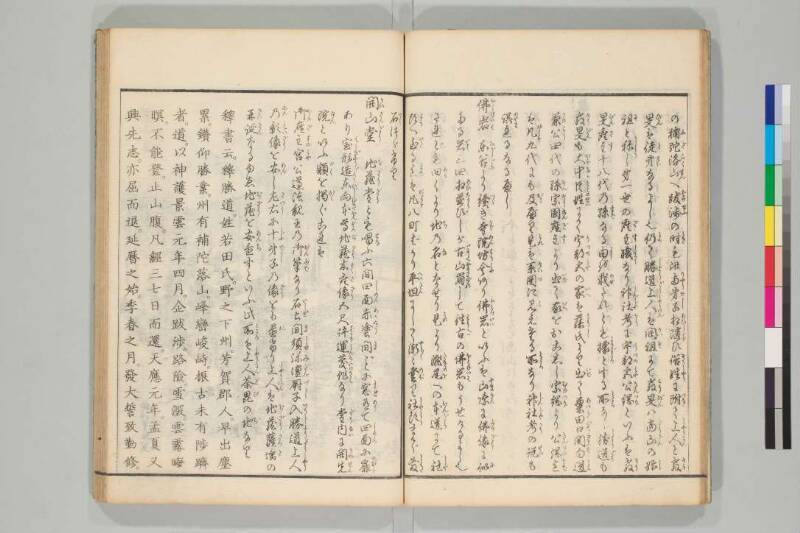
翻刻
【右丁】
の補𢏋洛山(ふだらくせん)へ跋涉(ばつせふ)の时(とき)も此 両㐧子(りやうでし)相随(あひしたが)ひ俗姓(そくしやう)に附(つき)て上人(しやうにん)と敎(けう)
旻(びん)は徒㐧(とてい)なるよし也 仍(よつ)て勝道上人(しようだうしやうにん)は開祖(かいそ)にて敎旻(けうびん)は當山(たうざん)の始(し)
祖(そ)と称(しよう)し㐧一世の座主職(ざすしよく)なり神社考(じんじやかう)に宇都宮公綱(うつのみやきんつな)といふは敎(けう)
旻座主(びんざす)十八代の孫(まご)なる由(よし)を載(のせ)たれども據(よりどころ)とする所(ところ)なし勝道(しようだう)も
敎旻(けうびん)も大中臣姓(おほなかとみのせい)にて宇都宮(うつのみや)の家(いへ)は藤氏(とうし)より出(いで)て粟田口関白道(あはだぐちくわんばくみち)
兼公(かねこう)四代の孫(そん)宗圓座主(そうゑんざす)より出(いで)て家(いへ)をおこしし宗綱(むねつな)より公綱(きんつね)【ママ】迄(まで)
は凡(およそ)九代にも及(およ)べり是(これ)は系圖(けいづ)に見(み)えたる所(ところ)なり神社考(じんじやかう)の説(せつ)も
誤(あやま)れるなるべし
佛岩(ほとけいは) 東谷(ひがしだに)より續(つゞ)き寺院(じゐん)坊舎(ばうしや)あり佛岩(ほとけいは)といふは山際(やまぎは)に佛像(ぶつざう)に似(に)
たる岩(いは)三四 相並(あひなら)びしが古(いにしへ)山崩(やまくづれ)して徃古(わうご)の佛岩(ほとけいは)もうせけるよし也
されども旧(ふる)くより地(ち)の名(な)となせり是(これ)より瀧尾(たきのを)への本道(ほんだう)にて社(しや)
頭(とう)へ至(いた)る迄(まで)は凡(およそ)八町ばかり平坦(へいたん)にして漸(やう)〻(〳〵)登(のぼ)り社頭(しやとう)まで敷(しき)
【左丁】
石(いし)つゞけり
開山堂(かいさんだう) 地蔵堂(ぢざうだう)とも唱(とな)ふ六間 四面(しめん)赤塗(あかぬり)間(ま)ごとに窓(まど)有(あり)て四面(しめん)に扉(とびら)
あり宝形造(はうぎやうづくり)東向(ひがしむき)本尊(ほんぞん)地蔵木座像(ぢざうもくざざう)五尺 許(ばかり)運慶作(うんけいのさく)なり堂内(だうない)に開先(かいせん)
院(ゐん)といふ額(がく)を掲(かゝ)ぐこれは
御座主宮(おんざすのみや)公道法親王の御筆(おんふで)なり石土間(いしどま)須弥壇(しゆみだん)厨子入(づしいり)勝道上人(しようだうしやう)
の(にん)【ママ】影像(えいざう)を安(あん)し左右(さいう)に十㐧子(じふでし)の像(ざう)をも置(お)けり上人(しやうにん)は地蔵薩埵(ぢざうさつた)の
再誕(さいたん)なるゆゑ地蔵(ぢざう)を安置(あんち)すといふ此 所(ところ)は上人(しやうにん)荼毘(だび)の地(ち)なり
釋書云。釋勝道。姓若田氏。野之下州。芳賀郡人。早出塵
累。鑚仰勝業。州有補陀落山。峰巒峻峙。振古未有陟躋
者。道。以神護景雲元年四月。企跋涉。路險。雪㴱。雲霧晦
暝。不能登。止山腹。凡經三七日而還。天應元年。孟夏又
興先志。亦屈而退。延曆之始。季春之月。發大誓致勤修。
現代語訳
【右丁】
の補陀洛山への跋渉の時も、この両弟子が相従い、俗姓に付いて上人と教旻は従兄弟であるということである。よって勝道上人は開祖であって教旻は当山の始祖と称し、第一世の座主職である。神社考に宇都宮公綱というのは教旻座主十八代の孫である由を載せているが、根拠とする所がない。勝道も教旻も大中臣姓であって、宇都宮の家は藤氏より出て、粟田口関白道兼公四代の孫宗円座主より出て家を興した宗綱より公綱まではおよそ九代にも及んでいる。これは系図に見える所である。神社考の説も誤っているのであろう。
仏岩 東谷より続き、寺院坊舎がある。仏岩というのは山際に仏像に似た岩三四個が相並んでいたが、古く山崩れして往古の仏岩も失せたということである。しかしながら古くより地名となしている。これより滝尾への本道であって、社頭へ至るまではおよそ八町ばかり平坦にして漸々登り、社頭まで敷石が続いている。
【左丁】
開山堂 地蔵堂とも唱える。六間四面、赤塗り、間ごとに窓があって四面に扉がある。宝形造り東向き。本尊は地蔵木座像五尺ばかり、運慶作である。堂内に開山院という額を掲げる。これは御座主宮公道法親王の御筆である。石土間、須弥壇、厨子入りで勝道上人の影像を安置し、左右に十弟子の像をも置いている。上人は地蔵薩埵の再誕であるゆえ地蔵を安置するという。この所は上人荼毘の地である。
釈書に云う。「釈勝道。姓は若田氏。下野州芳賀郡の人。早くに塵累を出で、勝業を鑚仰す。州に補陀落山有り。峰巒峻峙し、振古より陟躋する者未だ有らず。道、神護景雲元年四月を以て跋涉を企つ。路険しく、雪深く、雲霧晦暝にして登ること能わず。山腹に止まり、凡そ三七日を経て還る。天応元年、孟夏また先志を興す。亦屈して退く。延暦の始め、季春の月、大誓を発して勤修を致す。
英語訳
【Right Page】
When journeying to Mount Potalaka, these two disciples accompanied him, and according to their family names, Saint Shōdō and Kyōmin were cousins. Therefore, Saint Shōdō is the founder and Kyōmin is called the originating patriarch of our mountain, serving as the first head abbot. The Jinja-kō records that Utsunomiya Kōtsuna was supposedly the eighteenth-generation descendant of Abbot Kyōmin, but there is no reliable source for this. Both Shōdō and Kyōmin bore the Ōnakatomi surname, while the Utsunomiya family descended from the Fujiwara clan, originating from Abbot Sōen, who was the great-great-grandson of Awadaguchi Chancellor Michikane, and from Munetsuna who established the family line to Kōtsuna spans approximately nine generations. This is what appears in the genealogical records. The theory in Jinja-kō is probably erroneous.
Buddha Rock: Continuing from the eastern valley, there are temple buildings and monks' quarters. Buddha Rock refers to three or four rocks resembling Buddhist statues that stood side by side at the mountain's edge, but due to an ancient landslide, the original Buddha Rocks were lost. However, it has remained as a place name since ancient times. From here is the main road to Takino-o, and it is about eight chō (approximately 870 meters) of flat terrain gradually ascending to the shrine precincts, with stone paving continuing all the way to the shrine grounds.
【Left Page】
Kaizan Hall: Also called Jizō Hall. Six ken square with four sides, painted red, with windows in each section and doors on all four sides. Built in hōgyō style facing east. The principal image is a wooden seated Jizō statue about five shaku tall, made by Unkei. Inside the hall hangs a plaque reading "Kaisen-in," written by His Imperial Highness Prince Kōdō, the head abbot. On the stone floor is a Buddhist altar with a tabernacle containing a portrait statue of Saint Shōdō, with statues of his ten disciples placed on either side. Since the saint was a reincarnation of Jizō Bodhisattva, Jizō is enshrined here. This place is where the saint was cremated.
The Buddhist records state: "The monk Shōdō. His family name was Wakata. A person from Haga District, Shimotsuke Province. He early transcended worldly attachments and aspired to supreme achievement. In the province there was Mount Potalaka. Its peaks towered majestically, and since ancient times no one had climbed it. In the fourth month of Jingo-keiun 1 (767), Dō attempted the ascent. The path was treacherous, the snow deep, and clouds and mist obscured the way so that he could not climb. He remained on the mountainside for approximately twenty-one days before returning. In Tennō 1 (781), in early summer, he again took up his former aspiration. He was again forced to retreat. At the beginning of Enryaku (782), in the third month, he made a great vow and applied himself to diligent practice.