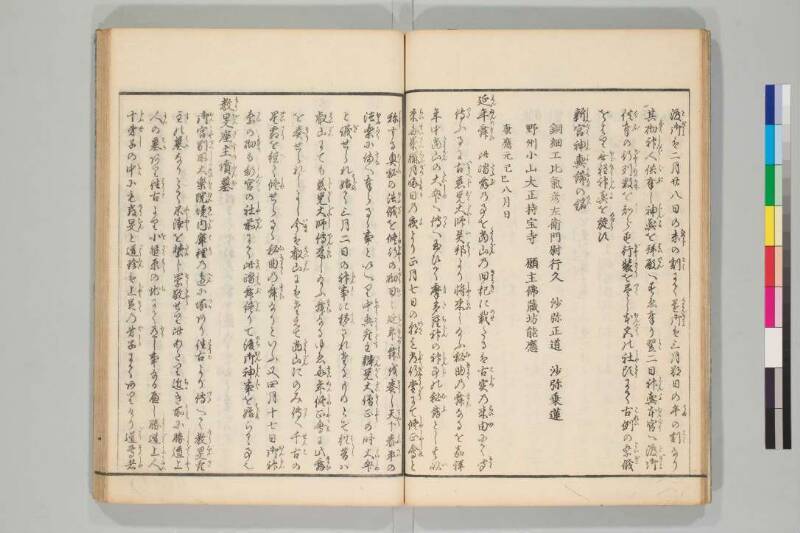
翻刻
【右丁】
渡御(とぎよ)は二月廿八日の未(ひつじ)の刻(こく)にて還御(くわんぎよ)は三月朔日の午(うま)の刻(こく)なり
其 砌(みぎり)神人(しん〴〵)供奉(ぐぶ)し神輿(じんよ)を拜殿(はいでん)へすゑ奉り翌(よく)二日 神輿(じんよ)本宮(ほんぐう)へ渡御(とぎよ)
供奉(ぐぶ)の行列(ぎやうれつ)数(かず)を知(し)らず行装(ぎやうさう)を尽(つく)し本宮(ほんぐう)の社頭(しやとう)にて古例(これい)の祭儀(さいぎ)
をはり無程(ほどなく)神輿(じんよ)を旋(めぐら)す
新宮神輿䤭(しんぐうしんよかなもの)の銘(めい)
銅細工比氣彦左衛門尉行久 沙弥正道 沙弥乗蓮
野州小山大正持宝寺 願主佛蔵坊能應
康應元《割書:己| 巳》八月日
延年舞(えんねんのまひ) 此 踏舞(たふぶ)の事を當山(たうざん)の旧記(きうき)に載(のせ)たるは古実(こじつ)の来由(らいゆ)にて聞(きゝ)
傳(つた)ふるに古(いにしへ)慈覚大師(じかくだいし)異邦(いはう)より将来(しやうらい)し給ふ秘曲(ひきよく)の舞(まひ)なるを嘉祥
年中 當山(たうざん)の大衆(たいしゆ)へ傳(つた)へ玉ひて摩多羅神(またらじん)の神事(じんじ)の秘舞(ひふ)とし其 以(い)
来(らい)毎歳(まいさい)臘月(らふげつ)晦日(みそか)の夜(よ)より正月七日の朝(あさ)迄 常行堂(じやうぎやうだう)にて修正會(しゆしやうゑ)と
【左丁】
称(しよう)する奥秘(あうひ)の法儀(ほふぎ)を修行(しゆぎやう)の砌(みぎり)日(ひ)〻(ゞ)延年舞(えんねんのまひ)を奏(そう)し天下泰平(てんかたいへい)の
法楽(ほふらく)に備(そな)へ奉らるゝ事といへり中興(ちゆうこう)座主(ざす)辨覚大僧正(べんがくだいそうじやう)の时 大衆(たいしゆ)
と議(ぎ)せられ始(はじめ)て三月二日の神事(じんじ)に移(うつ)されたるものとぞ徃昔(むかし)は
叡山(えいざん)にても慈覚大師(じがくだいし)傳来(でんらい)し給ふ舞(まひ)なるゆゑ每年(まいねん)修正會(しゆしやうゑ)に此 舞(まひ)
を奏(そう)せられしよし今(いま)は叡山(えいざん)にはたえて當山(たうざん)にのみ傳(つた)へ千古(せんこ)の
星霜(せいさう)を經(へ)て修(しゆ)せらるゝ秘曲(ひきよく)の舞(まひ)なりといふ又四月十七日 御神(おんじん)
祭(さい)の砌(みぎり)も新宮(しんぐう)の社前(しやぜん)にて此(この)踏舞(たふぶ)終(をは)りて後(のち)御神事(おんじんじ)を始(はじめ)らるゝ事也
教旻座主墳墓(けうびんざすのふんぼ)
御宮(おんみや)別所(べつしよ)大樂院(だいらくゐん)境内(けいだい)庫裡(くり)の邊(へん)に塚(つか)あり徃古(わうご)より傳(つた)へて敎旻座(けうびんざ)
主(す)の墓(はか)なりとて不浄(ふじやう)を禁(きん)じ崇敬(そうきやう)せり此あたり近(ちか)き所(ところ)に勝道上(しようだうしやう)
人(にん)の墓(はか)あり徃古(わうこ)より小笹原(をざゝはら)の地(ち)にて有(あり)し事なるべし勝道上人(しようだうしやうにん)
十㐧子(じふでし)の中(なか)にも敎旻(けうひん)と道珍(だうちん)は上足(じやうそく)の㐧子(でし)にてありけり道尊者(だうそんじや)
現代語訳
【右丁】
渡御は二月二十八日の未の刻(午後2時頃)で、還御は三月朔日の午の刻(正午頃)である。
その際、神人たちが供奉し、神輿を拝殿へお据え申し上げ、翌二日に神輿は本宮へ渡御する。
供奉の行列は数知れず、行装を尽くして本宮の社頭にて古例の祭儀を終え、程なく神輿を巡らす。
新宮神輿の金物の銘
銅細工比気彦左衛門尉行久 沙弥正道 沙弥乗蓮
野州小山大正持宝寺 願主仏蔵坊能応
康応元年(1389年)八月日
延年舞 この踏舞のことを当山の旧記に載せているのは古実の来由で、聞き伝えるところによれば、古く慈覚大師が異国より将来された秘曲の舞であるのを、嘉祥年中(848-851年)に当山の大衆へ伝えられて摩多羅神の神事の秘舞とし、その以来毎歳十二月晦日の夜より正月七日の朝まで常行堂にて修正会と
【左丁】
称する奥秘の法儀を修行の際、日々延年舞を奏して天下泰平の法楽に備え奉ることという。中興座主弁覚大僧正の時、大衆と議せられ始めて三月二日の神事に移されたものである。昔は
叡山でも慈覚大師伝来の舞であるゆえ毎年修正会にこの舞を奏せられたということだが、今は叡山では絶えて当山にのみ伝わり、千古の
星霜を経て修せられる秘曲の舞であるという。また四月十七日の御神祭の際も新宮の社前にてこの踏舞を終えてから御神事を始められることである。
教旻座主墳墓
御宮別所大楽院境内の庫裏の辺りに塚があり、往古より伝えて教旻座主の墓であるとして不浄を禁じ崇敬している。このあたり近き所に勝道上人の墓があり、往古より小笹原の地にあったことであろう。勝道上人十弟子の中でも教旻と道珍は上足の弟子であった。道尊者
英語訳
【Right Page】
The procession departure (togyo) takes place at the hour of the Sheep (around 2 PM) on the twenty-eighth day of the second month, and the return (kangyo) occurs at the hour of the Horse (around noon) on the first day of the third month.
On that occasion, the shrine attendants (shinjin) serve in attendance, placing the portable shrine in the worship hall, and on the following second day, the portable shrine proceeds to the main shrine.
The procession of attendants is countless in number, with full ceremonial dress, and after completing the ancient ritual ceremonies at the main shrine's precincts, the portable shrine is soon carried around.
Inscription on the Metal Fittings of Shingu Portable Shrine:
Copper craftsman Hike Hikozaemon-no-jō Yukihisa, Novice Shōdō, Novice Jōren
Daishō Jihōji Temple of Oyama, Shimotsuke Province, Patron Butsuzo-bō Nōō
Kōō 1st year (1389), eighth month
Ennen Dance: This stepping dance is recorded in the old records of our mountain as an ancient tradition. According to what has been passed down, it is a secret dance that Jigaku Daishi brought from foreign lands in ancient times, which he transmitted to the monks of our mountain during the Kashō era (848-851), making it a secret dance for the rituals of Matara-jin deity. Since then, every year from the night of the last day of the twelfth month until the morning of the seventh day of the first month, during the esoteric religious ceremonies called Shushō-e at Jōgyō Hall,
【Left Page】
daily Ennen dances are performed as religious entertainment for the peace of the realm during these profound and secret ritual practices. During the time of the restoration abbot Bengaku Daisōjō, it was decided through consultation with the monks to move it for the first time to the divine service on the second day of the third month.
In the past, at Mount Hiei as well, since this was a dance transmitted by Jigaku Daishi, this dance was performed every year during Shushō-e, but now it has ceased at Mount Hiei and is preserved only at our mountain, a secret dance that has been practiced through a thousand years of time. Also, on the seventeenth day of the fourth month during the Onjin Festival, this stepping dance is performed in front of Shingu shrine before beginning the divine service.
Tomb of Abbot Kyōmin:
There is a mound near the temple kitchen within the precincts of Dairaku-in, a separate temple of the shrine. Since ancient times it has been said to be the tomb of Abbot Kyōmin, and impurity is forbidden there while reverence is maintained. Near this place is the tomb of Saint Shōdō, which has been in the area called Ozasahara since ancient times. Among Saint Shōdō's ten disciples, Kyōmin and Dōchin were his most advanced disciples. Saint Dō...