翻刻
【右丁】
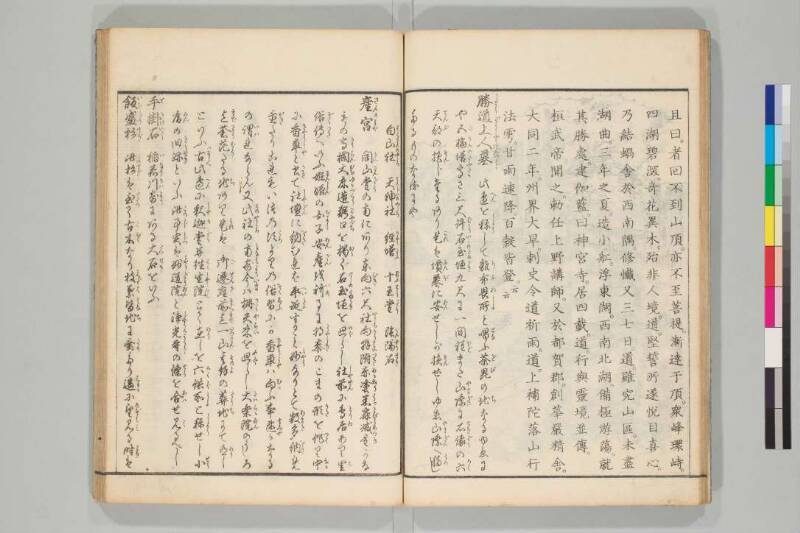
且曰。者囘不到山頂。亦不至菩提。漸達于頂。衆峰環峙。
四湖碧㴱。竒花異木。殆非人境。道。堅誓所遂悅目喜心。
乃結蝸舎於西南隅。修懴又三七日。道。雖究山區。未盡
湖曲。三年之夏。造小舡。浮東湖。西南北湖。備極游蕩。就
其勝處。建伽藍。曰神宮寺。居四載。道。行與靈境並傳。
桓武帝聞之。勅任上野講師。又於都賀郡。創蕐嚴精舎。
大同二年。州界大旱。剌【刺】史令道祈雨。道。上補陀落山行
法雩。甘雨速降。百穀皆登。《割書:云| 云》
勝道上人墓(しようだうしやうにんのはか) 此 邊(へん)を称(しよう)して離布畏所(りふゐしよ)と唱(とな)ふ荼毘(だび)の地(ち)なるゆゑに
や五輪塔(ごりんのたふ)高(たか)さ三尺 許(ばかり)石玉垣(いしのたまがき)九尺に一間 程(ほど)また山際(やまぎは)に石像(せきざう)の六(ろく)
天部(てんぶ)の損(そん)じたるあり是(これ)は墳墓(ふんぼ)に安(あん)せしが損(そん)ぜしゆゑ山際(やまぎは)へ移(うつ)し
たるものなるにや
【左丁】 白山社(はくさんのやしろ) 天神社(てんじんのやしろ) 經塔(きやうたふ) 十王堂(じふわうだう) 陰陽石(いんやうせき)
産宮(さんのみや) 開山堂(かいさんだう)の南にあり東 向(むき)六尺 社向拜附(やしろかうはいつき)赤塗(あかぬり)黒扉(くろとびら)滅金(めつき)かな
もの高欄(かうらん)大床造(おほゆかづくり)鰐口(わにぐち)を掲(かゝ)ぐ石玉垣(いしのたまかき)を廻(めぐ)らし社前(しやせん)に鳥居(とりゐ)あり里(り)
俗(ぞく)傳(つた)へいふ姙娠(にんしん)の女子(ぢよし)安産(あんざん)を祈(いの)るに将棊(しやうぎ)のこまの形(かた)を作(つく)り中(なか)
に香車(きやうしや)と書(かき)て社壇(しやだん)に納(をさ)むれば平誕(へいたん)すること妙(みやう)なりとて数多(あまた)納(をさ)め
置(おき)たりこれもいつの頃(ころ)よりの俗習(そくしふ)にか香車(きやうしや)は向(むか)ふ事 速(すみや)かなる
の謂(いは)れならん又 此社(このやしろ)の南寄(みなみより)今(いま)は柵矢來(さくやらい)を廻(めぐ)らし大楽院(たいらくゐん)のうしろ
迄(まで)蒼茫(さうばう)たる地(ち)あり是(これ)は 御遷座(ごせんざ)前迄(まへまで)一山(いつさん)其餘(そのよ)の葬地(さうち)にて有(あり)し
といふ古(いにしへ)此 邊(へん)に釈迦堂(しやかだう)并 徃生院(わうしやうゐん)とて在(あり)しを六供所(ろくぐしよ)と称(しよう)せし小(せう)
庵(あん)の旧跡(きうせき)といふ此事実(このじじつ)は妙道院(みやうだうゐん)と浄光寺(じやうくわうじ)の條(でう)を合(あは)せ見(み)るべし
手掛石(てかけいし) 稲荷川寄(いなりかはより)にある大石(たいせき)をいふ
飯盛杉(いひもりすぎ) 此杉(このすぎ)は至(いたつ)て古木(こぼく)なり枝葉(えだは)皆(みな)地(ち)に垂(たり)たり遥(はるか)に望見(のぞみみ)る时(とき)は
現代語訳
【右丁】
また言う。この度は山頂に到達せず、また菩提にも至らなかった。漸く頂上に達すると、多くの峰が環状に立ち並び、
四つの湖が碧く深い。奇花異木があり、殆ど人間の境地ではない。道心が堅固な誓いによって遂げられ、目を悦ばせ心を喜ばせる。
そこで西南の隅に小さな庵を結び、懺悔の修行をまた二十一日間行った。道心は山の区域を究めたが、まだ湖の曲がりくねった所を尽くしていなかった。
三年目の夏、小舟を造って東湖に浮かべ、西南北の湖を備に極めて遊覧した。その
勝れた場所に伽藍を建て、神宮寺と名付けた。そこに四年間居住した。道心の行いと霊験ある境地が並び伝わった。
桓武帝がこれを聞いて、勅命により上野講師に任じた。また都賀郡に華厳精舎を創建した。
大同二年、州内に大旱魃があった。刺史が道心に祈雨を命じた。道心は補陀落山に上って雩祭の法を行った。甘雨が速やかに降り、百穀が皆実った。
勝道上人墓(しょうどうしょうにんのはか) この辺りを称して離布畏所(りふいしょ)と唱える。荼毘の地であるゆえに
か。五輪塔の高さは三尺ばかり。石の玉垣は九尺に一間ほど。また山際に石像の六
天部の損じたものがある。これは墳墓に安置していたが損じたゆえ、山際へ移し
たものであろうか。
【左丁】 白山社(はくさんのやしろ) 天神社(てんじんのやしろ) 経塔(きょうとう) 十王堂(じゅうおうどう) 陰陽石(いんようせき)
産宮(さんのみや) 開山堂(かいさんどう)の南にあり、東向き六尺。社殿には向拝が付き、赤塗りで黒扉、滅金の金
物、高欄、大床造り、鰐口を掛ける。石の玉垣を巡らし、社前に鳥居がある。里
俗の伝えによると、妊娠の女子が安産を祈るのに将棋の駒の形を作り、中
に香車と書いて社壇に納めれば平安に出産することが妙なりとて、数多く納め
置いてある。これもいつの頃からの俗習であろうか。香車は向かうことが速やか
であるという謂れであろう。また、この社の南寄り、今は柵矢来を巡らし大楽院の後ろ
まで蒼茫たる地がある。これは御遷座前まで一山その余の葬地であった
という。古くこの辺りに釈迦堂並びに往生院というものがあったのを、六供所と称した小
庵の旧跡という。この事実は妙道院と浄光寺の条を合わせ見るべきである。
手掛石(てかけいし) 稲荷川寄りにある大石をいう。
飯盛杉(いいもりすぎ) この杉は至って古木である。枝葉が皆地に垂れている。遥かに望み見る時は
英語訳
【Right Page】
He also said: This time he did not reach the mountain summit, nor did he attain enlightenment. Gradually reaching the peak, numerous peaks stood in a ring formation,
and four lakes were deep blue. With rare flowers and unusual trees, it was hardly a human realm. His religious devotion, accomplished through firm vows, delighted the eyes and gladdened the heart.
So he built a small hermitage in the southwest corner and performed penitential practices for another twenty-one days. Though his religious practice had explored the mountain region, he had not yet exhausted the winding curves of the lakes.
In the summer of the third year, he built a small boat, floated it on the eastern lake, and thoroughly toured the western, southern, and northern lakes. At that
excellent location, he built a temple complex called Jingū-ji. He resided there for four years. His religious practices and the spiritual realm became widely known together.
Emperor Kanmu heard of this and by imperial decree appointed him as Kōzuke Lecturer. He also established the Kegon Hermitage in Tsuga District.
In the second year of Daidō, there was a great drought throughout the province. The provincial governor ordered Dōshin to pray for rain. Dōshin ascended Mount Fudaraku and performed the rain ceremony ritual. Sweet rain fell quickly and all crops flourished.
Tomb of Saint Shōdō (Shōdōshōnin-no-haka) This area is called Rifui-sho (Place of Departure from Fear). Perhaps because it is a cremation ground,
there is a five-story pagoda about three feet high. The stone jeweled fence is about nine feet by one ken. Also, near the mountain there is a damaged stone statue of the six
celestial beings. This was probably moved to the mountainside because it was originally placed in the tomb but became damaged.
【Left Page】 Hakusan Shrine (Hakusan-no-yashiro) Tenjin Shrine (Tenjin-no-yashiro) Sutra Pagoda (Kyōtō) Ten Kings Hall (Jūōdō) Yin-Yang Stones (Inyōseki)
Birth Shrine (San-no-miya) Located south of Kaizan Hall, facing east, six feet wide. The shrine has an attached worship hall, painted red with black doors, tarnished gold
fittings, balustrades, raised floor construction, and hanging gong. Stone jeweled fences surround it, and there is a torii gate in front of the shrine. According to
folk tradition, when pregnant women pray for safe delivery, they make shapes like shogi pieces and write "kyōsha" (lance piece) inside
and offer them to the shrine altar, whereupon they give birth safely—this is considered miraculous, so many are offered
and placed there. This too is a folk custom from some unknown time. The kyōsha (lance) probably relates to the idea of moving forward quickly.
Also, south of this shrine, now surrounded by bamboo fencing extending to behind Dairaku-in,
there is a vast, misty area. This was the burial ground for the entire mountain community until before the relocation
of the deity, it is said. In ancient times, there were Shaka Hall and Ōjō-in in this area, which were called the old site of a small
hermitage known as Rokugu-sho. This fact should be understood by examining together the sections on Myōdō-in and Jōkō-ji.
Handhold Stone (Tekake-ishi) Refers to a large stone located near Inari River.
Rice-Serving Cedar (Iimori-sugi) This cedar is an extremely old tree. All its branches and leaves droop to the ground. When viewed from afar,