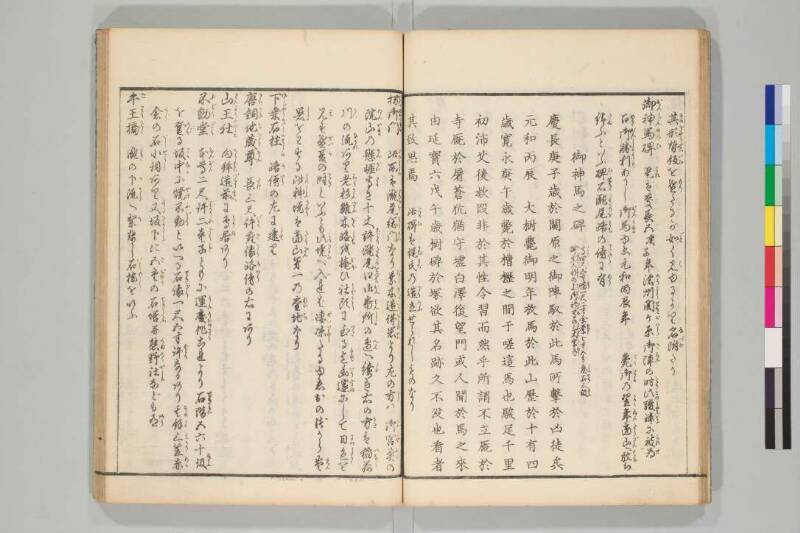
翻刻
【右丁】
其(その)形㔟(ぎやうせい)飯(いひ)を盛(もり)たるが如(ごと)く見(み)ゆるより名附(なづけ)たり
御神馬碑(おんじんめのひ) 是(これ)は慶長五《割書:庚| 子》年 濃州(のうしう)関(せき)ヶ(が)原(はら)御陣(ごぢん)の时(とき)此(この)駿蹄(しゆんてい)に被(られ)_レ為(せ)
召(めさ)御勝利(おんしようり)ありし御馬(おんうま)ゆゑ元和丙辰年 薨御(こうぎよ)の翌年(よくねん)當山(たうざん)へ放(はな)ち
給(たま)ふといふ碑石(ひせき)瀧尾路(たきのをみち)の傍(かたはら)に有(あり)
御神馬之碑 《割書:高(たかさ)四尺五寸 幅(はゞ)一尺二寸余 厚(あつさ)七寸五分 臺石(だいせき)三 級(きふ)|碑文(ひぶん) 五 行(ぎやう)の上(うへ)御神馬(おんじんめ)の三大字(さんたいじ)有(あり)》
慶長庚子歳御關原之御陣馭於此馬所擊於凶徒矣
元和丙𫝕 大𣗳薨御明年放馬於此山歷於十有四
歳寛永庚午歳斃於槽櫪之間于嗟這馬也駿足千里
初沛艾後欵段非於其性令習而然乎所謂不立厩於
寺厩於屠蒼犺猶守墟白澤復望門或人聞於馬之來
由延寶六戊午歳𣗳碑於塚欲其名跡久不没也㸔者
其致思焉 此碑(このひ)は梶氏(かぢうぢ)の造立(ざうりふ)せられしものなり
【左丁】
栃御門(とちのおんもん) 此所(このところ)は瀧尾総門(たきのをそうもん)なり素木造(しらきづくり)佛岩(ほとけいは)より㔫の方(かた)は 御宮(おんみや)奥(おく)の
院(ゐん)山(やま)の懸崕(けんがい)高(たか)さ十丈 許(ばかり)瀧尾口(たきのをぐち)御番所(おんばんしよ)の邊(へん)へ續(つゞ)き右の方(かた)は稲荷(いなり)
川(かは)の流(ながれ)あり老杉(らうさん)雑木(ざふぼく)路(みち)を掩(おほ)ひ社頭(しやとう)に至(いた)る迄(まで)幽邃(いうすゐ)にして日色(につしよく)を
見(み)ず盛夏(せいか)の时(とき)といふとも此境(このさかひ)へ入(い)れば凄凉(せいりやう)たるゆゑおのづから炎(えん)
暑(しよ)をわする此神境(このしんきやう)は當山(たうざん)第一の靈地(れいち)なり
下乗石柱(げじやうのいしのはしら) 路傍(ろはう)の㔫に建(たて)り
唐銅地蔵尊(からかねぢざうそん) 長(たけ)三尺 許(ばかり)座像(ざざう)路傍(ろはう)の右にあり
山王社(さんわうのやしろ) 向拜造(かうばいづくり)前(まへ)に鳥居(とりゐ)あり
不動堂(ふどうだう) 本尊(ほんぞん)二尺 許(ばかり)二童子(にどうじ)ともに運慶作(うんけいのさく)これより石階(せきかい)五六十 級(きふ)
を登(のぼ)る坂中(さかなか)に燒不動(やけふどう)といへる石像(せきざう)一尺五寸 許(ばかり)なるあり其餘(そのよ)三笠赤(みかさあか)
倉(くら)の石小祠(いしせうし)あり又(また)坂下(さかした)に五重(ごぢゆう)の石塔(せきたふ)《割書:并》熊野社(くまのゝやしろ)なども有(あり)
牛王橋(ごわうばし) 瀧(たき)の下流(かりう)へ架(か)せし石橋(いしばし)をいふ
現代語訳
【右丁】
その形状が飯を盛ったようにように見えることから名付けられた。
御神馬碑(おんじんめのひ) これは慶長五年(庚子)、美濃国関ヶ原の御陣の時、この駿馬に乗られて
御勝利があった御馬であるため、元和丙辰年の薨御の翌年、当山へ放ち
給うという。碑石は滝尾路の傍らにある。
御神馬之碑 《高さ四尺五寸、幅一尺二寸余、厚さ七寸五分、台石三級/碑文五行の上に御神馬の三大字がある》
慶長庚子歳御関原之御陣馭於此馬所撃於凶徒矣
元和丙辰 大樹薨御明年放馬於此山歴於十有四
歳寛永庚午歳斃於槽櫪之間于嗟這馬也駿足千里
初沛艾後欵段非於其性令習而然乎所謂不立廐於
寺廐於屠蒼犺猶守墟白澤復望門或人聞於馬之来
由延宝六戊午歳樹碑於塚欲其名跡久不没也看者
其致思焉 この碑は梶氏が造立されたものである。
【左丁】
栃御門(とちのおんもん) この所は滝尾総門である。素木造りで、仏岩より左の方は御宮奥の
院山の断崖で高さ十丈ばかり。滝尾口御番所の辺りへ続き、右の方は稲荷
川の流れがある。老杉や雑木が道を覆い、社頭に至るまで幽邃で日の光を
見ない。盛夏の時といっても、この境内に入れば涼しいので、おのずから炎
暑を忘れる。この神境は当山第一の霊地である。
下乗石柱(げじょうのいしのはしら) 路傍の左に建てられている。
唐銅地蔵尊(からかねじぞうそん) 高さ三尺ばかりの座像で、路傍の右にある。
山王社(さんのうのやしろ) 向拝造りで前に鳥居がある。
不動堂(ふどうどう) 本尊は二尺ばかりで、二童子とともに運慶作。ここから石階五、六十級
を登る。坂中に焼不動という石像一尺五寸ばかりがある。その他三笠赤
倉の石小祠がある。また坂下に五重の石塔並びに熊野社なども有る。
牛王橋(ごおうばし) 滝の下流へ架けた石橋をいう。
英語訳
【Right Page】
Its shape resembles rice served in a bowl, hence the name.
Sacred Horse Monument (Onjinme-no-hi) This commemorates the horse that was ridden during the Battle of Sekigahara in Mino Province in the 5th year of Keichō (1600, year of the Metal Rat), which brought
victory. Therefore, in the year of Hinoe-tatsu of Genna, the year after the Shogun's death, the horse was released
to this mountain. The stone monument stands beside the Takino-o path.
Sacred Horse Monument 《Height: 4 shaku 5 sun, Width: 1 shaku 2 sun and more, Thickness: 7 sun 5 bu, Three-tiered stone base/Above the five-line inscription are the three large characters "Sacred Horse"》
In the year Kanoe-ne of Keichō, at the Battle of Sekigahara, riding this horse, the enemy was defeated
In Hinoe-tatsu of Genna, the year after the Great Tree's death, the horse was released to this mountain, where it lived for fourteen
years until it died in the Kanoe-uma year of Kan'ei in its stable. Alas, this horse! Swift-footed for a thousand ri,
First spirited, later gentle—was this not its natural disposition shaped by training? As they say, not stabling at
a temple but stabling at a slaughterhouse—the gray horse still guards the ruins, the white horse still looks toward the gate. Someone hearing of the horse's
origin erected this monument at the grave in the 6th year of Enpō (1678) wishing that its fame would not be forgotten. Let viewers
contemplate this deeply. This monument was erected by the Kaji family.
【Left Page】
Tochi Gate (Tochi-no-onmon) This place is the Takino-o Main Gate. Built of plain wood, to the left of Buddha Rock is the inner
temple mountain with cliffs about ten jō high. It continues to the area of the Takino-o checkpoint, and to the right flows the Inari
River. Ancient cedars and various trees cover the path, and it is secluded and dark without sunlight until reaching the shrine grounds.
Even in midsummer, entering this sacred precinct is cool, naturally making one forget the blazing
heat. This sacred realm is the foremost spiritual site of this mountain.
Dismounting Stone Pillar (Gejō-no-ishi-no-hashira) Erected on the left side of the roadway.
Bronze Jizō Statue (Karakane Jizō-son) A seated statue about three shaku tall, located on the right side of the roadway.
Sannō Shrine (Sannō-no-yashiro) Built with a worship hall structure, with a torii gate in front.
Fudō Hall (Fudō-dō) The main image is about two shaku tall, along with two attendant boys, all carved by Unkei. From here one climbs fifty to sixty stone steps.
Midway up the slope is a stone statue called "Burnt Fudō" about one shaku five sun tall. There are also other small stone shrines of Mikasa-aka
Kura. Also at the bottom of the slope are a five-story stone pagoda and Kumano Shrine.
Goō Bridge (Goō-bashi) Refers to the stone bridge built downstream of the waterfall.