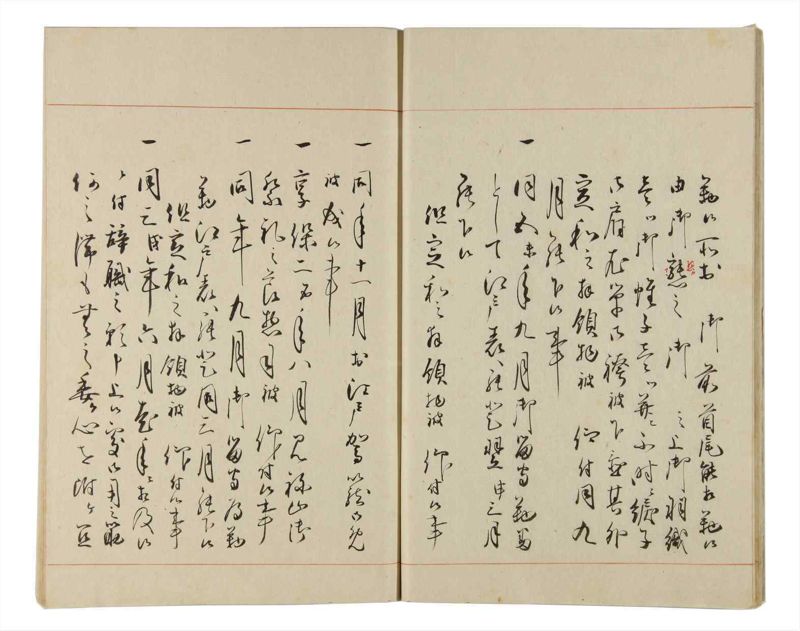
翻刻
勤候所於 御前首尾能相勤候
由御《振り仮名:熟|懇|マヽ》之 御【意欠ヵ】之上御羽織
壱ツ御帷子壱ツ幷ニ不時ニ綟子【綸子の誤ヵ】
御肩衣単御袴被下置其外
定和之拝領物被 仰付同九
月罷下候事
一 同五未年九月御留守勤番
として江戸表ㇸ罷登翌申三月
罷下候
但定和之拝領物被 仰付候事
一 同年十一月於江戸駕篭御免
被成候事
一 享保二酉年八月見祢山御
祭礼之節惣司被 仰付候事
一 同年九月御留守為勤
番江戸表ㇸ罷登同三月罷下候
但定和之拝領物被 仰付候事
一 同三戌年六月老年ニ相及候
ニ付辞職之願申上候処御用之筋
何之滞も無之委ヶ心を附ヶ宜
現代語訳
勤めたところ、御前において首尾よく相勤めた由、御懇(ごこん)の御意の上、御羽織一つ・御帷子(かたびら)一つ、ならびに不時に綸子(りんず)の御肩衣(かたぎぬ)・単御袴(ひとえおんはかま)を下し置かれ、その外、定和(じょうわ)の拝領物を仰せ付けられ、同九月に罷り下った。
一 同五未年(正徳五年・1715年)九月、御留守勤番として江戸表へ罷り登り、翌申年(享保元年・1716年)三月に罷り下った。
ただし、定和の拝領物を仰せ付けられた。
一 同年十一月、江戸において駕籠御免が成された。
一 享保二酉年(1717年)八月、見祢山(みねやま)の御祭礼の節、惣司を仰せ付けられた。
一 同年九月、御留守勤番として江戸表へ罷り登り、同(翌)三月に罷り下った。
ただし、定和の拝領物を仰せ付けられた。
一 同三戌年(享保三年・1718年)六月、老年に及んだことにつき、辞職の願いを申し上げたところ、御用の筋に何の滞りもなく、委しく心を付け、よく〔以下次頁に続く〕
英語訳
[Continued from the previous page] —having performed said duties, and having performed them with distinction in the lord's presence, in warm personal regard (gokon), he was presented with one御羽織 (formal jacket), one御帷子 (summer ceremonial robe), and additionally, on an informal occasion, a rinzu (figured satin) 御肩衣 (sleeveless formal vest) and a single-layer hakama (formal divided skirt); beyond these, he was also appointed to receive the regular ceremonial gifts (jōwa no hairyōmono), and he returned to the domain in the ninth month of the same year.
Item: In the ninth month of the fifth year of Shōtoku (1715, Year of the Sheep), he traveled up to Edo as a resident duty guard during the lord's absence (orusu kinban), and returned in the third month of the following Year of the Monkey (1716, first year of Kyōhō).
However, he was appointed to receive the regular ceremonial gifts (jōwa no hairyōmono).
Item: In the eleventh month of the same year, he was granted exemption from restrictions on the use of a palanquin (kago) in Edo.
Item: In the eighth month of the second year of Kyōhō (1717, Year of the Rooster), he was appointed General Superintendent (sōji) for the festival ceremonies at Minesan (Mineya-san).
Item: In the ninth month of the same year, he traveled up to Edo as a resident duty guard during the lord's absence (orusu kinban), and returned in the third month of the same [following] year.
However, he was appointed to receive the regular ceremonial gifts (jōwa no hairyōmono).
Item: In the sixth month of the third year of Kyōhō (1718, Year of the Dog), he submitted a petition to resign from office on account of his advanced age; [in response, it was noted that] there had been no delays whatsoever in his official duties, that he had attended to matters with great care and diligence, and that he had served well— [continued on the next page].