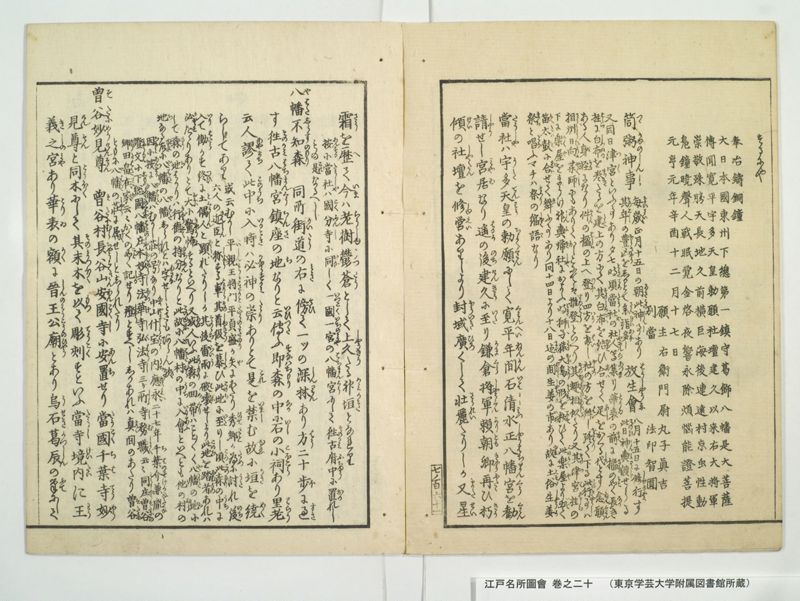
翻刻
するにや
奉冶鋳銅鐘
大日本国東州下総第一鎮守葛飾八幡是大菩薩
伝聞寛平宇多天皇勅願社壇建久以来右大将軍
崇敬殊勝天長地久前横巨海後連遠村京䖝【虫】性動
鳬鐘暁声人戦眠覚金啓夜響永除煩悩能証菩提
元享元年辛酉十二月十七日
願主右衛門尉丸子真吉
別当 法印智圓
筒粥神事(つゝかゆのしんし) 《割書:毎歳(まいさい)正月十五日の朝(あさ)此神事(このしんし)あり|其年(そのとし)の豊凶(ほうきやう)をしるとて参詣(さんけい)多(おほ)し》 放生会(はうしやうゑ) 《割書:八月十五日に修行(しゆきやう)す|此日(このひ)神輿(しんよ)渡(わたら)せらる》
《割書: 又同日 津宮(つく)といふ事あり夕七 時(とき)頃(ころ)当社(たうしや)の社人等(しやにんら)集(あつま)り華表(とりゐ)の前(まへ)に檣(なき)の如(こと)く長(なか)き| 柱(はしら)に白布(しろぬの)を巻(まき)たるを建(たて)上の方にて其(その)白布(しろぬの)を結(むす)ひ合(あは)せて足(あし)をかくる代(しろ)とす念願(ねんくわん)》
《割書: ある人 身軽(みかる)になり件(くたん)の楹(はしら)の上へ登(のほ)り四 方(はう)を拝(はい)し社(やしろ)の方を拝(はい)し終(おはり)て下る此(この)行事(きやうし)は| 相州(さうしう)日向(しうか)薬師(やくし)にもありてかしこにては推登(すゐとう)といへり其(その)趣(おもむき)相似(あひに)たり又 其(その)津宮(つく)柱(はしら)の》
《割書: 下に楽屋(らくや)をまうけ神輿(しんよ)帰社(きしや)におよふ時(とき)獅子(しゝ)猿(さる)大鳥(おほとり)の形(かたち)を数(よそ)ひて此(この)楽屋(らくや)より出(いて)て| 笛(ふへ)太鼓(たいこ)に合(あは)せて舞(ま)ふ事あり同十四日より十八日 迄(まて)の間(あひた)生姜(しやうか)の市(いち)あり故(ゆえ)に土俗(とそく)生姜(しやうか)》
《割書: 祭(まち)と唱(とな)ふマチは祭(まつり)の縮語(しゆくこ)なり|》
当社(たうしや)は宇多天皇(うたてんわう)の勅願(ちよくくわん)にして寛平(くわんへい)年間(ねんかん)石清水正八幡宮(いはしみつしやうはちまんくう)を勧(くはん)
請(しやう)せし宮居(みやゐ)なり遥(はるか)の後(のち)建久(けんきう)に至(いた)り鎌倉(かまくら)将軍(しやうくん)頼朝卿(よりともきやう)再(ふたゝ)ひ朽(きう)
傾(けい)の社壇(しやたん)を修営(しゆえい)ありしより封域(ほういき)広(ひろ)くして壮麗(さうれい)たりしか又(また)星(せい)
霜(さう)を歴(へ)て今(いま)は老樹(らうしゆ)鬱蒼(うつさう)として上久(しやうきう)たる神垣(かみかき)となれり
《割書: 按(あんする)に当社(たうしや)は国分寺(こくふんし)に同(おな)しく一国一宮(いつこくいちのみや)の八幡宮(はちまんくう)にして往古(そのかみ)府中(ふちゆう)に置(おか)れし| もの是(これ)なるへし》
八幡不知森(やはたしらすのもり) 同所 街道(かいたう)の右(みき)に傍(そひ)て一つの深森(しんりん)あり方(はう)二十 歩(ほ)に過(すき)
す往古(そのかみ)八幡宮(はちまんくう)鎮座(ちんさ)の地(ち)なりと云伝(いひつた)ふ即(すなはち)森(もり)の中(なか)に石(いし)の小祠(こほこら)あり里老(りらう)
云人 謬(あやまち)て此中(このうち)に入時(いるとき)は必(かならす)神(かみ)の祟(たゝり)ありとて是(これ)を禁(いまし)む故(ゆゑ)に垣(かき)を繞(めく)
らしてあり 《割書:或云むかし平親王(へいしんわう)将門(まさかと)平貞盛(たいらのさたもり)か矢(や)にあたり秀郷(ひてさと)か為(ため)に討(うた)れ後(のち)|六人の近臣(きんしん)と称(しよう)する輩(ともから)其(その)首級(しゆきう)を慕(した)ひ此地(このち)に至(いた)りし頃(ころ)此森(このもり)を踏者(ふむもの)あれは》
《割書: 必(かならす)たゝりありとて大(おほひ)に驚怖(きやうふ)するといへり又 或(ある)人いふ此森(このもり)回帯(めくり)はこと〳〵く八幡(やはた)の地(ち)に| して森(もり)の地(ち)はかりは行徳(ちやうとく)の持分(もちふん)なりと此故(このゆゑ)に八幡村(やはたむら)の中(うち)に入会(いりあふ)といへとも他(た)の村(むら)の》
《割書: 地なる故(ゆゑ)に八幡(やはた)の八幡(やはた)しらすとは字(あさな)せしとさもあらん歟(か)|》
《割書: 因(ちなみ)に按(あんする)に八幡(やはた)はむかし荘(しやう)の号(かう)なり中山什宝(なかやましうはう)の内(うち)応永(おうえい)二十七年 千葉介(ちはのすけ)兼胤(かねたね)の| 証文(しやうもん)に下総国(しもつふさのくに)八幡庄(やはたのしやう)本妙寺(ほんめうし)法華寺(ほつけし)弘法寺(くはうし)三ヶ所寺務職(しむしよく)云々同庄(とうしやう)曽谷(そたにの)》
《割書: 郷(かう)田畠在家(たはたさいけ)云々かくの如(こと)く記(しる)せり証(しやう)とすへししかあれは真間(まゝ)のあたり曽谷(そたに)| ともに八幡(やはた)の荘(しやう)に属(そく)せしとしられたり》
曽谷妙見尊(そたにめうけんそん) 曽谷村(そたにむら)長谷山安国寺(ちやうこくさんあんこくし)に安置(あんち)せり当国(たうこく)千葉寺(ちはてら)妙(めう)
見尊(けんそん)と同木(とうほく)にして其(その)末木(まつほく)を以(もつ)て彫刻(てうこく)すといふ当寺(たうし)境内(けいたい)に王(わう)
義之宮(きしのみや)あり華表(とりゐ)の額(かく)に晋王公廟(しんのわうこうのひやう)とあり烏石葛辰(うせきかつしん)の筆(ふて)にして
現代語訳
することになる。
奉納して鋳造した銅鐘
大日本国東州下総第一鎮守葛飾八幡是大菩薩
伝聞によれば寛平年間に宇多天皇の勅願社として社殿が建立され、建久以来右大将軍が
崇敬すること格別である。天長地久、前方には大海が広がり、後方には遠い村々が連なる。京都の虫の性質で動き、
鴨の鐘の暁の声で人々の戦いの眠りを覚まし、金の啓示の夜の響きで永遠に煩悩を除き、よく菩提を証する。
元享元年辛酉十二月十七日
願主右衛門尉丸子真吉
別当 法印智円
筒粥神事(つつがゆのしんじ)《毎年正月十五日の朝にこの神事がある。その年の豊作・凶作を知るとして参詣者が多い》 放生会(ほうじょうえ)《八月十五日に修行する。この日神輿が渡される》
《また同日に津宮(つく)ということがある。夕方七時頃、当社の社人等が集まり、鳥居の前に帆柱のように長い柱に白布を巻いたものを建て、上の方でその白布を結び合わせて足をかける代わりとする。念願》
《ある人が身軽になって件の柱の上へ登り、四方を拝し、社の方を拝し終わって下る。この行事は相模国日向薬師にもあって、そこでは推登(すいとう)と言う。その趣旨は相似ている。またその津宮柱の》
《下に楽屋を設け、神輿帰社に及ぶ時、獅子・猿・大鳥の形を装って、この楽屋より出て笛太鼓に合わせて舞うことがある。同十四日より十八日までの間、生姜の市がある。故に土俗では生姜》
《祭と唱える。「マチ」は祭りの縮語である》
当社は宇多天皇の勅願であって、寛平年間に石清水正八幡宮を勧請した宮居である。遥か後の建久に至り、鎌倉将軍頼朝卿が再び朽ち傾いた社殿を修営したことから、封域が広くして壮麗であったが、また星霜を経て今は老樹が鬱蒼として上久たる神垣となっている。
《考察するに、当社は国分寺と同じく一国一宮の八幡宮であって、往古府中に置かれたものがこれであろう》
八幡不知森(やはたしらずのもり) 同所。街道の右に沿って一つの深い森がある。方二十歩に過ぎない。往古八幡宮鎮座の地であると言い伝える。すなわち森の中に石の小祠がある。里老が言うには、人が誤ってこの中に入る時は必ず神の祟りがあるとして、これを禁じている。故に垣を巡らしてある。
《ある説では、昔平親王将門が平貞盛の矢に当たり、秀郷のために討たれた後、六人の近臣と称する輩がその首級を慕ってこの地に至った頃、この森を踏む者があれば必ず祟りがあるとして大いに驚怖するという。また、ある人が言うには、この森の周囲はことごとく八幡の地であって、森の地だけは行徳の持分であると。この故に八幡村の中に入会いというても他の村の地なる故に八幡の八幡知らずとは字したのだろうか》
《因みに考察するに、八幡は昔荘の号である。中山什宝の内、応永二十七年千葉介兼胤の証文に「下総国八幡荘本妙寺法華寺弘法寺三ヶ所寺務職云々、同荘曽谷郷田畠在家云々」かくの如く記されている。証拠とすべきである。しかしながら真間のあたり曽谷ともに八幡の荘に属していたと知られる》
曽谷妙見尊(そたにみょうけんそん) 曽谷村長谷山安国寺に安置されている。当国千葉寺妙見尊と同木であって、その末木を以て彫刻するという。当寺境内に王義之宮がある。鳥居の額に「晋王公廟」とあり、烏石葛辰の筆である。
英語訳
is done.
Dedicated Cast Bronze Bell
Great Bodhisattva of Katsushika Hachiman, First Guardian Shrine of Shimōsa Province, Eastern Region of Great Japan
According to tradition, during the Kanpyō era, a shrine hall was built as Emperor Uda's imperial prayer temple, and since the Kenkyū era, the Right General has shown exceptional veneration. With heaven long and earth eternal, the great sea spreads in front and distant villages stretch behind. Moving with the nature of Kyoto insects, the dawn voice of the duck bell awakens people from the sleep of battle, and the night sound of golden revelation eternally removes worldly desires and well attests to enlightenment.
First year of Genkō, Kanoto-Tori, December 17th
Petitioner: Uemon-no-jō Maruko Masayoshi
Temple Administrator: Hōin Chien
Tsutsugayu Shinji (Rice Porridge Divination Ritual) ⟨This ritual takes place every year on the morning of January 15th. Many people visit to learn about the year's harvest prospects⟩ Hōjōe (Release of Living Beings Ceremony) ⟨Performed on August 15th. On this day, the portable shrine is carried⟩
⟨Also on the same day, there is something called Tsukumiya. Around 7 o'clock in the evening, shrine personnel gather and erect a long pole like a ship's mast wrapped in white cloth in front of the torii gate, tying the white cloth together at the top to serve as footholds for prayers⟩
⟨A person becomes light-bodied and climbs to the top of said pole, worships the four directions, worships toward the shrine, and then descends. This ritual also exists at Hinata Yakushi in Sagami Province, where it is called Suitō. The purpose is similar. Also, beneath that Tsukumiya pole⟩
⟨a performance stage is set up, and when the portable shrine returns to the shrine, performers dressed as lions, monkeys, and large birds emerge from this stage and dance to flutes and drums. From the 14th to the 18th day, there is a ginger market. Hence, the common people call it the Ginger Festival. "Machi" is a contracted form of "matsuri" (festival)⟩
This shrine is an imperial prayer temple of Emperor Uda, being a sanctuary where Iwashimizu Shōhachimangū was invited during the Kanpyō era. Much later, in the Kenkyū era, Kamakura Shogun Yoritomo restored the decayed and deteriorating shrine buildings, making the sacred precincts broad and magnificent. However, after years and years, it has now become a divine enclosure with ancient trees growing luxuriantly.
⟨Upon examination, this shrine, like the provincial temples, is a Hachiman shrine serving as the first shrine of the province, probably the one that was established in the ancient provincial capital⟩
Hachiman Shirazu no Mori (Hachiman Unknown Forest) - Same location. Along the right side of the highway, there is a deep forest measuring no more than twenty steps square. It is said to be the site where Hachiman Shrine was originally enshrined in ancient times. There is a small stone shrine in the forest. The village elders say that if anyone mistakenly enters this area, divine retribution will surely follow, so they forbid it. Therefore, it is surrounded by a fence.
⟨One theory states that long ago, when Prince Taira no Masakado was struck by Taira no Sadamori's arrow and killed by Hidesato, six retainers who claimed to be his close vassals came to this place following his severed head. During that time, anyone who stepped on this forest would surely face divine punishment, causing great fear and terror. Another person says that while the area surrounding this forest entirely belongs to Hachiman territory, only the forest land belongs to Gyōtoku. For this reason, although it is within Hachiman village, since it belongs to another village, it came to be written as "Hachiman no Hachiman shirazu" (Hachiman's unknown Hachiman)⟩
⟨Incidentally, upon examination, Hachiman was anciently the name of a manor. Among the treasures of Nakayama, in a document by Chiba-no-suke Kanetane from the 27th year of Ōei, it records "Shimōsa Province Hachiman Manor, Honmyōji, Hokkeji, Kōbōji three temple administrative positions, etc., the same manor's Sotani village fields and residences, etc." It should serve as evidence. However, it is known that both the Mama area and Sotani belonged to Hachiman Manor⟩
Sotani Myōken-son (Sotani Myōken Deity) - Enshrined at Chōkokusan Ankokuji in Sotani Village. It is made from the same wood as the Myōken-son of Chibaji Temple in this province, carved from its remaining wood. Within the temple grounds is Ōgishi-no-miya. The plaque on the torii reads "Jin Ōkō-byō" (Shrine of Prince Jin), written by Useki Katsushin.