翻刻
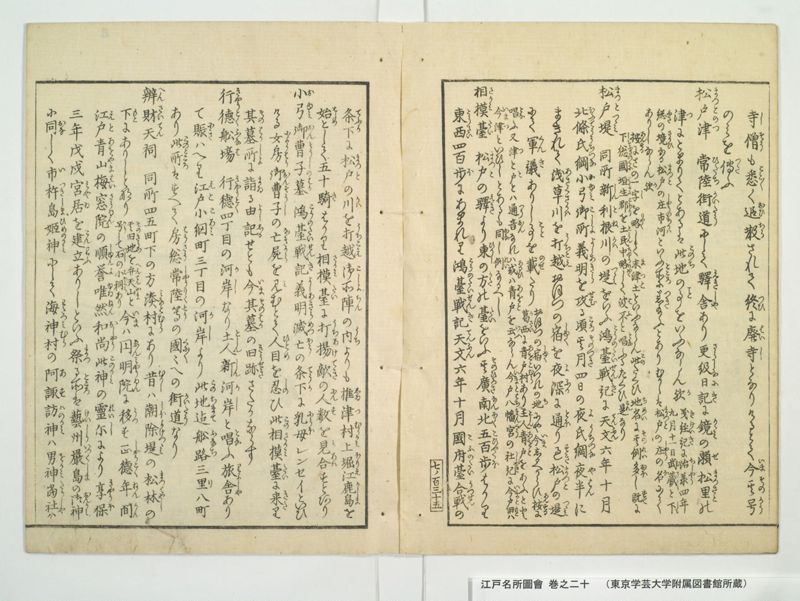
寺僧(しそう)も悉(こと〳〵)く追散(おひちら)されて終(つひ)に廃寺(はいし)となりけるとて今(いま)其号(そのかう)
のみを伝(つた)ふ
松戸津(まつとのつ) 常陸街道(ひたちかいたう)にして駅舎(えきしや)あり更級日記(さらしなにき)に鏡(かゝみ)の瀬(せ)松里(まつさと)の
津(つ)にとまりてとあるは此地(このち)の事(こと)をいふならん歟(か) 《割書:義経記(きけいき)に治承(ちしやう)四年|九月十一日 武蔵(むさし)と下(しも)》
《割書:総(ふさ)の境(さかひ)なる松戸(まつと)の庄(しやう)市河(いちかは)といふ所(ところ)に着(つき)給ふとありむかしは松戸(まつと)の庄(しやう)の名(な)にて|ありしならん歟(か)》
松戸堤(まつとつゝみ) 同所 新利根川(しんとねかは)の堤(つゝみ)をいふ鴻台戦記(こうのたいせんき)に天文(てんふん)六年十月
北条氏綱(ほふてううちつな)小弓御所義明(おゆみこしよよしあきら)を攻(せむ)る頃(ころ)其月(そのつき)四日の夜(よる)氏綱(うちつな)夜半(やはん)に
まきれて浅草川(あさくさかは)を打越(うちこえ)おほつの宿(しゆく)を夜深(よふか)に通(とほ)り過(すき)松戸(まつと)の堤(つゝみ)
にて軍議(くんき)ありし事(こと)を載(のせ)たり 《割書:おほつの宿(しゆく)いつれの地(ち)にや今(いま)しるへからす按(あんする)に|葛西(かさい)に青戸村(あをとむら)あり土人(としん)青戸(あをと)をあふとと》
《割書:唱(とな)ふ又 津(つ)と戸(と)とは通音(つうおん)なれは或(あるひ)は青戸(あをと)を云(いふ)ならん今戸八幡宮(いまとはちまんくう)の社記(しやき)に今戸(いまと)旧(もと)は|今津(いまつ)といひしとあるも同(おな)し例(れい)なるへし》
相模台(さかみたい) 松戸(まつと)の駅(えき)より東(ひかし)の方(かた)の台(たい)をいふ其広(そのひろさ)南北(なんほく)五百歩(こひゃくほ)はかり
東西(とうさい)四百 歩(ほ)にあまれり鴻台戦記(こうのたいせんき)天文(てんふん)六年十月 国府台合戦(こふのたいかつせん)の
条下(てふか)に松戸(まつと)の川(かは)を打越(うちこえ)御所陣(こしよちん)の内(うち)よりも椎津(しゐつ)村上(むらかみ)堀江(ほりえ)鹿島(かしま)を
始(はしめ)として五十 騎(き)はかり相模台(さかみたい)に打揚(うちあけ)敵(てき)の人数(にんす)を見合(みあは)すとあり
小弓御曹子墓(おゆみおんそうしのはか) 鴻台戦記(こうのたいせんき)義明(よしあきら)滅亡(めつほう)の条下(てうか)に乳母(にうほ)レンセイといひ
ける女房(にようはう)御曹子(おんそうし)の亡屍(なきから)を見(み)むとて人目(ひとめ)を忍(しのひ)此(この)相模台(さかみたい)に来(きた)り
其(その)墓所(はかしよ)に詣(まひ)る由(よし)記(しる)せとも今(いま)其墓(そのはか)の旧跡(きうせき)さたかならす
行徳船場(きやうとくふなは) 行徳(きやうとく)四丁目の河岸(かし)なり土人(としん)新河岸(しんかし)と唱(とな)ふ旅舎(りよしや)あり
て賑(にき)はへり江戸(えと)小網(こあみ)町三丁目の河岸(かし)より此地(このち)迄(まて)船路(ふなち)三 里(り)八町
あり此所(このところ)はすへて房総(はうさう)常陸(しやうりく)等(とう)の国々(くに〳〵)への街道(かいたう)なり
弁財天(へんさいてん)祠 同所四五町下の方 湊村(みなとむら)にあり昔(むかし)は潮除堤(しほよけつゝみ)の松林(まつはやし)の
下(もと)にありしとなり 《割書:其(その)旧地(きうち)を弁天山(へんてんやま)と|号(かう)して石の小祠(こほこら)あり》 今は円妙院(ゑんみやうゐん)に移(うつ)す正徳年間(しやうとくねんかん)
江戸(えと)青山(あをやま)梅窓院(はいさうゐん)の順誉(しゆんよ)唯然和尚(ゆゐねんおしやう)此神(このかみ)の霊爾(れいし)により享保(きやうほ)
三年戊戌 宮居(みやゐ)を建立(こんりふ)ありしといふ祭(まつ)る所(ところ)は芸州(けいしう)厳島(いつくしま)の御神(おんかみ)
に同(おな)しく市杵島姫神(いつきしまひめのかみ)にして海神村(わたつみむら)の阿諏訪神(あすはのかみ)は男神(をとこかみ)当社(たうしや)は
現代語訳
(寺の)僧侶もことごとく追い散らされて、ついに廃寺となってしまったとのことで、今はその名称だけが伝わっている。
**松戸津** 常陸街道沿いにある宿場町である。『更級日記』に「鏡の瀬・松里の津に泊まりて」とあるのは、この地のことを指すのであろうか。(『義経記』に、治承四年九月十一日、武蔵と下総の境にある松戸の庄・市河という所に着き給うとある。昔は松戸の庄という名であったのだろうか。)
**松戸堤** 同所。新利根川の堤のことをいう。『鴻台戦記』に、天文六年十月、北条氏綱が小弓御所・義明を攻めた頃、その月の四日の夜、氏綱は夜半に乗じて浅草川を打ち渡り、大津の宿を夜更けに通り過ぎ、松戸の堤にて軍議を行ったことが記されている。(大津の宿がいずれの地にあたるかは今は分からない。考えるに、葛西に青戸村がある。土地の人は青戸を「あふと」と唱える。また、津と戸とは通音であるから、あるいは青戸のことを言うのかもしれない。今戸八幡宮の社記に「今戸はもとは今津といった」とあるのも同じ例であろう。)
**相模台** 松戸の宿駅より東の方にある台地のことをいう。その広さは南北五百歩ほど、東西四百歩余りある。『鴻台戦記』の天文六年十月、国府台合戦の条に、「松戸の川を打ち越え、御所陣の内よりも椎津・村上・堀江・鹿島を始めとして五十騎ほどが相模台に打ち上がり、敵の人数を見合わせた」とある。
**小弓御曹子の墓** 『鴻台戦記』の義明滅亡の条に、乳母のレンセイという女房が、御曹子(義明)の亡骸を見ようとして、人目を忍んでこの相模台に来て、その墓所に詣でた旨が記されている。しかし今はその墓の旧跡は定かでない。
**行徳船場** 行徳四丁目の河岸である。土地の人は「新河岸」と呼んでいる。旅宿があって賑わっている。江戸・小網町三丁目の河岸からこの地まで、船路は三里八町ある。この所は全体として、房総・常陸などの国々への街道となっている。
**弁財天祠** 同所の四、五町下の方にある湊村にある。昔は潮除堤の松林の下にあったとのことである。(その旧地を弁天山と称して、石の小祠がある。)今は円妙院に移されている。正徳年間、江戸・青山の梅窓院の順誉・唯然和尚がこの神の霊示により、享保三年戊戌(つちのえいぬ)に宮居を建立したという。祀られているのは、芸州・厳島の御神と同じく市杵島姫神であり、海神村の阿諏訪神は男神であるが、当社は(次ページへ続く)
英語訳
The temple's monks were completely dispersed, and it ultimately became an abandoned temple. Today, only its name is passed down.
**Matsudo Ferry Landing (Matsudo-no-tsu)** This is a post station on the Hitachi Highway. The passage in the *Sarashina Diary* that reads "we lodged at the ford of Kagami and the ferry landing of Matsusato" likely refers to this very place. (The *Gikeiki* states that on the eleventh day of the ninth month of Jishō 4 [1180], [Yoshitsune's party] arrived at a place called Ichikawa in the estate of Matsudo, on the border of Musashi and Shimōsa provinces. Perhaps it was formerly known by the name "the estate of Matsudo.")
**Matsudo Embankment (Matsudo-zutsumi)** Same location. This refers to the embankment along the New Tone River (Shin-Tonegawa). The *Kōnodai Senki* records that in the tenth month of Tenbun 6 [1537], when Hōjō Ujitsuna was attacking the Oyumi御所 (residence of Lord Yoshiaki), on the night of the fourth day of that month, Ujitsuna crossed the Asakusa River under cover of midnight, passed through the post town of Ōtsu deep in the night, and held a war council at the Matsudo Embankment. (It is unclear where exactly the post town of Ōtsu was located. Upon reflection, there is a village called Aoto in Kasai. The local people pronounce "Aoto" as "Afuto." Furthermore, since "tsu" and "to" are interchangeable sounds, perhaps it refers to Aoto. The shrine record of Imado Hachiman Shrine states that "Imado was formerly called Imatsu," which would be another example of the same phenomenon.)
**Sagami-dai (Sagami Plateau)** This refers to the plateau east of the Matsudo post station. Its extent is approximately five hundred paces north to south and over four hundred paces east to west. In the *Kōnodai Senki*, under the entry for the Battle of Kōnodai in the tenth month of Tenbun 6, it is recorded: "After crossing the Matsudo River, some fifty horsemen, including Shiitsu, Murakami, Horie, and Kashima from within the lord's encampment, rode up to Sagami-dai to assess the enemy's numbers."
**Tomb of the Young Lord of Oyumi (Oyumi Onsōshi no Haka)** In the *Kōnodai Senki*, under the entry on the fall of Yoshiaki, it is written that a wet nurse called Rensei came secretly to this Sagami-dai, concealing herself from public view, wishing to see the remains of the young lord, and visited his grave site. However, the exact location of that grave site is no longer clearly known today.
**Gyōtoku Boat Landing (Gyōtoku Funaba)** This is the riverside landing at Gyōtoku 4-chōme. Local people call it the "New Landing" (Shin-gashi). There are lodging houses and it is a lively place. The distance by water from the landing at Koami-chō 3-chōme in Edo to this location is three ri and eight chō. This area serves as the main highway route to the provinces of Bōsō (Awa and Kazusa) and Hitachi, among others.
**Shrine of Benzaiten** Located in Minato Village, four or five chō downstream from the same place. It is said that in former times it stood beneath the pine forest of the tide-break embankment. (The old site is called Benten-yama, where a small stone shrine remains.) It has since been relocated to Enmyō-in temple. During the Shōtoku era, the monk Junyo Yuinen of Baisō-in Temple in Aoyama, Edo, received a divine revelation from this deity and erected a shrine building in Kyōhō 3 [1718], the year of the Dog. The deity enshrined is the same as that of Itsukushima in Aki Province—Ichikishima-hime no Kami. Whereas the Asu(w)a deity of Watatsumi Village is a male deity, this shrine's deity is... (continues on next page)