翻刻
女神(めかみ)と称(しよう)す神田(しんてん)あり弁天免(へんてんめん)と唱(とな)ふ
船霊宮(ふなたまのみや) 《割書:画像(くわさう)一幅(いつふく)探信(たんしん)の筆(ふて)なりといふ古(いにしへ)此地(このち)大船(たいせん)|入津(にふしん)の湊(みなと)なりし故(ゆゑ)此神(このかみ)を崇(あか)むるといへり》
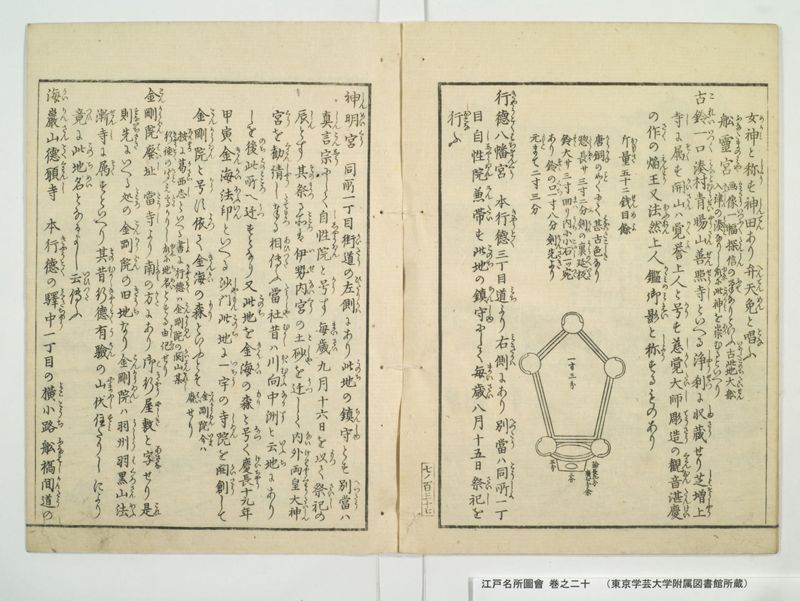
古鈴一口(これいいつく) 湊村(みなとむら)青暘山善照寺(せいやうさんせんせうし)といへる浄刹(しやうせつ)に収蔵(しゆさう)せり芝(しは)増上(そうしやう)
寺(し)に属(そく)す開山(かいさん)は覚誉(かくよ)上人と号(かう)す慈覚大師(しかくたいし)彫像(てうさう)の観音(くわんおん)湛慶(たんけい)
の作(さく)の焔王(えんわう)又 法然(ほふねん)上人 鑑御影(かゝみのみえい)と称(しやう)するものあり
斤量(おもさ)五十二 銭(せん)目(め)余(よ)
唐銅(からかね)の如(こと)くにて甚(はなはた)古色(こしき)なり
総長(さうなか)さ三寸二 分(ふ)剣(けん)の裏延板(うらのへいた)
鈴(すゝ)大さ三寸回(はま)り内(うち)に小石(こいし)一つ宛(つゝ)
あり鈴(すゝ)の口(くち)一寸八分 剣先(けんさき)より
元(もと)まて二寸三分
【挿し絵】
一寸三分
輪長九分
広七分余
三分
五分【挿し絵ここまで】
行徳八幡宮(きやうとくはちまんくう) 本 行徳(きやうとく)三丁目 道(みち)より右側(みきかは)にあり別当(へつたう)は同所(とうしよ)一丁
目 自性院(ししやうゐん)兼帯(けんたい)す此地(このち)の鎮守(ちんしゆ)にして毎歳(まいさい)八月十五日 祭祀(さいし)を
行(おこな)ふ
神明宮(しんめいくう) 同所一丁目 街道(かいたう)の左側(ひだりかは)にあり此地(このち)の鎮守(ちんしゆ)とす別当(へつたう)は
真言宗(しんこんしう)にして自称院(ししやうゐん)と号(かう)す毎歳(まいさい)九月十六日を以(もつ)て祭祀(さいし)の
辰(しん)とす其(その)祭(まつ)る所(ところ)は伊勢内宮(いせないくう)の土砂(としや)を遷(うつ)して内外両皇大神(ないけりやうくわうたいしん)
宮(くう)を勧請(くわんしやう)し奉(たてまつる)相伝(あひつた)ふ当社(たうしや)昔(むかし)は川向(かわむかふ)中洲(なかす)と云(いふ)地(ち)にあり
しを後(のち)此所(このところ)へ遷(うつ)すとなり又 此地(このち)を金海(きんかい)の森(もり)と号(なつ)く慶長(けいちやう)十九年
甲寅 金海法印(きんかいほふいん)といへる沙門(しやもん)此地(このち)に一宇(いちう)の寺院(しゐん)を開創(かいさう)して
金剛院(こんかうゐん)と号(かう)す依(よつ)て金海(きんかい)の森(もり)といふと 《割書:金剛院(こんかうゐん)今(いま)は|廃(はい)せり》
《割書: 按(あんする)に葛西志(かさいし)といへる書(しよ)に行徳(きやうとく)は金剛院(こんかうゐん)の開山(かいさん)某(それかし)| 行徳(きやうとく)の聞(きこ)え高(たか)かりし故(ゆゑ)に地名(ちめい)とする由(よし)記(しる)せり》
金剛院(こんかうゐん)廃止(はいし) 当寺(たうし)より南(みなみ)の方(かた)にあり御行屋敷(こきやうやしき)と字(あさな)せり是(これ)
則(すなはち)先(さき)にいへる処(ところ)の金剛院(こんかうゐん)の旧地(きうち)なり金剛院(こんかうゐん)は羽州羽黒山(うしうはくろさん)法(ほふ)
漸寺(せんし)に属(そく)すといへり其昔(そのむかし)行徳(きやうとく)有験(うけん)の山伏(やまふし)住(すみ)たりしにより
竟(つひ)に此(この)地名(ちめい)となるよし云(いひ)伝(つた)ふ
海巌山徳願寺(かいかんさんとくくわんし) 本 行徳(きやうとく)の駅中(えきちゆう)一丁目の横小路(よここうち)船橋間道(ふなあしかんたう)の
現代語訳
女神と称する神田があり、弁天免と呼んでいる。
船霊宮《割書:画像一幅は探信の筆によるものという。古くはこの地が大船が入港する湊であったため、この神を崇めるという》
古鈴一口 湊村青陽山善照寺という浄土宗の寺に収蔵されている。芝増上寺に属する。開山は覚誉上人と号する。慈覚大師彫像の観音、湛慶作の閻魔王、また法然上人鑑御影と称するものがある。
重量五十二銭目余り
唐銅のようで甚だ古色を呈している
全長三寸二分、剣の裏延板
鈴の大きさ三寸回り、内に小石一つずつある
鈴の口一寸八分、剣先から元まで二寸三分
【挿絵】
一寸三分
輪長九分
広七分余
三分
五分【挿絵ここまで】
行徳八幡宮 本行徳三丁目、道より右側にある。別当は同所一丁目自性院が兼帯する。この地の鎮守であり、毎年八月十五日に祭祀を行う。
神明宮 同所一丁目、街道の左側にある。この地の鎮守とする。別当は真言宗で自性院と号する。毎年九月十六日をもって祭祀の日とする。その祀る所は伊勢内宮の土砂を遷して内外両皇大神宮を勧請し奉る。相伝によると、当社は昔は川向かいの中洲という地にあったが、後にこの所へ遷したという。またこの地を金海の森と号する。慶長十九年甲寅、金海法印という沙門がこの地に一宇の寺院を開創して金剛院と号した。よって金海の森というと《割書:金剛院は今は廃寺である》
《割書:按ずるに「葛西志」という書に、行徳は金剛院の開山某の行徳の聞こえが高かった故に地名とする由が記されている》
金剛院廃止 当寺より南の方にあり、御行屋敷と字する。これは即ち先に言った所の金剛院の旧地である。金剛院は羽州羽黒山法漸寺に属するという。その昔、行徳という有験の山伏が住んでいたことにより、ついにこの地名となると言い伝えている。
海巌山徳願寺 本行徳の駅中一丁目の横小路、船橋間道の
英語訳
There is a rice field called the goddess field, referred to as Benten-men.
Funatama Shrine《Note: There is a painting, said to be by the brush of Tanshin. In ancient times, this place was a harbor where large ships entered port, hence this deity is worshipped》
An ancient bell It is housed in Seiyōzan Zenshōji temple in Minato village, a Pure Land sect temple. It belongs to Zōjōji temple in Shiba. The founding priest is called Kakuyo Shōnin. There are an Kannon carved by Jikaku Daishi, an Enma-ō made by Tankei, and what is called the mirror image of Hōnen Shōnin.
Weight: fifty-two sen-me and more
Like bronze and of very ancient patina
Total length: three sun two bu, the backing plate of the sword
Bell size: three sun around, with one small stone inside each
Bell mouth: one sun eight bu, from sword tip to base: two sun three bu
【Illustration】
One sun three bu
Ring length nine bu
Width seven bu and more
Three bu
Five bu【End of illustration】
Gyōtoku Hachiman Shrine Located in Hon-Gyōtoku 3-chōme, on the right side from the road. The bettō is concurrently managed by Jishōin temple at 1-chōme of the same place. It is the tutelary shrine of this area, and festival rites are performed every year on August 15th.
Shinmei Shrine Located at 1-chōme of the same place, on the left side of the highway. It serves as the tutelary shrine of this area. The bettō belongs to the Shingon sect and is called Jishōin. September 16th of every year is designated as the day of festival rites. What is enshrined there is the transferring of soil from Ise Inner Shrine to enshrine both the Inner and Outer Imperial Grand Shrines. According to tradition, this shrine was originally located in a place called Nakasu across the river, but was later moved to this location. This place is also called Kinkai no Mori. In the 19th year of Keichō, year of the Wood Tiger, a monk called Kinkai Hōin established a temple here and named it Kongōin. Hence it is called Kinkai no Mori《Note: Kongōin is now abolished》
《Note: According to a book called "Kasai-shi," Gyōtoku became the place name because of the fame of a certain founding priest of Kongōin named Gyōtoku》
Kongōin abolished Located south of this temple, it is called Ogyō Yashiki. This is precisely the former site of the aforementioned Kongōin. Kongōin is said to have belonged to Hōsenji temple at Mount Haguro in Ushū. In ancient times, a yamabushi named Gyōtoku of proven spiritual power lived here, and eventually this became the place name, according to tradition.
Kaigan-zan Tokuganji In the side street of 1-chōme in the station town of Hon-Gyōtoku, on the Funabashi bypass