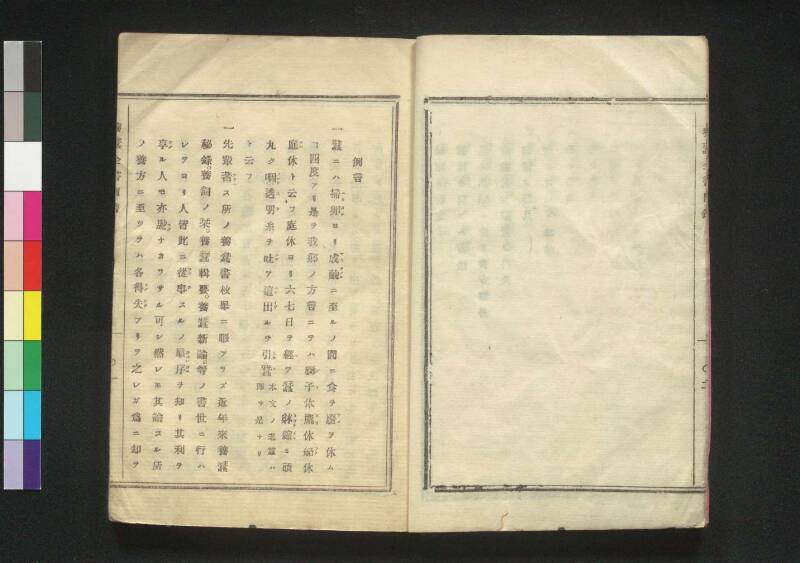
翻刻
【右丁 文字無し】
【左丁】
例言
一蚕ニハ掃卵(ハキタテ)ヨリ成繭(マユツクル)ニ至ルノ間ニ食ヲ廃(ヤメ)テ休ム
ヿ四度アリ是ヲ我郷ノ方言ニテハ獅子(シヽ)休/鷹(タカ)休/船(フナ)休
庭(ニハ)休ト云フ庭休ヨリ六七日ヲ経(ヘ)テ蚕ノ体(カタチ)縮(チヽ)ミ頭
丸ク咽(ノント)透明(スキ)糸ヲ吐(ハキ)テ這出(ハイイツ)ルヲ引蚕(ヒキコ)《割書:本文ノ老蚕ハ|即チ是ナリ》
ト云フ
一先輩/著(アラハ)ス所ノ養蚕書枚挙ニ暇アラズ近年来養蚕
秘録。養飼ノ栞。養蚕輯要。養蚕新論。等ノ書世ニ行ハ
レテヨリ人皆此ニ従事(ジウジ)スルノ順序(ジユンジヨ)ヲ知リ其利ヲ
享(ウク)ル人モ亦/尟(スク)ナカラサル可シ然レ𪜈其論スル所
ノ養方ニ至ツテハ各/得失(トクシツ)アリテ之レガ為ニ却テ
現代語訳
【右丁 文字無し】
【左丁】
例言
一蚕には掃立て(孵化)から繭を作るまでの間に、餌を食べることをやめて休む
ことが四度ある。これを我が郷土の方言では獅子休み/鷹休み/船休み/
庭休みという。庭休みから六七日を経て蚕の体が縮み、頭が
丸く、咽が透明になり、糸を吐いて這い出るのを引蚕《割書:本文の老蚕は|即ちこれである》
という。
一先輩が著した養蚕書は数え切れないほど多い。近年、養蚕
秘録、養飼の栞、養蚕輯要、養蚕新論等の書が世に行われる
ようになってから、人皆これに従事する順序を知り、その利益を
享受する人も亦少なくないであろう。しかしながら、その論じる
養い方については、それぞれに得失があって、これがために却って
英語訳
【Right Page - No text】
【Left Page】
Preface
One: Silkworms have four periods between hatching and cocoon formation when they stop eating and rest.
In our local dialect, these are called lion rest, hawk rest, ship rest, and
garden rest. Six to seven days after the garden rest, the silkworm's body shrinks, its head
becomes round, its throat transparent, and it spits silk thread and crawls out - this is called hiki-ko (mature silkworm) 《Marginal note: The mature silkworms mentioned in the main text are precisely these》
One: The sericulture books written by our predecessors are too numerous to count. In recent years, since books such as "Sericulture
Secret Records," "Guide to Silkworm Raising," "Essentials of Sericulture," "New Theories on Sericulture," etc. have been published,
people have come to know the proper sequence for engaging in this work, and those who
enjoy its benefits are also not few in number. However, regarding the raising methods
they discuss, each has its advantages and disadvantages, and because of this, on the contrary...