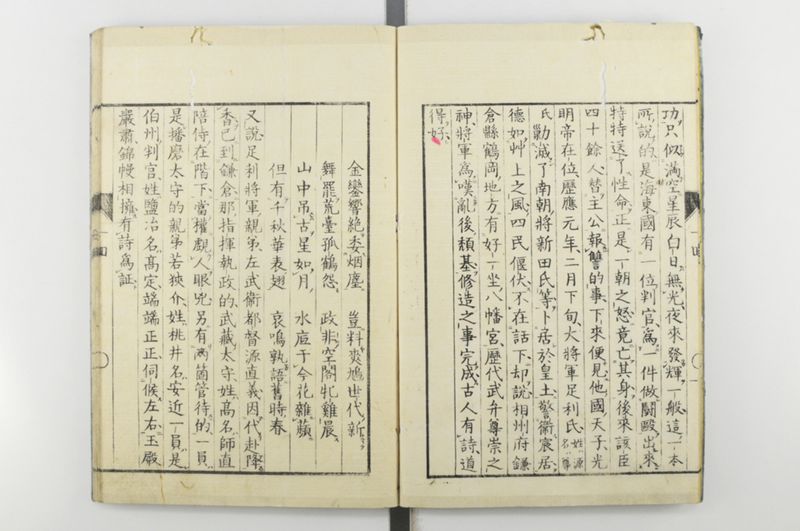
翻刻
【右丁】
功_一 ̄ヲ只 似(コトク)_二 満 ̄ルノ_レ空 ̄ニ星-辰白-日 ̄ニハ無 ̄ク_レ光、夜來發 ̄ルカ_一_レ輝 ̄ヲ一-般、這 ̄ノ一-本
所 ̄ノ_レ說 ̄ク的 ̄ハ、是海東 ̄ノ國有_二 一位 ̄ノ判官_一、爲 ̄メニ_下 一件做 ̄シ_二鬪毆 ̄ヲ_一出 ̄シ來 ̄ルカ_上
特特送_二-了 ̄ス性命 ̄ヲ_一、正 ̄ニ是 ̄レ一-朝之-怒 ̄ニ、竟 ̄ニ亡 ̄フ_二其身 ̄ヲ_一、後-來該-臣
四十餘人、替 ̄テ_二主公 ̄ニ_一報 ̄スル_レ讐的-事、下-來便 ̄チ見 ̄ユ、他 ̄ノ國 ̄ノ天子、光
明帝在-位、歷應元年、二月下旬、大將軍足利氏、《割書:姓 ̄ハ源|名 ̄ハ尊》
《割書:氏| 》勦_二-滅 ̄シ了南朝 ̄ノ將新田氏-等 ̄ヲ_一、卜_二-居 ̄シ於皇土 ̄ニ_一、警_二-衞 ̄ス宸居 ̄ヲ_一、
德如 ̄ク_二艸上之-風 ̄ノ_一、四民偃-伏 ̄ス、不_レ在_二話下 ̄ニ_一、却 ̄テ說、相-州-府鎌
倉縣鶴-岡 ̄ノ地-方 ̄ニ有_二好-一-坐 ̄ノ八幡宮_一、歷代武弁尊崇之-
神、將-軍爲 ̄メニ_レ嘆《送り仮名:スルカ》_二亂後 ̄ノ頽基 ̄ヲ_一、修-造之-事完 ̄ク成 ̄ル、古人有_レ詩、道
得 ̄テ好 ̄シ、
【左丁】
金鑾響絶 ̄テ委 ̄ス_二烟塵 ̄ニ_一 豈 ̄ニ料 ̄ンヤ爽鳩世-代 ̄ノ新 ̄ナルヿヲ
舞-罷 ̄テ荒臺孤-鶴怨 ̄ミ 政-非(─)《送り仮名:ニ𬼀》空-閣牝-雞-晨 ̄ス
山中吊 ̄スレハ_レ古 ̄ヲ星如 ̄ク_レ月 ̄ノ 水底于_レ今花 ̄ル雜_レ蘋 ̄ニ
但有 ̄テ_二千秋華表 ̄ノ翅_一 哀鳴孰 ̄ニカ語 ̄ル舊時 ̄ノ春
又-說、足利將軍 ̄ノ親-弟、左武衞都-督源直義因 ̄テ_二代 ̄リ赴 ̄テ降 ̄スニ_一
_レ香 ̄ヲ、已 ̄ニ到 ̄ル_二鎌倉 ̄ニ_一、那 ̄ノ指-揮執-政的、武藏 ̄ノ太守、姓 ̄ハ髙名 ̄ハ師直
陪侍《送り仮名:𬼀》在_二階下 ̄ニ_一、當 ̄テ_レ權 ̄ニ覰 ̄ルノ_レ 人 ̄ヲ眼-兇、另 ̄ニ有 ̄リ_二两箇管待 ̄スル的_一、一員 ̄ハ
是 ̄レ播磨太守的親-弟若狹介、姓 ̄ハ桃井名 ̄ハ安近一-員 ̄ハ是 ̄レ
伯州 ̄ノ判官、姓 ̄ハ鹽冶名 ̄ハ髙定、端端正正、伺_二-候 ̄ス左右 ̄ニ_一、玉殿
嚴肅、錦幔相-擁 ̄ス、有_レ詩爲_レ証 ̄ト、
現代語訳
【右丁】
功績を)ただ空に満ちる星辰が白日には光なく、夜来て輝きを発するが如し。この一本で説くところは、海東の国に一位の判官がいて、一件の喧嘩のために命を落とし、まさに一朝の怒りによって、ついにその身を亡ぼした。後に該当する家臣四十余人が、主公に代わって仇を報ずる事は、これから見えてくる。彼の国の天子、光明帝が在位し、歴応元年二月下旬、大将軍足利氏(姓は源、名は尊氏)が南朝の将新田氏等を討滅し、皇土に居を定め、宮中を警護した。その徳は草上の風の如く、四民は皆伏した。これは話すまでもない。
さて、相州府鎌倉県鶴岡の地方に立派な八幡宮があり、歴代武家が尊崇する神である。将軍は乱後の荒廃を嘆き、修造の事を完成させた。古人に詩があり、よく詠んでいる。
【左丁】
金鑾殿の響きは絶えて煙塵に委ね どうして料ろうか鳩が世代を新たにすることを
舞い終えて荒れた台で孤鶴が怨み 政は空しい閣で雌鶏が暁を告げるにあらず
山中で古を弔えば星月の如く 水底で今花が蘋に雑じって咲く
ただ千秋の華表の翼があって 哀鳴する誰が旧時の春を語ろうか
また説く。足利将軍の実弟、左武衛都督源直義が代わって赴き香を捧げるため、すでに鎌倉に到着した。その指揮執政たる武蔵太守、姓は高、名は師直が階下に侍している。権勢を笠に着て人を見下す目付きは凶悪である。別に二人の接待する者がいた。一員は播磨太守の実弟若狭介、姓は桃井、名は安近。一員は伯州の判官、姓は塩冶、名は高定である。端正に左右に伺候している。玉殿は厳粛で、錦の幔幕が相い擁している。詩があって証拠とする。
英語訳
【Right Page】
achievements) are just like the stars filling the sky that have no light during the day but emit radiance when night comes. What this story tells is of a certain judge in the land of Kaitō (Japan) who lost his life over a single brawl, truly perishing from a moment's anger. Later, over forty retainers avenged their lord, as will be seen. In that country, Emperor Kōmyō was on the throne, and in the second month of the first year of Ryakuō (1338), General Ashikaga (family name Minamoto, given name Takauji) destroyed the Southern Court generals including Nitta and others, established residence in the imperial land, and guarded the palace. His virtue was like wind over grass, and all four classes of people submitted. This goes without saying.
Now, in the region of Tsurugaoka in Kamakura County, Sagami Province, there was a splendid Hachiman Shrine, a deity revered by warrior houses throughout the ages. The general lamented the post-war devastation and completed its restoration. An ancient poet wrote well of this:
【Left Page】
The sounds of the golden palace hall have ceased, entrusted to smoke and dust / Who could have foreseen that doves would renew the generations
After the dance ends, a solitary crane grieves on the ruined platform / This is not politics where hens crow at dawn in empty pavilions
Mourning the past in the mountains, like stars and moon / At the water's bottom, flowers now bloom mixed with duckweed
There remain only the wings of the eternal ornamental pillars / Whose mournful cry speaks of the spring of former times
It is also told that Ashikaga Shogun's younger brother, Left Military Guard Captain Minamoto no Tadayoshi, went in his stead to offer incense and had already arrived in Kamakura. The commanding administrator there, the Governor of Musashi Province, surnamed Kō and named Moronao, was in attendance below the steps. His eyes were fierce as he looked down on people, wielding his authority. There were also two others in attendance: one was the younger brother of the Governor of Harima, Wakasa-no-suke, surnamed Momoi and named Yasuchika; the other was the Judge of Hōki Province, surnamed Enya and named Takasada. They served respectfully on both sides. The jade palace was solemn, embraced by brocade curtains. There is a poem as evidence.