翻刻
【コマ18】
【右丁】
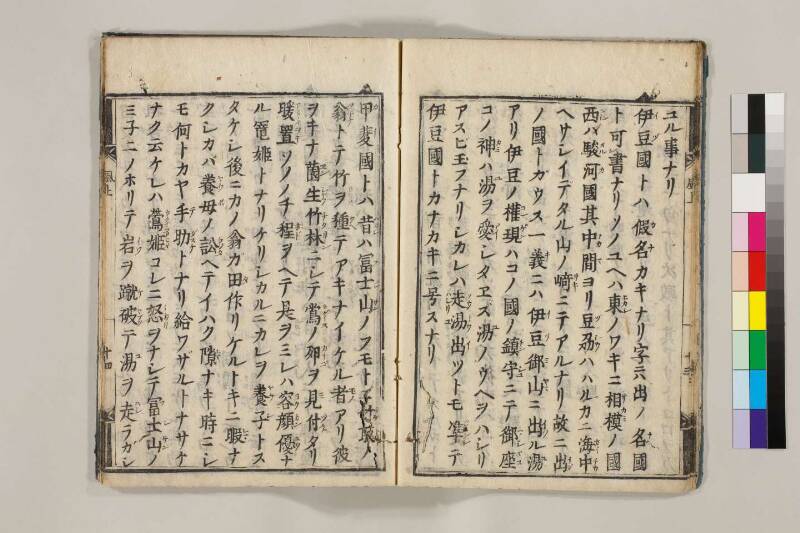
ユル事ナリ
伊豆國(イヅ )トハ 假名(カナ)カキナリ字ニハ出ノ名(ナ)國
ト可_レ書ナリソノユヘハ東(ヒカシ)ノワキニ相模(サカミ)ノ國
西(ニシ)ハ駿河國(スルカ )其 中間(ナカマ)ヨリ豆刕(ヅシウ)ハハルカニ海中(カイチウ)
ヘサシイデタル山ノ﨑(サキ)ニテアルナリ故ニ出(イツ)
ノ國トガウス一義( キ)ニハ伊豆御山(イツミヤマ)ニ出(イツ)ル湯(ユ)
アリ伊豆ノ権現(コンゲン)ハコノ國ノ鎮守(チンシユ)ニテ御座(マシマス)
コノ神(カミ)ハ湯(ユ)ヲ愛(アイ)シタヱズ湯(ユ)ノウヘヲハシリ
アスビ玉フナリシカレハ走湯(ソウトウ|ハシリユ )出(イ)ツトモ準(ジユンシ)テ
伊豆國トカナカキニ号スナリ
【左丁】
甲斐國(カイ )トハ 昔(ムカシ)ハ冨士山(フジサン)ノフモトニ竹取(タケトリ)ノ
《振り仮名:翁󠄂|ヲキナ》トテ竹ヲ種(ウヘ)テアキナイケル者(モノ)アリ彼
ヲキナ薗生竹林(ヱンシヤウチクリン)ニシテ鶯(ウグイス)ノ卵(カイゴ)ヲ見付(ミツケ)タリ
暖置(アタヽメオキ)ソノノチ程(ホド)ヲヘテ是ヲミレハ容顔(ヨウカン)優(ユウ)ナ
ル寵姬トナリケリシカルニカレヲ養子(ヤウシ)トス
タケシ後ニカノ翁󠄂ガ田(タ)作リケルトキニ暇(シマ)ナ
クシカバ養母(ヤウボ)ノ訟(ウツタ)ヘテイハク隙(ヒマ)ナキ時ニシ
モ何トカヤ手助(テダスケ)トナリ給ワザルトナサケ
ナク云ケレハ《振り仮名:鶯姬|ウクイスノヒメ》コレニ怒(イカリ)ヲナシテ冨士山(フシサン)ノ
ミネニノホリテ岩(イワ)ヲ蹴破(ケヤブツ)テ湯(ユ)ヲ走(ハシ)ラカシ
現代語訳
### 駿河国(承前)
……ということである。
---
### 伊豆国(いずのくに)について
「伊豆(いず)」とは、仮名書きの名称である。漢字では「出(いず)の名国」と書くべきものである。その理由は——東には相模国、西には駿河国があり、その中間から豆州(ずしゅう)ははるかに海中へと突き出た山の岬(さき)となっているのである。ゆえに「出(いず)の国」と号するのである。
もう一つの意味(一義)としては、伊豆の御山(みやま)に湧き出る温泉(ゆ)があり、伊豆の権現(ごんげん)はこの国の鎮守(ちんじゅ)としてお鎮まりである。この神は湯をこよなく愛され、湯の上を走り遊ばれるのである。それゆえ、「走り湯(はしりゆ)が出(い)ずる」にも準(なぞら)えて、「伊豆国」と仮名書きに号するのである。
---
### 甲斐国(かいのくに)について
「甲斐(かい)」とは——昔、富士山のふもとに、「竹取の翁(おきな)」と呼ばれる、竹を植えて商いをしていた者がいた。その翁が、園生(えんしょう)の竹林において鶯(うぐいす)の卵(かいご)を見つけた。これを暖めて置いておくと、その後しばらく経って見てみると、容顔(ようかん)の優れた寵姫(ちょうき)となっていた。そこでその者を養子(ようし)とした。
たけし(後に)、その翁が田作り(農作業)をしていた時に、暇がなかったところ、養母(ようぼ)が訴えて言うには、「暇のない時でも、何とやら手助けにもなってくださらないとは、情けない」と言ったので、鶯姫(うぐいすのひめ)はこれに怒りをなして、富士山の峰に登り、岩を蹴り破って湯を走らせ……
(本頁ここで終わる)
英語訳
### On the Province of Suruga (continued)
...This is indeed the case.
---
### On the Province of Izu (伊豆国)
"Izu" (伊豆) is a name written in kana. In Chinese characters, it should properly be written as "Izu no Na-kuni" (出の名国), meaning "the province that juts out." The reason for this is as follows: to the east lies the Province of Sagami (相模国), to the west lies the Province of Suruga (駿河国), and from the middle between them, the province of Zushū (豆州, i.e., Izu) extends far out into the sea as a mountain cape (saki). Therefore, it is named "the Province of Izu" (出の国, "the protruding province").
As a second meaning (ichigi): there are hot springs (yu) that well up from Mount Izu (伊豆の御山), and the Gongen (権現, the deity) of Izu resides as the tutelary guardian (chinju) of this province. This deity greatly loves hot water, and is said to run and play upon the surface of the flowing hot spring. For this reason, by analogy with the image of "the running hot spring (hashiri-yu) issuing forth (izu)," the province is named "Izu" in kana.
---
### On the Province of Kai (甲斐国)
As for "Kai" (甲斐): in ancient times, at the foot of Mount Fuji, there lived a man known as the "Bamboo-cutter Elder" (Taketori no Okina), who grew bamboo and traded in it. This old man, in the bamboo grove of his garden, discovered an egg (kaigo) of a bush warbler (uguisu). He kept it warm, and after some time had passed, when he looked upon it, it had transformed into a beautiful and charming princess of graceful countenance. He then adopted her as his own child.
Later on, when the old man was busy working in the fields and had no spare time, his foster-mother (yōbo) complained, saying: "Even at such a busy time as this, why will you not lend a hand? How heartless!" Upon hearing this, the Uguisu-hime (Warbler Princess, 鶯姫) became furious, climbed to the peak of Mount Fuji, and kicked through the rocks, sending hot spring water rushing forth...
(The page ends here.)