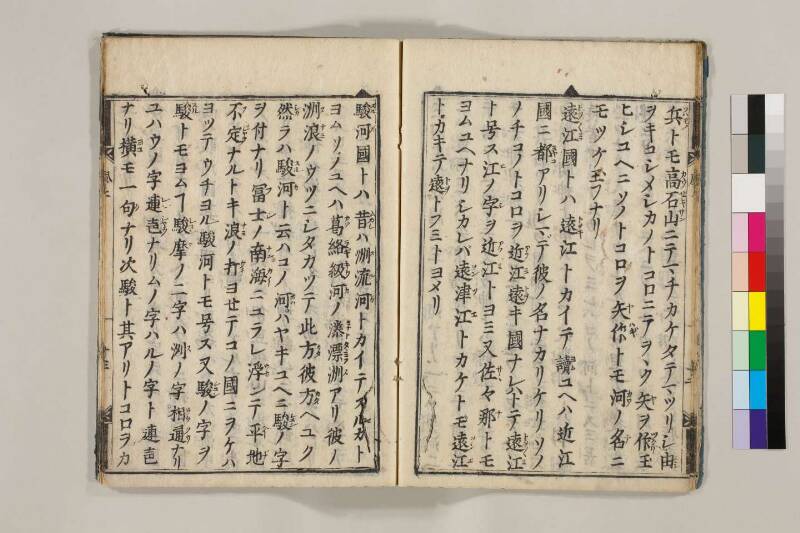
翻刻
【コマ17】
【右丁】
兵(ツハモノ)トモ高石山(カウセキサン)ニテマチカケタテマツリシ由(ヨシ)
ヲキコシメシカノトコロニテヲヽク矢(ヤ)ヲ作(ツクリ)玉
ヒシユヘニソノトコロヲ矢作(ヤハギ)トモ河(カワ)ノ名(ナ)ニ
モツケ玉フナリ
遠江國(トヲ〳〵ミ )トハ 遠江(トヲキ )トカイテ讀(ヨム)ユヘハ近江
國ニ都(ミヤコ)アリシマデ彼ノ名ナカリケリソノ
ノチコノトコロヲ《振り仮名:近江遠キ國|アフミトヲ 》ナレハトテ遠江(トヲ〳〵ミ)
ト号ス江(エ)ノ字(シ)ヲ近江(アフミ)トヨミ又 佐々那(サヽナ)トモ
ヨムユヘナリシカレバ遠津江(ヲンツエ)トカケトモ遠江(ヲンエ)
ト。カキテ《振り仮名:遠トフミ|トヲ 》トヨメリ
【左丁】
駿河國(スルガ )トハ 昔(ムカシ)ハ洲流河(スルガ)トカイテスルカト
ヨムソノユヘハ《振り仮名:葛󠄀絡級河|カツラギキウカ》ノ湊(ミナト)漂洲(タヽミフス)アリ彼ノ
洲浪(スナミ)ノウツニシタカツテ此方( カタ)彼方( カタ)ヘユク
然(シカ)ラハ駿河(スルカ)ト云ハコノ河(カハ)。ハヤキユヘニ駿(シユン)ノ字
ヲ付ナリ冨士(フシ)ノ南海(ナンカイ)ニユラレ浮(ウカ)ンテ平地(ヘイヂ)
不定(フジヤウ)ナルトキ浪(ナミ)ノ打(ウチ)ヨセテコノ國ニヲケハ
ヨツテウチヨル駿河トモ号ス又 駿(シユン)ノ字ヲ
駿(スル)トモヨムヿ駿摩(シユンマ)ノ二字ハ洲(ス)ノ字 相通(サウツウ)ナリ
ユハウノ字 連声(レンシヤウ)ナリムノ字ハルノ字ト連声
ナリ横(ヨコ)モ一句( ク)ナリ次駿ト其アリトコロヲカ
現代語訳
### 矢作川(やはぎかわ)の由来(承前)
……夷(えびす)の兵士たちが高石山(こうせきさん)でお待ち受け申し上げたということをお聞きになり、その場所にて多くの矢をお作りになったゆえに、その場所を「矢作(やはぎ)」と名付け、川の名にもお付けになったのである。
---
### 遠江国(とおとおみのくに)について
「遠江(とおとおみ)」と書いて読む理由は——近江国に都があった頃まで、この(遠江という)名はなかった。その後、この土地を「近江より遠い国であるから」として、「遠江(とおとおみ)」と号するようになった。「江(え)」の字を「近江(あふみ)」と読み、また「佐々那(ささな)」とも読むゆえである。したがって、「遠津江(をんつえ)」と書けるとも言えるが、「遠江(をんえ)」と書いて「遠(とお)とふみ」と読まれている。
---
### 駿河国(するがのくに)について
「駿河(するが)」とは——昔は「洲流河(するが)」と書いて「するか」と読んでいた。その理由は、葛絡級河(かつらぎきゅうか)の湊(みなと)に漂い伏す洲(す)があり、その洲の波が打つのにしたがって、此方(こなた)へ、彼方(かなた)へと動いていく。そうであれば、「駿河(するか)」というのはこの川が速いゆえに、「駿(しゅん)」の字を付けたのである。
富士(ふじ)の南海(なんかい)に揺られ浮かんで、平地が定まらない時に、波が打ち寄せてこの国に置かれると、よって打ち寄る「駿河(するが)」とも号する。
また、「駿(しゅん)」の字を「スル」とも読むことについて——「駿摩(しゅんま)」の二字は「洲(す)」の字と相通じる。「ゆはう」の字は連声(れんじょう)であり、「む」の字は「る」の字と連声である。横も一句である。次に、「駿(するが)」と、その在るところを……
(本頁ここで終わる)
英語訳
### On the Yahagi-gawa (矢作川) — continued
...He heard that the barbarian (Ebisu) warriors were lying in wait for him at Mount Kōseki (高石山), and at that place he made a great many arrows. For this reason, that place was named "Yahagi" (矢作, "arrow-making"), and this name was also given to the river.
---
### On the Province of Tōtōmi (遠江国)
The reason for writing and reading [this province as] "Tōtōmi" (遠江) is as follows: until the time when the capital was in the Province of Ōmi (近江), this name [Tōtōmi] did not yet exist. After that, this place came to be called "Tōtōmi" (遠江) — meaning "the province far from Ōmi" — and was given that name. This is because the character 江 (e) is read as "Afumi" (近江, Ōmi), and is also read as "Sasana." Therefore, although one could write it as "Ontsu-e" (遠津江), it is written as "On-e" (遠江) and read as "Tōtōmi."
---
### On the Province of Suruga (駿河国)
As for "Suruga" (駿河) — in ancient times it was written as "洲流河" (Suruga) and read as "suruka." The reason for this is that at the harbor of the Katsuragi-kyūka River (葛絡級河), there were sandbars (su) that drifted and lay flat upon the water, and following the waves that beat against these sandbars, [the sand] would move this way and that. Given this, the name "Suruka" was given because this river is swift (hayai), and the character 駿 (shun, meaning "swift/excellent") was appended.
Rocked and floating in the southern sea of Mount Fuji (富士), when the flatlands were unsettled and unfixed, the waves came washing in and deposited [sand] upon this province — thus it is also named Suruga, meaning "that which is washed ashore."
Furthermore, regarding the reading of the character 駿 (shun) as "suru": the two characters of "Shunma" (駿摩) share a common phonetic root with the character 洲 (su). The character "yuhau" is a rendaku/rensei (連声, phonetic assimilation), and the character "mu" is in rensei with the character "ru." This forms a single horizontal phrase as well. Next, as for "駿 (Suruga)" and the place where it exists...
(The page ends here.)